Leslie Jamison on Make It Scream, Make It Burn
Caption: 

“In the summer of 1929, after completing his freshman year at Harvard, James Agee headed west to spend a few months working as a migrant farm hand,” reads Leslie Jamison from her essay collection Make It Scream, Make It Burn (Little, Brown, 2019) in this 2019 Harvard University event with writer and critic James Wood.

The Lovers

9.15.21

“He said he wanted to set me on fire like a cigarette—he inhaled me with vigor, indulgence, and did so really, really carelessly,” writes Brontez Purnell in his short story “The Boyfriends,” in which titled sections include “Boyfriend 2.0 / The Firefighter,” “Boyfriend #33 / The Hairdresser,” and “Boyfriend #77 / The Chef.” The story, which is featured in Purnell’s collection 100 Boyfriends (MCD x FSG Originals, 2021), consists of quick scenes that have brief conclusions and convincing details, altogether creating a feeling for a particular time in the speaker’s life. Write a story consisting of brief scenes that recount time spent with either one or several lovers. What do these scenes reveal about your protagonist?

Late Summer

9.14.21

As the days get shorter and colder in mid-September, the autumnal equinox and the official end of summer approach. Many poets find inspiration in this in-between zone when seasonal plants transition and the duties of a school year begin again. “Three Songs at the End of Summer” by Jane Kenyon, “Blackberry-Picking” by Seamus Heaney, and “Vespers” by Louise Glück are examples of poems that speak to late summer. Write a poem that celebrates this fleeting, yet evocative moment between seasons.

Kei Miller and Carolyn Forché

Caption: 

In this virtual event from the 2020 Cúirt International Festival of Literature, Kei Miller and Carolyn Forché read their poems and discuss the exploration of place, hope, and community in their work with poet Jess Traynor. Miller’s second essay collection, Things I Have Withheld (Grove Press, 2021), is featured in Page One in the September/October issue of Poets & Writers Magazine.

Genre: 

A Crown

In Hanif Abdurraqib’s essay “Fear: A Crown,” included in his latest collection, A Little Devil in America: Notes in Praise of Black Performance (Random House, 2021), he borrows the form of a crown of sonnets to link vignettes—parts of the last line of each section act as the first line of the next. Use the crown form to link an essay in sections that discusses a central feeling or theme. As you echo the last line of a vignette into the next, allow the words to launch you into unexpected places.

Chanteuse

“[Amy] Winehouse is so much more than the sum of her parts, isn’t she? The tower of hair. The broad wings of eyeliner. The coldness beneath the boldness, the shyness beneath the highness,” says Diane Seuss in an interview with Tony Leuzzi for the Brooklyn Rail discussing the title of her latest collection, frank: sonnets (Graywolf Press, 2021), a reference to three things: Frank O’Hara; the synonym for honest and direct; and Winehouse’s first album, Frank. Write a story in which the protagonist is based on a legendary singer. Use song lyrics as well as their biography as inspiration for a way to begin the story.

Kat Chow on Seeing Ghosts

Caption: 

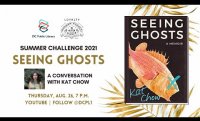
Kat Chow reads from her debut memoir, Seeing Ghosts (Grand Central Publishing, 2021), and speaks about the macabre humor of her family and growing up with loss in this virtual event for DC Public Library’s Summer Challenge series. The memoir is featured in Page One in the September/October issue of Poets & Writers Magazine.

Pages

Subscribe to Poets & Writers RSS