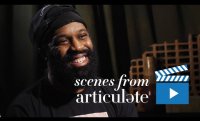
Forrest Gander Reads “Wasteland: on the California Wildfires”

Caption: 

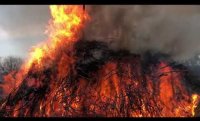
“Green spring grass on / the hills had cured / by June and by July,” reads Forrest Gander from his poem “Wasteland: on the California Wildfires” for Dear Poet, the Academy of American Poets’ educational project for National Poetry Month.

Genre: 

Memory Letters

10.12.21

“Dear Mother, I have so many questions. What city were you born in? What was your American birthday? Your Chinese birthday? What did your mother do?” writes Victoria Chang in the first letter of her nonfiction book, Dear Memory: Letters on Writing, Silence, and Grief, published in October by Milkweed Editions. In the book, Chang writes letters to family members, teachers, and writing colleagues—to silence, to the reader, to memory itself—interspersed with collages made from family documents, relics, and mementos, including a marriage license, photographs, and a visa petition, forming an immersive collection that reckons with memory and what it dredges from the past. Using Dear Memory as inspiration, write three poems in the form of letters: one addressed to a parent, another to a grandparent, and the third to an experience or emotion, such as regret or grief. Try using family photographs or keepsakes as a way of entering the poems.

Grace M. Cho With Sun Yung Shin

Caption: 

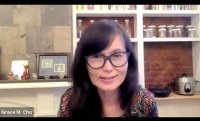
“It wasn’t until I was assigned the family tree project at the age of nine, the same age as my mother when she became a refugee, that I began to understand that she had survived a war.” In this Greenlight Bookstore virtual event, Grace M. Cho reads from her memoir, Tastes Like War (Feminist Press, 2021), which is shortlisted for the 2021 National Book Award in nonfiction, and speaks with Sun Yung Shin about breaking the conventions of writing genres.

Tips and Tricks

10.7.21

“I’ve attended plenty of workshops and lectures with writers I admire, only to leave with vague and puzzling advice about listening to your story’s truth,” writes Blair Hurley in the latest Craft Capsule essay “Tiny Doable Things.” “I treasured, instead, the writers who admitted that their writing was not always inspired and that their drafts were not always successful on the first try.” In the essay, Hurley compares writers with specific technical advice to “woodworkers or glassblowers who must learn the practical needs of their medium.” Write a list of practical writing advice you have received over the years, and reflect upon which practices have stuck with you and why.

Animals

10.6.21

In an article for the Guardian, children’s book author Piers Torday writes about a recent study in the journal People and Nature conducted by the German Centre for Integrative Biodiversity Research which concluded that “animals are being written out of novels at a similar rate to their extinction in the real world.” Torday notes that although there are plenty of animals in children’s literature, there is a shortage of them in novels and concludes that, “perhaps it is time for fiction authors to educate ourselves, and learn how to radically and authentically represent the non-human voice on the page.” This week, write a story with a non-human protagonist. How will you render their voice urgently real?

Pages

Subscribe to Poets & Writers RSS