Translating Yourself

4.21.22

Jhumpa Lahiri’s latest collection of essays, Translating Myself and Others, forthcoming in May by Princeton University Press, catalogues the Pulitzer Prize–winning author’s identity as a writer and translator of books in English and Italian. In the first essay, “Why Italian?” Lahiri explores her reason for beginning to write books in Italian. “Some people ask me, Why Italian instead of an Indian language, a closer language, more like you?” she writes. Inspired by the works of Italian authors such as Lalla Romano and Elena Ferrante, Lahiri continues to answer the question with three metaphors: the dual nature of a door, limited eyesight and blindness, and the multiple meanings of the word graft. Think back to a time when you first learned a skill or a new language, then choose a metaphor that captures the stages of that journey. Write an essay using the metaphor to flesh out the feelings and themes that arise from your exploration.

Trident Booksellers & Café on Sustainability

Caption: 

“These times are really ripe for different opportunities and taking different approaches to things because everyone’s sort of making it up as they go along.” In this BLDRfly video, Wisteria Bristol, Peter Jones, and Sofia Miranda, co-owners of Trident Booksellers & Café in Boulder, Colorado, speak about shifting the store to an employee-owned model during the pandemic and how that has affected their connection to the community. For more, read “From Booksellers to Owners” by Lynn Rosen in the May/June issue of Poets & Writers Magazine.

May Flowers

4.20.22

Crocuses, daffodils, irises, tulips, bloodroot: Spring is the time when blooming flowers arrive to symbolize, if only briefly, the rebirth of the natural world and the chance for new beginnings. The English bluebell, for example, blooms in April and May, flashing wild indigo before dying when the temperature rises. Crocuses are known for their sudden blooming, with no prior signal, sometimes peeking up through snow before lasting only about three weeks. Taking inspiration from the relatively brief life of flowers, write a story in which a protagonist finds a new direction for living, sparked by the presence of spring blooms. How will your protagonist grow out of the long winter? What can we learn about your character using the yearly persistence of blossoming flowers as a guiding metaphor?

Fiona Murphy: The Shape of Sound

Caption: 

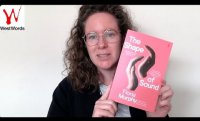
“The technology was described as discreet. Perhaps my secret would be mine to keep,” reads Fiona Murphy from her debut memoir, The Shape of Sound (Text Publishing, 2022), about her experience of coming to terms with her deafness for the WestWords’ Writing Western Sydney series. Murphy’s memoir is featured in Page One in the May/June issue of Poets & Writers Magazine.

How-To

4.19.22

“After killing your god, hotbox the gun smoke,” writes Kemi Alabi in “How to Fornicate,” the opening poem of their debut collection, Against Heaven, winner of the 2021 Academy of American Poets First Book Award, published by Graywolf Press in April. Alabi’s poem enumerates a set of instructions that lyrically lay out the relationship the speaker has with sex and sexuality, using imperatives to speak directly to the reader. These intimate instructions transform throughout the poem, ranging from clear actions to more unexpected uses of nouns that have been repurposed as verbs: “Choir everything. Tenor the roses. / Alto the mulch. Mezzo the flies.” Write a poem in which each sentence begins with an imperative. Try, as Alabi does in the poem, to use a range of words and lexicons to challenge traditional instructional language.

Renee Gladman at the Windham-Campbell Virtual Festival

Caption: 

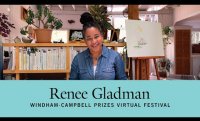
In this video from the 2021 Windham-Campbell Virtual Festival, Renee Gladman reads from her book Ana Patova Crosses a Bridge (Dorothy, a publishing project, 2013) and collaborates in a performance with sound artist Val Jeanty. Gladman’s new book, Plans for Sentences (Wave Books, 2022), is featured in Page One in the May/June issue of Poets & Writers Magazine.

Genre: 

The Multitude That We Are

Caption: 

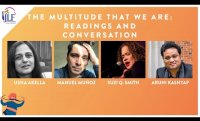
In this virtual reading and conversation examining the multitude of identities, authors Usha Akella, Manuel Muñoz, and Suzi Q. Smith read their work and speak with Aruni Kashyap for the 2021 Jaipur Literature Festival Colorado. Akella, cofounder of the Matwaala collective, is featured in “Building Solidarity Through Poetry” by Swati Khurana in the May/June issue of Poets & Writers Magazine.

On a Sentence

4.14.22

“I’m interested in [Leilani’s] sentences for their expressive, controlled looseness and flexibility; for the way that syntax blurs into scene; for the sense, always, that their shapes are responsive to the psychology of her narrator,” writes Garth Greenwell in “On a Sentence by Raven Leilani,” an essay diving into the particulars of the novelist’s sentences, which was published in the Spring 2022 issue of the Sewanee Review. “As I pour my attention into them, they seem to deepen and expand, inexhaustible.” Whose sentences do you admire most? Inspired by Greenwell’s thorough and passionate analysis, write an essay about your favorite writer’s sentences. Try to break down the root of your fascination by quoting specific sections from your favorite works.

Drafting

4.13.22

“What is revealed by the early manuscripts of classic novels?” asks Hephzibah Anderson in an article published on BBC Culture, in which first drafts of famous novelists like Virginia Woolf, Marcel Proust, and F. Scott Fitzgerald are examined. Woolf’s manuscripts reveal a writer radically rethinking the end of her iconic novel, Mrs. Dalloway, while Proust’s drafts show liberally crossed-out and annotated sections as well as a key rethinking of a central image: the madeleine, which originally began as a slice of toast and a cup of tea. This week try a different strategy for a first draft and write a story out of order. Jot down three crucial scenes from a story you’ve been wanting to begin. Then, at random, pick one and write a draft of that scene. How does this help relieve the pressure of drafting a whole new story from beginning to end?

Pages

Subscribe to Poets & Writers RSS