Portals Into Bygone Times

The author of Country of Origin muses on the transporting power of photographs.
Tags:
Jump to navigation Skip to content
The author of Country of Origin muses on the transporting power of photographs.

The 2021 guest editor of Ōrongohau: Best New Zealand Poems 2021 discusses the editorial process behind the anthology and what it reveals about contemporary New Zealand poetry.
In “The Romans in Films,” an essay from his 1957 book Mythologies, Roland Barthes analyzes Joseph L. Mankiewicz’s 1953 film Julius Caesar by focusing on the presence of fringes in the hair of the characters. “Some have them curly, some straggly, some tufted, some oily, all have them well combed, and the bald are not admitted, although there are plenty to be found in Roman history,” he writes. “What then is associated with these insistent fringes? Quite simply the label of Roman-ness.” Inspired by Barthes’s cheeky analysis of the believability of this ancient Roman period film, write an essay about a film you have criticized. Describe scenes of the film using unique details to illustrate what inspires your argument.
“My mother thought that if she taught me to read, I would become interested to read my books and leave her alone,” says Jamaica Kincaid about her experience reading as a child and how it influenced her as a writer in this interview from the 2021 Louisiana Literature Festival at the Louisiana Museum of Modern Art in Denmark.
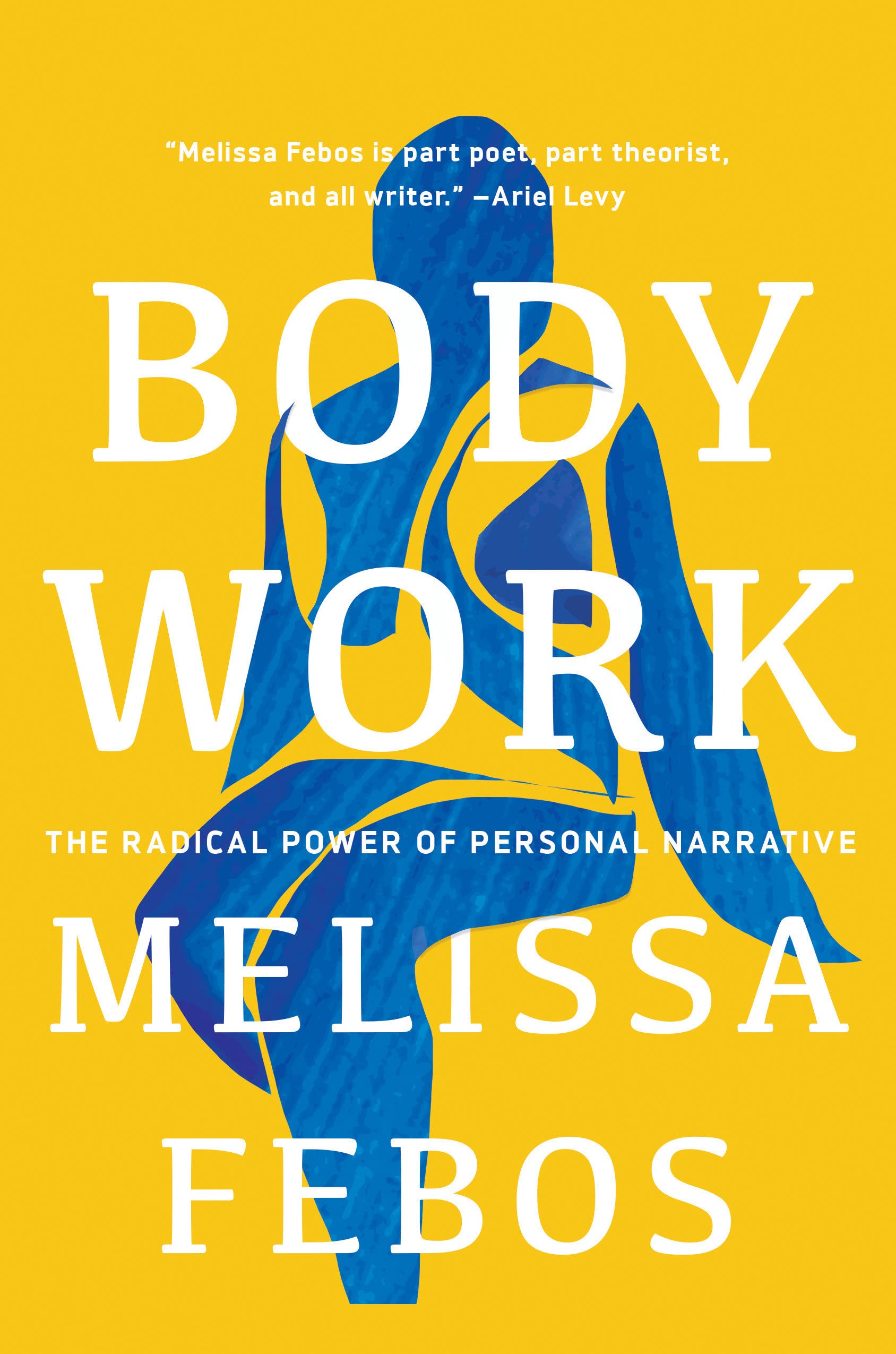
“These essays are attempts to describe the ways that writing is integrated into the fundamental movements of my life: political, corporeal, spiritual, psychological, and social,” writes Melissa Febos in the author’s note of Body Work: The Radical Power of Personal Narrative, a collection of four essays on the emotional and physical work of writing about one’s own life. Febos mixes anecdotes from her own experiences—in academia as a writing professor and with addiction and sex work—with a thorough exploration of how to write about the body, the difficulties in writing about intimate relationships, and what it means for a writer’s personal essays to be dismissed as “navel-gazing.” While exemplifying the power of personal narratives, Febos offers candid advice, lessons, dangers, and possibilities for all writers seeking the courage to tell their own stories. “Write your life,” writes Febos. “Let this book be a totem of permission, encouragement, proof, whatever you need it to be.”
“When I think about the writers and books I have worked with, it’s the dialogue about shape that I most remember. A draft of a story in which a kind of sonic boom goes off at the beginning demands an answering boom at the end,” writes Rebecca Saletan, vice president and editorial director of Riverhead Books, in “A Thing Meant to Be: The Work of a Book Editor” published as online exclusive for Poets & Writers in 2018. “Rather than trying to launch six complicated characters at the outset, how about introducing them one by one, like a juggler putting balls into the air?” This week find an old draft of a story and reshape its structure. How does this exercise force a new perspective on the story’s elements?
This 2022 AWP Conference & Book Fair event held at Al-Bustan Seeds of Culture in Philadelphia and copresented by Radius of Arab American Writers celebrates the Experimental Issue of Mizna featuring readings by poets George Abraham, Tamara Al-Qaisi-Coleman, Tracy Fuad, Yasmine Rukia, Glenn Shaheen, and Issam Zineh.
From the Czech word litost—a state of torment created by the sudden sight of one’s own misery—to the German word schadenfreude—the pleasure derived from the misfortune of others—to the French word dépaysement—the restlessness that comes with being away from your country of origin—untranslatable words have continued to be a source of inspiration for writers across languages. Each word reflects the culture from which it comes as well as illustrates the inability for language to fully capture the human experience. Write a poem using an untranslatable word as a jumping-off point. For inspiration, read Barbara Hamby’s poem “Toska” included in her book On the Street of Divine Love: New and Selected Poems (University of Pittsburgh Press, 2014).
Drive My Car is a film adaptation of Haruki Murakami’s short story of the same name, directed by Ryusuke Hamaguchi and starring Hidetoshi Nishijima and Toko Miura. The film, which won best screenplay at the 2021 Cannes Film Festival and the 2022 Oscar for best international feature film, follows the relationship between a widowed theater actor-director and a young woman hired to be his chauffeur.
In this Poetry.LA conversation, Ramón García, author of The Chronicles (Red Hen Press, 2015), and Anthony Seidman, author of Cosmic Weather (Spuyten Duyvil Publishing, 2020), read their poems and talk about their origin stories as poets, poetry in translation, and the many writers throughout history who have influenced their writing.