A Turn of Phrase

“Poets are supposed to avoid clichés—bits of language so hackneyed as to seem drained of meaning—but I’m fascinated by what hyper-familiar turns of phrase can reveal and conceal,” writes Hannah Aizenman about her poem “As a Father of Daughters,” published in the Academy of American Poets’ Poem-a-Day series. The poem uses the phrase in the title as a jumping-off point for a seemingly associative list that hinges on the levity of rhyme and continues to reveal more about the original phrase. “As a failure of rathers / As a faithful support / As we gather together / As a fear of disorder,” writes Aizenman. Write a poem inspired by a common phrase or idiom that challenges its meaning. What will be revealed or concealed?
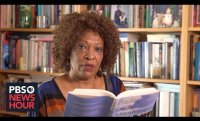
Rita Dove on Playlist for the Apocalypse

Caption: 

“I still believe that we listen more closely to a whisper than to a shout.” In this PBS NewsHour interview with Jeffrey Brown, Pulitzer Prize–winning poet Rita Dove speaks about history, rage, the power of poetry, and her latest collection, Playlist for the Apocalypse (Norton, 2021).

Genre: 

Deaf Republic: A Performance by Ilya Kaminsky

Caption: 

“Quiet thinking is like a current in the sea and moves freely until it’s disturbed by its own voice, and then it becomes a music each individual sings when speaking. This is what we hear when we hear Ilya read,” says poet Fanny Howe introducing Ilya Kaminsky at this 2018 reading of his poetry collection Deaf Republic (Graywolf Press, 2019) at Harvard University’s Woodberry Poetry Room.

Genre: 

Impact

In a Q&A from the September/October 2021 issue of Poets & Writers Magazine, poet Claire Schwartz asks Kaveh Akbar, author most recently of Pilgrim Bell (Graywolf Press, 2021), about the relationship between creating art and living a socially meaningful life. Akbar speaks about Iranian poet Forugh Farrokhzad and her 1962 film The House Is Black, a documentary about a leprosarium in northern Iran, as an example of the ideal. The film catalyzed Iranian new wave cinema and funds flowed into the leprosarium for renovations: “Farrokhzad’s film did exactly what one might hope for their art to do: It improved the material conditions of her subjects and expanded the aesthetic possibilities of the field,” says Akbar. Write an essay that explores the ideal impact you want your work to have, using an artist as a role model to illustrate your vision.

House of SpeakEasy Presents Jennifer Croft

Caption: 

“Everything is untranslatable if what translation means is making something new that stays the same. But that’s not what translation is,” says Jennifer Croft in this House of SpeakEasy video about her origins as a translator and what led her to the Polish language and to work with author Olga Tokarczuk. The Man Booker Prize–winning translator is featured in “Giving Translators Their Due” in the March/April issue of Poets & Writers Magazine.

Eyes Without a Face

In the latest installment of Craft Capsules, Allegra Hyde, author of Eleutheria, forthcoming from Vintage in March, writes about “face pareidolia,” a scientific term for the phenomenon of humans seeing faces in inanimate objects. Hyde finds evidence of this behavior used as a literary technique in a range of works from Homer’s The Odyssey to Alexandra Kleeman’s novel Something New Under the Sun (Hogarth, 2021), in which water is given “a human-like motive, which heightens the drama of the overall description.” This week, write a story that employs the personification, either literal or metaphorical, of an inanimate object. Whether it’s the clouds in the sky or a desk lamp, how does this human impulse to see ourselves help us better understand the world?

Fred D’Aguiar and Daljit Nagra on Poetry

Caption: 

In this virtual discussion, poet, novelist, and playwright Fred D’Aguiar speaks with Daljit Nagra, chair of the Royal Society of Literature, about their shared experience of breaking ground in the poetry landscape and their favorite poets, as well as D’Aguiar’s book Year of Plagues: A Memoir of 2020 (Harper, 2021).

Genre: 

Weeds

As many turn to gardening in warmer temperatures, so come the unwanted but sturdy weeds, popping up regardless of how often they’re removed. Louise Glück’s poem “Witchgrass” explores this perspective from an anthropomorphized incarnation of witchgrass, a common summer annual weed of field crops and small fruit. The result is a testament to the sheer force of nature, as well as a critique of humanity’s obsession with weeding out the seemingly unnecessary: “I don’t need your praise / to survive. I was here first, / before you were here, before / you ever planted a garden.” Write a poem from the perspective of a pesky, unwanted plant or animal. What strength can you find in the underdog?

Pages

Subscribe to Poets & Writers RSS