2022 Disability Futures Fellowship Recipients Announced

Seven poets and writers are among the class of 2022 Disability Futures fellows.
Tags:
Jump to navigation Skip to content
Seven poets and writers are among the class of 2022 Disability Futures fellows.
“My novel, An American Marriage, involves a husband and wife with an unusual challenge: Eighteen months after exchanging their vows, he is arrested and incarcerated for a crime he does not commit,” writes Tayari Jones in “Finding the Center” from an installment of our Craft Capsule series published in 2018. In the essay, Jones writes about the process of choosing the protagonist of her award-winning novel: “I discovered a fundamental truth of fiction and perhaps of life: The character with the most pressing material crisis will always be the center of the story.” This week, write a story in which you explore two sides of the same conflict between two characters. Whether by dividing the story into two parts, or weaving both perspectives together, how can you differentiate their individual stakes and perspectives?
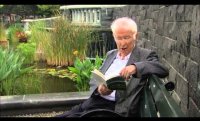
“Now the oil-fired heating boiler comes to life / Abruptly, drowsily, like the timed collapse / Of a sawn-down tree, I imagine them.” In this 2011 PBS NewsHour video, the late Seamus Heaney reads from and speaks about his final collection, Human Chain (Farrar, Straus and Giroux, 2010). The Nobel Prize–winning poet died at the age of seventy-four on August 30, 2013.
In Seamus Heaney’s poem “Oysters,” which appears in his 1979 collection, Field Work, the speaker faces an internal conflict in which he relishes in the “perfect memory” of eating oysters with friends while also dealing with the anger and “glut of privilege” that allows him such refined experiences. In the final sentence, as if avoiding the lingering guilt, Heaney writes: “I ate the day / Deliberately, that its tang / Might quicken me all into verb, pure verb.” Write a poem in which a moment of pleasure is met with guilt or shame. Bring both feelings into focus, digging into the complexity of the scene.
Watch the trailer for Blonde, a film adaptation of the best-selling 2000 historical novel of the same name by Joyce Carol Oates. Directed by Andrew Dominik, the film stars Ana de Armas as Marilyn Monroe and will be released on Netflix this fall.
The author of Took House explores what happens when poets permit themselves to write about the same subject multiple times.
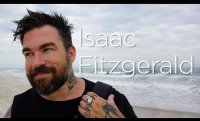
“I realized as I started to write it, that it was going to be a lot more focused on my childhood than I expected it to be,” says Isaac Fitzgerald about the process of writing his first memoir, Dirtbag, Massachusetts: A Confessional (Bloomsbury, 2022), in this interview for Poured Over: The Barnes & Noble Podcast produced and hosted by Miwa Messer. Fitzgerald’s memoir is featured in Page One in the July/August issue of Poets & Writers Magazine.
“What do you want, I asked, forgetting I had / no language,” reads Ocean Vuong from his poem “The Bull,” which appears in his second poetry collection, Time Is a Mother (Penguin Press, 2022), in this WSJ. Magazine video directed by Gioncarlo Valentine.
“There are two kinds of silence that trouble a translator: physical silence and metaphysical silence,” writes Anne Carson in her essay “Variations on the Right to Remain Silent” published in A Public Space. In the essay, Carson discusses various forms of silence—whether of torn ancient manuscripts, the untranslatable, or not being heard—through the works of British painter Francis Bacon and German poet Friedrich Hölderlin, weaving in and out of anecdotes and analyses that are punctuated by the author’s extensive experience as a translator of ancient Greek. Inspired by this thought-provoking essay, meditate on the many ways that silence has taken shape in your life. Then, write an essay that uses the works of others, or your own personal life, to illustrate your experience with silence.
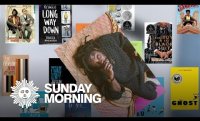
“To me, reading becomes a lot more palatable if young people realize that the stories, the books that exist within them are as valuable as the books that exist on the outside of them.” In this CBS Sunday Morning interview, Jane Pauley speaks to Jason Reynolds, award-winning author and National Ambassador for Young People’s Literature, about lifting up children through storytelling, his journey as a writer, and the importance of friendship.