For Keeps

7.12.22

In this week’s installment of our Craft Capsules series, Lauren Camp shares a technique she uses to salvage phrases from her poems that aren’t quite working. “Over the last few decades, I have maintained a Word document—I call it my ‘Keeps’ document,” Camp writes. “Into this file I paste my ‘darlings,’ margin to margin across the width and length of the page, smooshing them together with other beauties I couldn’t make work.” Inspired by Camp’s process, find a draft of a poem you have worked on but have yet to complete. Take a word or a line and repurpose it in a new poem. What surprising places do these words and phrases take you in your new work?
Geoff Dyer on the Writing Life

Caption: 

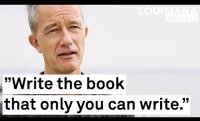
“One of the necessary disciplines in my life has been to discipline myself not to fall into despair when I’m not writing,” says Geoff Dyer in this Louisiana Channel interview in which he discusses his writing process and how his new book, The Last Days of Roger Federer: And Other Endings (Farrar, Straus and Giroux, 2022), came to be.

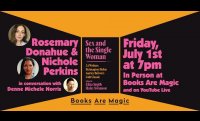
Rosemary Donahue and Nichole Perkins: Sex and the Single Woman

Caption: 

In this Books Are Magic event moderated by Denne Michele Norris, Rosemary Donahue reads from their essay “Thank U, Ex” and Nichole Perkins reads from her essay “Confessions of a Lonely Feminist” both published in the anthology Sex and the Single Woman: 24 Writers Reimagine Helen Gurley Brown’s Cult Classic (Harper Perennial, 2022) edited by Eliza Smith and Haley Swanson.

Who I Am

“My multiethnic existence is a protest against a racial hierarchy,” says Kali Fajardo-Anstine in “Keeping the Stories,” a profile by Rigoberto González published in the July/August 2022 issue of Poets & Writers Magazine. “If you ask me about my identity, prepare to hear about a complicated ancestry. I am a Chicana of Indigenous and mixed ancestry, and the story of who I am is inextricably tied to this country.” Inspired by Fajardo-Anstine’s statement, write an essay about the experiences that influence how you identify yourself in the world. What are the many stories that make up who you are?

A Conversation With Olivia Wenzel

Caption: 

“I come from a family for whom travel was always an unfulfilled longing. But not really in the sense of a lone wolf,” reads Olivia Wenzel from her debut novel, 1,000 Coils of Fear (Catapult, 2022), translated from the German by Priscilla Layne, in this conversation with Jamele Watkins with an introduction by Rosemarie Peña, founder and president of the Black German Heritage and Research Association. Wenzel’s novel is featured in Page One in the July/August issue of Poets & Writers Magazine.

Genre: 

From My Window

In Flannery O’Connor’s classic story “The Geranium,” an old, Southern man moves to New York City to live with his daughter and sits at the window looking into the apartment across the street where a potted geranium is set out on the ledge for sunlight every day. Although the story’s conflict involves the man’s racism and culture shock as a rural Southerner living in a big city, the story’s climax comes to a head when the geranium falls off the ledge and crashes six floors down into the alley. Write a story in which a character becomes obsessed with a neighbor’s life. What is transfixing about the neighbor’s daily routine that spurs on self-reflection for your character?

Jackson Poetry Prize Celebration: Honoring Sonia Sanchez

Caption: 

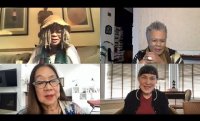
“One of the things we must do as poets is certainly to answer the most important question: What does it mean to be human?” says Sonia Sanchez, recipient of the 2022 Jackson Poetry Prize, in this virtual celebration with poets Mary Jo Bang, Marilyn Chin, and Claudia Rankine.

Genre: 

Independence Day

This past weekend, Independence Day was celebrated in the United States with barbecues, concerts, parades, picnics, and fireworks commemorating the signing of the Declaration of Independence on July 4, 1776. Amidst the celebration, the day has also become a reminder of what it means to uphold human rights. Write a poem reflecting on celebrating the country you grew up in and all the complicated feelings and memories that come along. For inspiration, read “Ghazal: America the Beautiful” by Alicia Ostriker, included in the archives of the Academy of American Poets’ website.

Martina Evans Reads a Poem by Wisława Szymborska

Caption: 

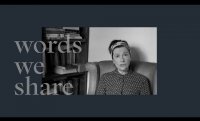
Irish poet and novelist Martina Evans reads Wisława Szymborska’s poem “Could Have,” translated from the Polish by Stanislaw Baranczak and Clare Cavanagh, in this short film directed by Matthew Thompson and produced by the Adrian Brinkerhoff Poetry Foundation for their Words We Share series.

Pages

Subscribe to Poets & Writers RSS