Villainous

7.20.22

Literature is fueled by its villains as much as it is by its heroes, and oftentimes, the villains make more compelling characters due to their flaws, convincing arguments, and twisted aspirations. Shakespeare’s villains are infamous for their layers of complexity. For example, Lady Macbeth, as she sleepwalks in Act V of Macbeth, hallucinates and sees her own bloodstained hands revealing both her guilt as much as her cruelty: “Out, damned spot! out, I say!” she says. Then as she reflects on plotting to kill King Duncan says: “Yet who would have thought the old man to have had so much blood in him.” This week, write a story with a compelling, complicated villain at its core. How will you turn this villain into a three-dimensional character?

Belongings

Caption: 

“Recalling the terror we experienced long ago, I wonder, is that something they wanted, to be acknowledged?” Belongings is a short film about the loss of a mother and a haunted childhood home directed by Alex Coppola and written by and starring Morgan Talty, author of the debut story collection, Night of the Living Rez (Tin House, 2022). Talty is introduced by Brandon Hobson in “First Fiction 2022” in the July/August issue of Poets & Writers Magazine.

Heartbeats

7.19.22

“Scientists have picked up a radio signal ‘heartbeat’ billions of light-years away,” reads an article headline published by NPR last Thursday from a report that astronomers at the Massachusetts Institute of Technology picked up radio signals that repeat in a clear periodic pattern similar to a beating heart from a galaxy billions of light-years from Earth. The discovery could help researchers determine at what speed the universe is expanding. Write a poem inspired by this headline in which you explore the metaphorical and literal ramifications of a “heartbeat” billions of light-years away.

Don’t Be Nice

Caption: 

“What does it mean to write something urgent right now?” Don’t Be Nice is a 2018 documentary directed by Max Powers that follows a group of poets from the Bowery Poetry Club in New York City’s East Village who grapple with the political climate punctuated by the Black Lives Matter and #MeToo movements as they prepare for the National Poetry Slam championship during the summer of 2016.

One Hundred Years of James Joyce’s Ulysses

Caption: 

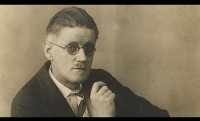
“The more you know about the book, the better the book becomes,” says author Colm Tóibín about James Joyce’s iconic novel Ulysses in this Morgan Library & Museum video introducing their exhibition “One Hundred Years of James Joyce’s Ulysses,” which showcases printed books, manuscripts, letters, handwritten notes, and photographs from Joyce’s life and career.

Genre: 

Kaveh Akbar and John Murillo at 92Y

Caption: 

In this 92nd Street Y recording, Kaveh Akbar, author of Pilgrim Bell (Graywolf Press, 2021), is introduced by poet Angel Nafis, and John Murillo, author of Kontemporary Amerikan Poetry (Four Way Books, 2020), is introduced by poet Terrance Hayes before reading from a selection of their poems.

Genre: 

Layers of History

7.14.22

In her lyric essay “Tsunami” published in the Margins, Juliet S. Kono uses the zuihitsu form to tell a layered story about how her family has survived through multiple tsunami attacks. The essay uses dates to introduce each section, beginning with her family emigrating from Japan to Hawai’i in the early 1900s, then jumping to the devastating 2011 earthquake and tsunami in Tōhoku, Japan, and culminating in 1946 when she and her family survived a deadly tsunami in Hilo, Hawai’i. Inspired by Kono, write a lyric essay that explores a shared history between you and your ancestors. Try using dates to structure the essay, adding historical and emotional layers to the narrative as you write.

Joseph Han in Conversation With Gene Kwak

Caption: 

“I had to confront the page, and at times it felt like I was staring directly at the heart and face of the Korean DMZ.” In this Powell’s Books virtual event, Joseph Han reads from his debut novel, Nuclear Family (Counterpoint, 2022), and speaks with author Gene Kwak about the process of writing a magical realist story and the ways in which every Korean American story is a ghost story. Han’s novel is featured in Page One in the July/August issue of Poets & Writers Magazine.

Genre: 

Involuntary Memory

7.13.22

This past Sunday marked Marcel Proust’s birthday, the French novelist, essayist, and critic whose list of work includes his iconic seven-volume novel, In Search of Lost Time. In the first volume, Swann’s Way, the protagonist dips a madeleine cake in his tea, takes a sip, and is overcome with a sensation of joy he traces back to a childhood memory of sharing a snack with his aunt Léonie. Proust has been named the originator of the term “involuntary memory,” which, according to Psychology Today, is “now understood to be a common mental recall experience that happens without any effort.” This week, write a story in which a character experiences a moment of “involuntary memory.” Either through food or an unexpected encounter, try immersing the reader in this memory which uncovers a secret in your character’s life.

Poetry as Radical Hope

Caption: 

“Poetry is a place where both grief and grace can live, where rage can be explored and examined, not simply exploited.” In this 2018 PBS NewsHour video, Ada Limón shares her opinion on why she sees more and more people turning to poetry in the search for “radical hope” in the digital age. Limón was named the twenty-fourth poet laureate of the United States today.

Genre: 

Pages

Subscribe to Poets & Writers RSS