Interview With Annie Ernaux

Caption: 

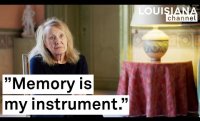
“Memory is my instrument and my element, my material,” says French Nobel Prize–winning author Annie Ernaux in this Louisiana Channel interview with Matthias Dressler-Bredsdorff in Copenhagen. “I’m nobody when I write. I search. When I write, I know I have a woman’s experience.”

Madison Davis in Conversation With Ivy Johnson

Caption: 

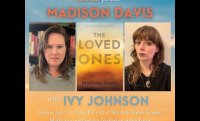
In this Green Apple Books event, Madison Davis reads from her essay collection, The Loved Ones: Essays to Bury the Dead (Dzanc Books, 2023), which is featured in Page One in the July/August issue of Poets & Writers Magazine, and speaks about hope in the face of grief with author Ivy Johnson.

Lyrical Language

In the fall of 1997, Deborah Tall and John D’Agata, then the editor and associate editor of Seneca Review, respectively, began publishing what they called the lyric essay, pioneering the popular essay form. Tall and D’Agata discussed the appeal of the lyric essay, writing: “We turn to the lyric essay—with its malleability, ingenuity, immediacy, complexity, and use of poetic language—to give us a fresh way to make music of the world.” Inspired by their definition of the lyric essay as a form that gives “primacy to artfulness over the conveying of information,” revise a forgotten draft of an essay and turn it into a lyric essay. Try to move by association and connotation, integrating gaps and lyrical language to help the essay bloom.

The Blaney Lecture: Patricia Smith

Caption: 

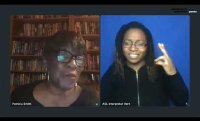
“It’s difficult to describe how I felt about the pictures I collected, how I continued to forge a link with them that I didn’t particularly understand.” Patricia Smith speaks about the photographs she collected over the course of twenty years that inspired her latest collection, Unshuttered (Northwestern University Press, 2023), for this recording of the Academy of American Poets’ 2023 Blaney Lecture. For more on Smith, read her conversation with Tyehimba Jess in the March/April issue of Poets & Writers Magazine.

Genre: 

Revisiting a Character

Although Garth Greenwell’s books What Belongs to You (Farrar, Straus and Giroux, 2016) and Cleanness (Farrar, Straus and Giroux, 2020) are two separate works of fiction with distinct stories and forms, they share the same protagonist and setting. The former is a novel that focuses on a gay American teacher in Bulgaria who has a relationship with a young sex worker, while the latter is a collection of linked stories featuring the same character that expands upon his life abroad. The reading experience of each is uniquely individual and immersive, making the follow-up book not a sequel but an expansion. Is there a character from a story you’ve written in the past that you want to revisit? This week, start a new story in which you return to a character of yours and expand their life.

Portrait of a Home

The house in which Nobel Prize–winning poet Tomas Tranströmer lived with his wife was located on the island of Runmarö in Sweden and built in the late nineteenth century by his maternal grandfather, a ship captain who needed a place to rest upon reaching landfall. In Tranströmer’s poem “The Blue House,” he describes the historic house’s exterior as well as its storied past. “It has stood for more than eighty summers. Its timber has been impregnated, four times with joy and three times with sorrow,” he writes. Write a poem that serves as a portrait of a place you have lived in. Consider its past tenants, the details of its exterior and interior, and its relationship to your life.

Ours Poetica: Gala Mukomolova

Caption: 

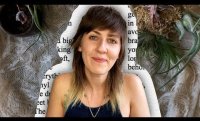
“The book itself is a meditation about growing up between an immigrant life and a queer life, between countries and between different kinds of kinship systems.” Gala Mukomolova discusses her debut collection, Without Protection (Coffee House Press, 2019), and reads her poem “X” in this installment of the Ours Poetica series, sponsored by Complexly and the Poetry Foundation.

Genre: 

Terrance Hayes, Claudia Rankine and Ocean Vuong in Conversation

Caption: 

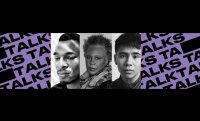
In this recorded event, Terrance Hayes, Claudia Rankine, and Ocean Vuong, acclaimed authors and professors at New York University’s Creative Writing Program, read from their work and participate in a conversation together for a packed audience at NYU Skirball. Rankine is the recipient of the 2014 Jackson Poetry Prize.

Deadline Nears for Howling Bird Press Poetry Prize

Looking to publish your poetry collection? Try sending it to Howling Bird Press for a shot at a prize of $2,500 and publication.

Using only the online submission system, submit a manuscript of 48 to 72 pages with a $25 entry fee by August 21. Visit the website for complete guidelines.

Howling Bird Press is the publishing house of the creative writing MFA program of Augsburg University in Minneapolis, where it is staffed by graduate students enrolled in the program’s publishing concentration. The press’s annual book prize alternates genres each year, awarding fiction and nonfiction manuscripts in addition to poetry. In 2019, Lisa Van Orman Hadley won the Howling Bird Press Fiction Prize for her novel, Irreversible Things, which “follows three decades in the life of author-qua-narrator Lisa and her charismatic Mormon family, from childhood to puberty to adulthood.” In 2018, KateLynn Hibbard won the Howling Bird Press Poetry Prize for her poetry collection Simples, which “transports us back in time to search out the remedies and inner strength necessary to survive a hardscrabble life on the frontier plains.”

Pages

Subscribe to Poets & Writers RSS