Book Bans Rising

Caption: 

“Books aren’t dangerous. At least, they’re not dangerous to those of us who want to create an equitable and just society,” says author Ibram X. Kendi in this Washington Post video which takes a look at the history and common themes of banned books in America.

Generational Divides

10.5.23

“I am not convinced that we live at the same time as the people we love. I cannot be the only child who felt like their grandparents came from a different planet,” writes Arthur Asseraf in his essay, “My Time Machine,” published in Granta magazine. In the essay, the author and historian muses over feeling disconnected from his grandparents, perceiving them as inhabitants of a distant era. This week write an essay reflecting on this quote and explore the idea of dissonance in the context of relationships with loved ones. How do generational gaps shape our understanding of each other’s experiences, values, and worldviews? Can these disparities lead to a sense of detachment or connection?

Sympathy for the Devil

10.4.23

“The more surmountable flaws your characters have, the better readers will connect with them,” writes Jordan Rosenfeld in Writing the Intimate Character: Create Unique, Compelling Characters Through Mastery of Point of View (Writer’s Digest Books, 2016), a craft book exploring character development and point of view. How do readers sympathize with a character who has committed terrible acts? Explore this notion by writing a short story with a character traditionally perceived as the antagonist. Delve into the gray area between hero and villain, evoking sympathy for an otherwise unlikable character. Unravel the complexities of your character’s choices and look for the humanity and relatable flaws that will challenge and connect with readers.

Will Alexander

Caption: 

“[Los Angeles is] part of an international community. The city has allowed tremendous growth for me, in terms of its cultural outlets, from libraries, great cinema, dance, orchestra, interesting mixes of people.... I see myself as a global citizen and a global writer.” Will Alexander, winner of the 2016 Jackson Poetry Prize, talks about the influence the city of Los Angeles has had on his relationship with language and writing.

Genre: 

Artist Sandra Mujinga on Science Fiction

Caption: 

“Science fiction is a reminder that not everyone had access to their history,” says Norwegian artist Sandra Mujinga who draws on science fiction in her artistic practice, which includes installation and video art, for this Louisiana Channel interview. “It’s so important to keep imagining other realities,” says Mujinga.

Genre: 

Young-Ha Kim

Caption: 

“The moment kids start to lie is the moment storytelling begins.” Young-Ha Kim delivers a TEDx Talk about all children beginning as artists, novel writing as a process of composing one sentence after another, and the value of a world in which everyone creates art, whether in public or in private. Kim’s story collection Diary of a Murderer (Mariner Books, 2019), translated from the Korean by Krys Lee, is featured in Page One in the May/June 2019 issue of Poets & Writers Magazine.

Genre: 

First Encounters

9.28.23

“When I was twelve, I saw a terrible movie called Devil Girl From Mars. And I turned off the television and said to myself, I can write a better story than that. I sat down and began writing my first science fiction story,” says award-winning science fiction author Octavia E. Butler in a 1993 interview for BBC News. Butler, whose work has recently made a resurgence with multiple television and film adaptations, expanded and revolutionized the science fiction genre by writing from the perspective of a marginalized Black woman and celebrating her voice. Is there a film, book, or work of art that you encountered in your childhood that inspired you to start writing? Write an essay that reflects on the impact of this work. Whether through resistance or celebration, how can you trace the development of your artistry back to this first encounter?

The Center for Fiction First Novel Prize Shortlist Announced

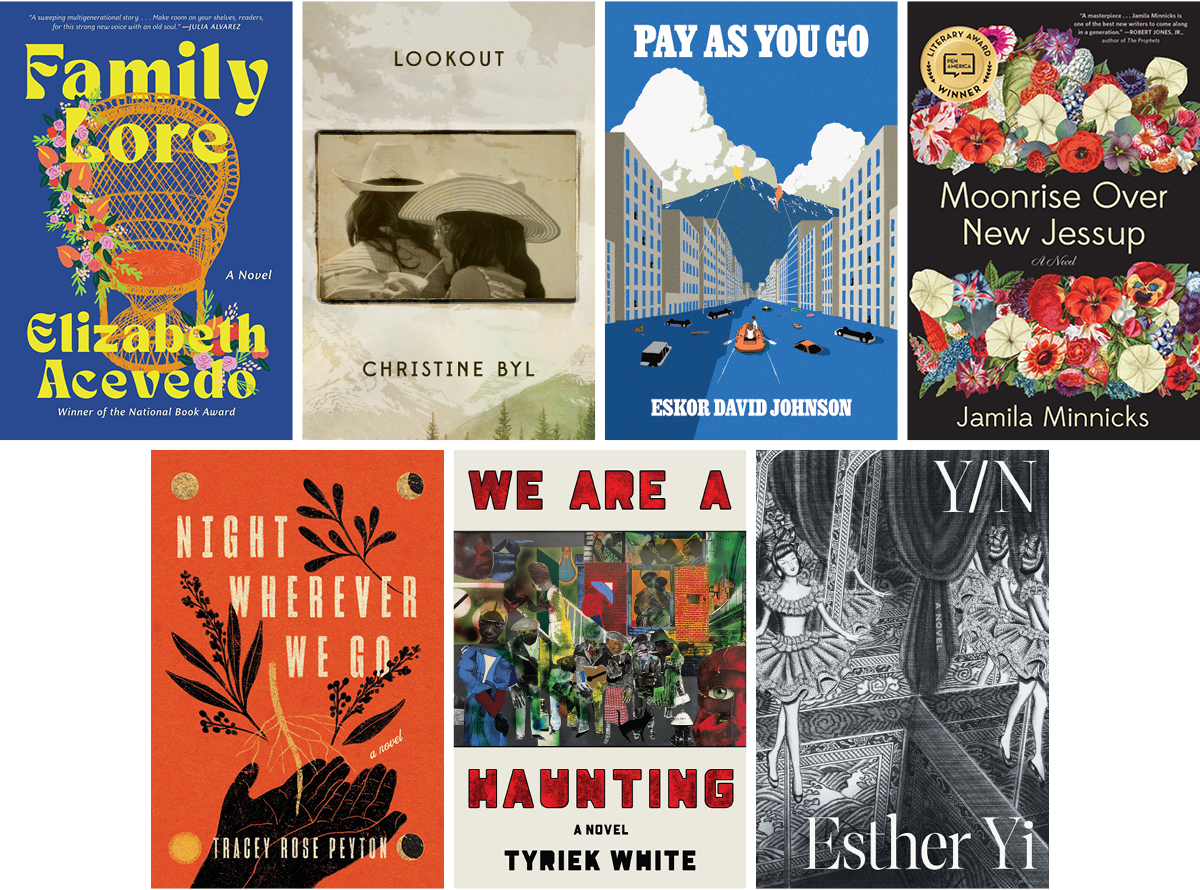
Hearty congratulations to the shortlisted authors of the Center for Fiction 2023 First Novel Prize. Chosen from a longlist of twenty-five debut novels published in the U.S. this calendar year, the seven titles (and authors!) listed below will be celebrated at the Center’s First Novel Fête on December 1. The winner will be announced on December 5 at the Center for Fiction’s Annual Awards Benefit.

Started in 2006 to honor exceptional debut fiction of the year and to help build literary careers, the Center’s First Novel Prize includes a $15,000 cash prize for the winner and $1,000 for each of the other shortlisted authors. The judges for this year’s award are Hannah Lillith Assadi, Ayana Mathis, Tochi Onyebuchi, and Deesha Philyaw. The Center for Fiction is a literary nonprofit “that brings diverse communities together to develop and share a passion for fiction.” Previous winners of this award include Raven Leilani (Luster), Noor Naga (If an Egyptian Cannot Speak English), and Kirstin Valdez Quade (The Five Wounds). Best of luck to this year’s First Novel Prize shortlisted writers!

Family Lore by Elizabeth Acevedo
Ecco, August 2023

Lookout by Christine Byl
A Strange Object, March 2023

Pay As You Go by Eskor David Johnson
McSweeney’s, October 2023

Moonrise Over New Jessup by Jamila Minnicks
Algonquin Books, January 2023

Night Wherever We Go by Tracey Rose Peyton
Ecco, January 2023

We Are a Haunting by Tyriek White
Astra House, April 2023

Y/N by Esther Yi
Astra House, March 2023

Pages

Subscribe to Poets & Writers RSS