Genre: Poetry

National Poetry Series Announces Winners

The National Poetry Series has announced the winners of its 2016 Open Competition. Each of the five winning poets will receive $10,000 and publication in 2017 by a participating trade, university, or small press.

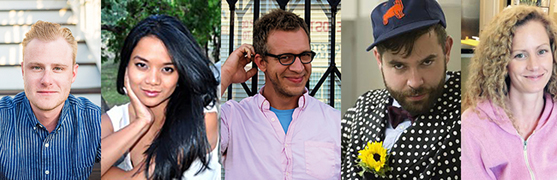
This year’s winners are William Brewer’s I Know Your Kind, selected by Ada Limón, to be published by Milkweed Editions; Sasha Pimentel’s For Want of Water, selected by Gregory Pardlo, to be published by Beacon Press; Jeffrey Schultz’s Civil Twilight, selected by David St. John, to be published by Ecco; Sam Sax’s Madness, selected by Terrance Hayes, to be published by Penguin Books; and Chelsea Dingman’s Thaw, selected by Allison Joseph, to be published by University of Georgia Press. 

The Princeton, New Jersey–based National Poetry Series was established in 1978 to “recognize and promote excellence in contemporary poetry” and to “provide a structural model for collective literary publishing ventures.” Past winners of the annual Open Competition include Joshua Bennett, Hannah Gamble, Terrance Hayes, Douglas Kearney, and Sarah Vap. For submission information, visit the National Poetry Series website

(Photos from left: William Brewer, Sasha Pimentel, Jeffrey Schultz, Sam Sax, Chelsea Dingman)

Neither Here Nor There

8.23.16

Have you ever stepped onto foreign soil—whether it be another town, state, or country—and immediately felt like you were in a different galaxy? Or conversely, have you traveled to a seemingly faraway place only to find that it felt surprisingly just like home? Write two short poems about places you have visited or passed through, and explore your expectations and feelings of familiarity or strangeness in each one. For inspiration, read about Baarle, a small European village situated partially in Belgium and partially in the Netherlands, with its international borders actually cutting through the middle of shops, living rooms, and backyards.

Poets & Writers' Sixth Annual Los Angeles Connecting Cultures Reading

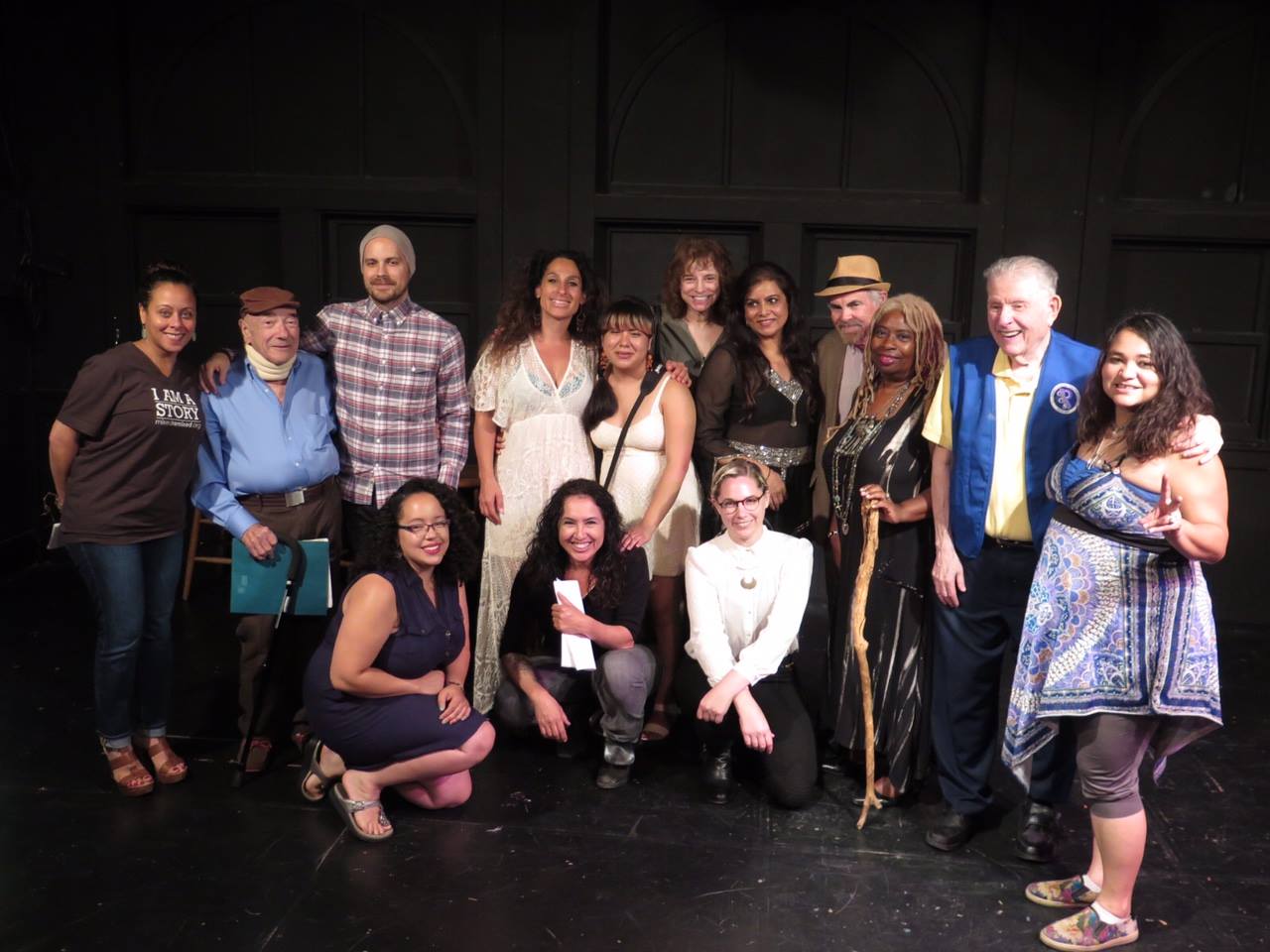
Poets & Writers' sixth annual Los Angeles Connecting Cultures Reading took place on June 30, 2016, before a packed house at Beyond Baroque Literary/Arts Center. Ten writers representing P&W–supported organizations Beyond Baroque, the Los Angeles Poet Society, Mixed Remixed Festival, QueerWise, and the Roots and Wings Project came together to celebrate the diversity of the SoCal literary community and Poets & Writers' Readings & Workshops program. Readings & Workshops (West) program associate Brandi Spaethe blogs about this lively annual event.
Connecting Cultures Readers

This past June, Connecting Cultures marked its sixth year celebrating the Los Angeles literary scene with a diverse group of voices and work. It feels like each year grows in power—with these organizations continuing to cultivate and support writing that’s unique, emerging, and all-around stunning. At the reception before the reading, I witnessed, and gladly participated in, rounds of hugging, handshaking, and wide smiles. We come to these spaces to let ourselves share what makes us human and this reading was no exception.

If only we could replace traffic citations
with love tickets, demanding
that one be more affectionate with their children.
If only there was a love meter you had to feed
every hour, or a
love-station where
the trains are never on time
but nobody cares because they're
all listening to
their love-pods or
updating their status on Lovebook.

Armine Iknadossian, representing literary organization and host for the event, Beyond Baroque, opened the night with the above lines from her poem “United States of Love” from her collection United States of Love and Other Poems. Beyond Baroque serves the Venice and larger West Los Angeles community through a long-standing free workshop series and a generous list of events and readings throughout the year.

The ever-elegant Dorothy Randall Gray brought a walking stick she had rescued and read a poem inspired by it—a kind of found art ekphrastic piece. She represented the Los Angeles Poet Society, an organization a few years old and dedicated to bringing people in the literary community together. The outreach and pure positive energy that project directors Jessica Wilson-Cardenas and Juan Cardenas give to the community is what keeps this organization strong.

Jackson Bliss, first runner-up for the Poets & Writers' 2013 California Writer's Exchange Award in fiction, represented the Mixed Remixed Festival by bowling us over with his moving words: “Siddhartha watched the silent miracle of correspondence unfolding before his eyes and wondered how many countries the postman carried in his hands today, how many miles his envelopes had traveled to inhabit aluminum boxes, where one day they would hibernate forever inside old shoeboxes, spongy minds, and expansive landfills. It seemed like such a waste of language.” The Mixed Remixed Festival is the nation's premiere cultural arts festival celebrating stories of the Mixed experience, multiracial and multicultural families and individuals, through films, books, and performance.
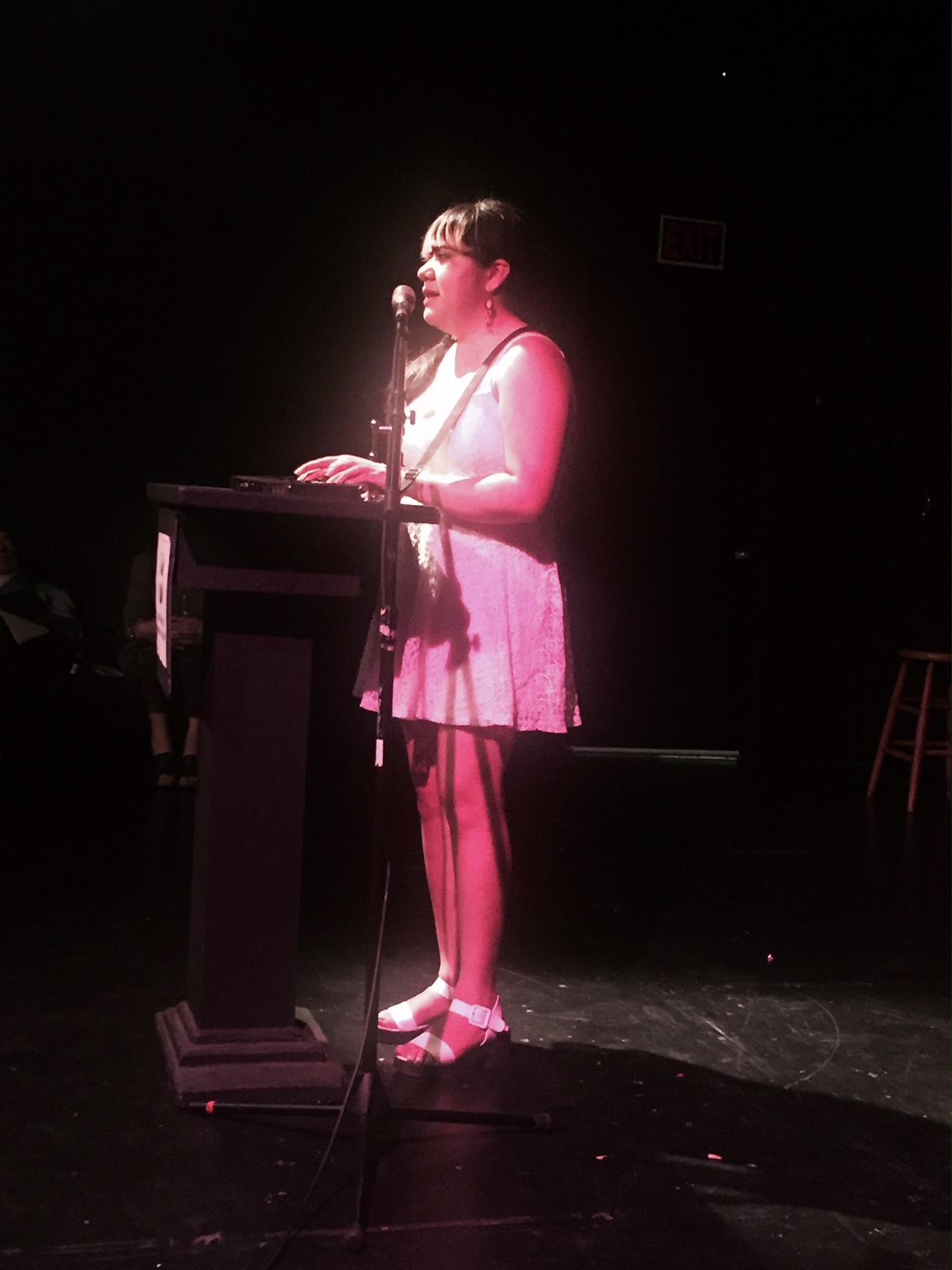
Laura Davila

There isn’t enough room in a small blog post to give you the power from all the voices in attendance. Like from QueerWise, a group of queer, senior spoken-word performers who brought Randy Gravelle and Jen OConnor to the stage, gifting us with stories of being queer in this world from perspectives reaching far back beyond our time of growing acceptance and celebration of queer lives and identities.

The young writer who closed the night, and who had been at this reading two years earlier representing 826LA, was the Roots and Wings Project’s very own Laura Davila, who delivered a poem responding to the part of the world that sees her blindness as a burden. “How brave you are,” she mimicked the voices she heard around her or “I wonder what it’s like to get up in the morning for you,” as if she was somehow missing something. “People reduce me to some pair of ‘broken eyes’ / as if sight is the only way to experience / the world.” Hardly a dry eye stood in applause with the closing of Davila's poem, which capped a reading where every voice, unique and explorative in its own right, gave us something honest and vulnerable and necessary.

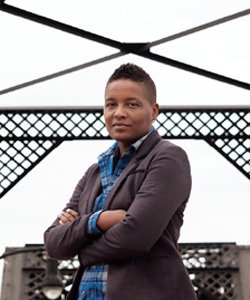
Photo (top): Los Angeles Connecting Cultures group. Front (L-R): Jamie Moore, Patricia Zamorano, Brandi M Spaethe. Back (L-R): Heidi Durrow, Joe Levy, Jackson Bliss, Jesse Bliss, Laura Davila, Jen OConnor, Kalpna Singh-Chitnis, Richard Modiano, Dorothy Randall Gray, Norman Molesko, Jessica Wilson Cardenas. Photo credit: Jamie FitzGerald. Photo (bottom): Laura Davila. Photo credit: Brandi M. Spaethe.

Major support for Readings & Workshops in California is provided by the James Irvine Foundation and the Hearst Foundations. Additional support comes from the Friends of Poets & Writers.

I Live Here

8.16.16

Instead of using GPS coordinates or traditional street numbers and names, a postal mail service in Mongolia will begin using a new address location system, created by a British tech start-up, in which the world map is divided into trillions of nine-square-meter patches and assigned a unique three-word code. Find the code for your own address at the What3Words website or create your own code. Then write a poem inspired by the combination of these three random words and how they connect to your concept of home.

David Campos on the California Rural Libraries Tour

David Campos is a CantoMundo fellow, the author of Furious Dusk (University of Notre Dame Press, 2015), and winner of the 2014 Andrés Montoya Poetry Prize. His poems have appeared in the American Poetry Review, Luna Luna, Prairie Schooner, Queen Mob’s Teahouse, and many others. Campos received an MFA in Creative Writing and Writing for the Performing Arts from the University of California in Riverside in 2013 and his BA from California State University in Fresno in 2010. Currently, he lives in Fresno and teaches English at Fresno City College and College of the Sequoias. As a part of Poets & Writers' Rural Libraries Tour project with California Center for the Book, Campos taught workshops at the Kings County Library, Tracy Branch Library, and Voices College-Bound Language Academies in California's Central Valley.

David Campos I drove down Highway 99 and took the 43, a two-lane highway, watching developments turn into vineyards, orchards, and the expansive agricultural land California’s Central Valley is known for. A tourist might be entranced with the plant life, but I couldn’t help but think of the houses, the sheds, the men, women, and children covered in the ninety-degree heat. The town of fifty-three thousand was quiet when I drove in on a Saturday morning where the Kings County Library in Hanford was still closed. They opened early for the workshop I was to give; I entered the space and prepped, greeting each of the twelve attendees trickling in.

And I knew not a lot of writers trickle into a small town’s library to give workshops and readings. In a town that lacks access to writers, poets, and artists in their area that can mentor, shape, or inspire the future in their medium, my presence was appreciated, and I accepted the responsibility of giving everything I could in the short amount of time we had together.

The Hanford Branch library group that had signed up for the workshop brought it. We worked on creating one single poem based on a tangible object that they held dear. A high schooler, accompanied by her mom and another family member, blew me away with her final draft. So much so that I told her if I was an editor, I’d publish it. I suggested she submit to places. Each one of the participants worked through their drafts diligently and with purpose. I felt honored to have worked with them. 

Then up the 99 I went to visit the Tracy Branch Library to give another workshop. While we drafted a poem, we mostly talked about where to write from, the sources we think could be used and those that they hadn’t thought about.

Lastly, the wonderful group of middle schoolers at Voices Academies engaged in bilingual poetry. Their workshop was focused on names—names given, names earned, names of things they’re associated with. They wrote lists, and then on a large piece of butcher paper, they combined their work in both Spanish and English.

I walked away from each of these sacred learning places thinking about the responsibility we have as artists and writers—at least those with the means to travel—to visit those smaller “markets.” It’s too easy to become complacent in our larger cities, and larger markets, to only read at universities or bookstores. I know I’m guilty of this, but I know the poetic spirit doesn't just exist near the meccas of literature. It lives in Hanford. It lives in Tracy. It lives in the young and bright minds at Voices Academies. The literary landscape of the future needs us. Go there. Find the voices eager and ready to change the world.

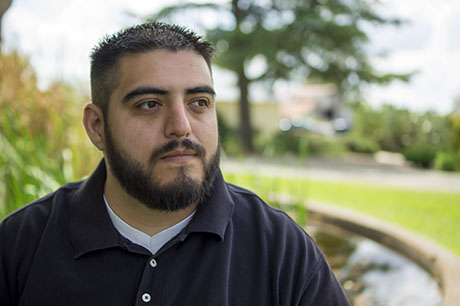
Photo: David Campos.

Major support for Readings & Workshops in California is provided by the James Irvine Foundation and the Hearst Foundations. Additional support comes from the Friends of Poets & Writers.


Dunya Mikhail

Caption: 

“When you write a poem in your language, you write it one time. And when you think in the other language, and try to write a poem in the other language, I feel as if it’s a new poem. They say ‘lost in translation’ but also there are things found in translation.” Dunya Mikhail, author of The Iraqi Nights (New Directions, 2014), translated from the Arabic by Kareem James Abu-Zeid, talks about the duality of living with multiple homes and languages, and how her journey from Iran to the United States affected her evolution as a poet. Mikhail occasionally translates her own work.

Genre: 

White Blight

Caption: 

“It’s a poem about the experiences of revolutions and war and migration and whiteness and racism, and how these experiences condition the lives of different family members.” Iranian-born Swedish poet Athena Farrokhzad talks about her book, White Blight (Argos Books, 2015), which consists of one long lyric poem with six voices, and reads excerpts in Swedish and English. Translated from the Swedish by Jennifer Hayashida, the book is longlisted for the 2016 National Translation Award.

Genre: 

Rilke Shake

Caption: 

“when i have a sleepless night / and nothing lights up / i order a rilke shake / and eat a toasted blake...” Brazilian author and editor Angélica Freitas reads the title poem from her debut collection, Rilke Shake (Phoneme Media, 2015), translated from the Portuguese by Hilary Kaplan. The book won the 2016 Best Translated Book Award and is longlisted for the 2016 National Translation Award.

Genre: 

Pages

Subscribe to Poetry