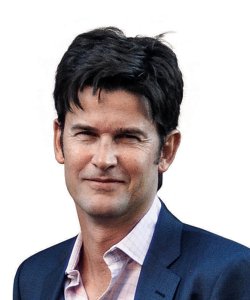
Eric Magrane Surveys his Audience on Poetry, Science, and the Nonhuman
Poet and cultural geographer Eric Magrane writes about his recent P&W-supported reading in Tucson for the POG: Poetry in Action reading series. POG also announced the Tumamoc Hill Writing project at this event, which will gather Tucson writers to explore Tumamoc Hill, a long term ecological research site and a natural and cultural treasure in the heart of Tucson. You can see Magrane’s interview with Paul Mirocha, artist in residence at Tumamoc and his co-presenter at this event, on Magrane’s Proximities blog on art, science, and environment, which he writes for the University of Arizona’s Institute of the Environment. Find Magrane’s Various Instructions for the Practice of Poetic Field Research here.
 What happens when we engage the spaces between poetry and science, between art and geography, between place and philosophy? What happens when all those categories get mixed up? I’d call the new arrangements that emerge a hybrid poetic geography, in which different fields of thought and knowledge collapse into each other.
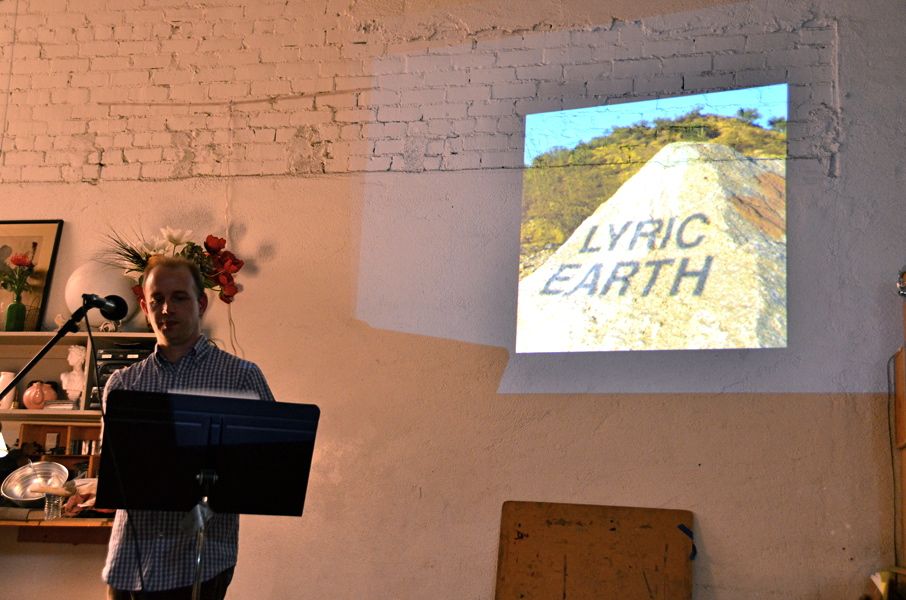
A recent reading that I gave for the experimental poetics series POG: Poetry in Action revolved around these questions. As part of my reading, I surveyed the audience. While I read sections of my poem Symbiosis-Nothing Separate-Lyric Earth, I asked the audience to respond to a survey that I designed for the event. I’d like to share a few of the questions and responses: What is the difference between poetry and science?
live wine // I have no idea. // poetry doesn’t prove? // one looks from the inside and the other looks from the outside // nothing // the beat // the observer // use of words to describe the process // prediction // science <--- language ---> poetry // weather // Lichen = algae + fungus; Lichen = poetry + science // everything but “E” // tools
I culled these responses above completely on my own whim. In other words, the results are not generalizable and are completely subjective. (Subjectivity is another question, and exploring where subject-object duality breaks down is crucial to explorations of poetry and science. Poetry, I believe, can be a method to rigorously collapse subject and object in a way that’s different from the rigor of science.)
The following quantitatively details the responses to a single question from all thirty-seven completed surveys. (Responses that occurred twice are coded with a 2 x.)
What is the first nonhuman species that comes to mind?
Bird (redbird) // 2 x Snake // 2 x Amoeba // Roses // 2 x Aardvark // Rocks // Bear // 2 x Birds // Stool // Cat // Sea anemone // 2 x Cats // Cypress tree // Robots // Worm // Lemur // Porcupine // Stone people // Crow // Pig // Man and Woman // Palo verde // Rabbit // Nematodes // Liquidamber // Feline // Lizard // Half the people I see on the street // Scissor-tailed flycatcher // Lizards – but I had a gecko // Mesquite // Birds, Dogs a close second
I was very surprised that two people responded both for amoebas and aardvarks! I was struck also by the number of responses that stepped outside of a traditional definition of species to include other matter (Rocks, Stool, Robots, Stone people, Liquidamber). I attribute this to the creative audience and to the embedded vibrant materiality of poetry.
Photo: Eric Magrane reads with Lyric Earth. Credit: Samuel Ace.
Support for Readings/Workshops events in Tucson is provided by an endowment established with generous contributions from the Poets & Writers Board of Directors and others. Additional support comes from the Friends of Poets & Writers.