
Deadline Approaches for the Moth International Short Story Prize

Submissions are currently open for the third annual International Short Story Prize, sponsored by the Cavan, Ireland–based literary magazine the Moth. The winner will receive €3,000 (approximately $4,082), and publication in the autumn 2014 issue of the Moth.

A second-place prize of €1,000 (approximately $1,361) and a third-place prize that includes a weeklong writing retreat at Circle of Misse in Missé, France, and €250 (approximately $340) for travel expenses, will also be given. Both winners will receive publication of their stories in the autumn 2014 issue of the Moth, and will be invited, along with the first-place winner, to read at the Winding Stair Bookshop in Dublin in September.

Submit a story of up to 6,000 words with a €9 (approximately $12) entry fee by June 30. Submissions can be sent through the online submission system, or by mail, with the required entry form, to the Moth Short Story Prize, the Moth, 81 Church Street, Cavan, Co. Cavan, Ireland. Irish fiction writer Mike McCormack will judge. McCormack is the author of two short story collections, most recently Forensic Songs (The Lilliput Press, 2012), and two novels. A recent interview with McCormack can be read on the Moth website.

The International Short Story Prize was established in 2012. The 2013 winner, Meadhbh Ní Eadhra of Galway, Ireland, won for her story “Ghosties,” which was chosen by Martina Evans. Visit the Moth website to read the winning entry.

 Photo: The Winding Stair bookstore in Dublin.
Pet Matchmaker

5.28.14

There's an old adage that people tend to resemble their pets. This could be due to the law of attraction, which many people believe is at play when we look for a partner, and which suggests that we tend to feel more comfortable with those with a similar appearance and who share similar interests. What if there was a service available for people looking for their perfect pet match? Write a scene in which a character visits a "pet matchmaker," a professional who consults with clients on what they value most in a pet, and then conducts a search to help them find "the One."

Winners on Winning: Paisley Rekdal

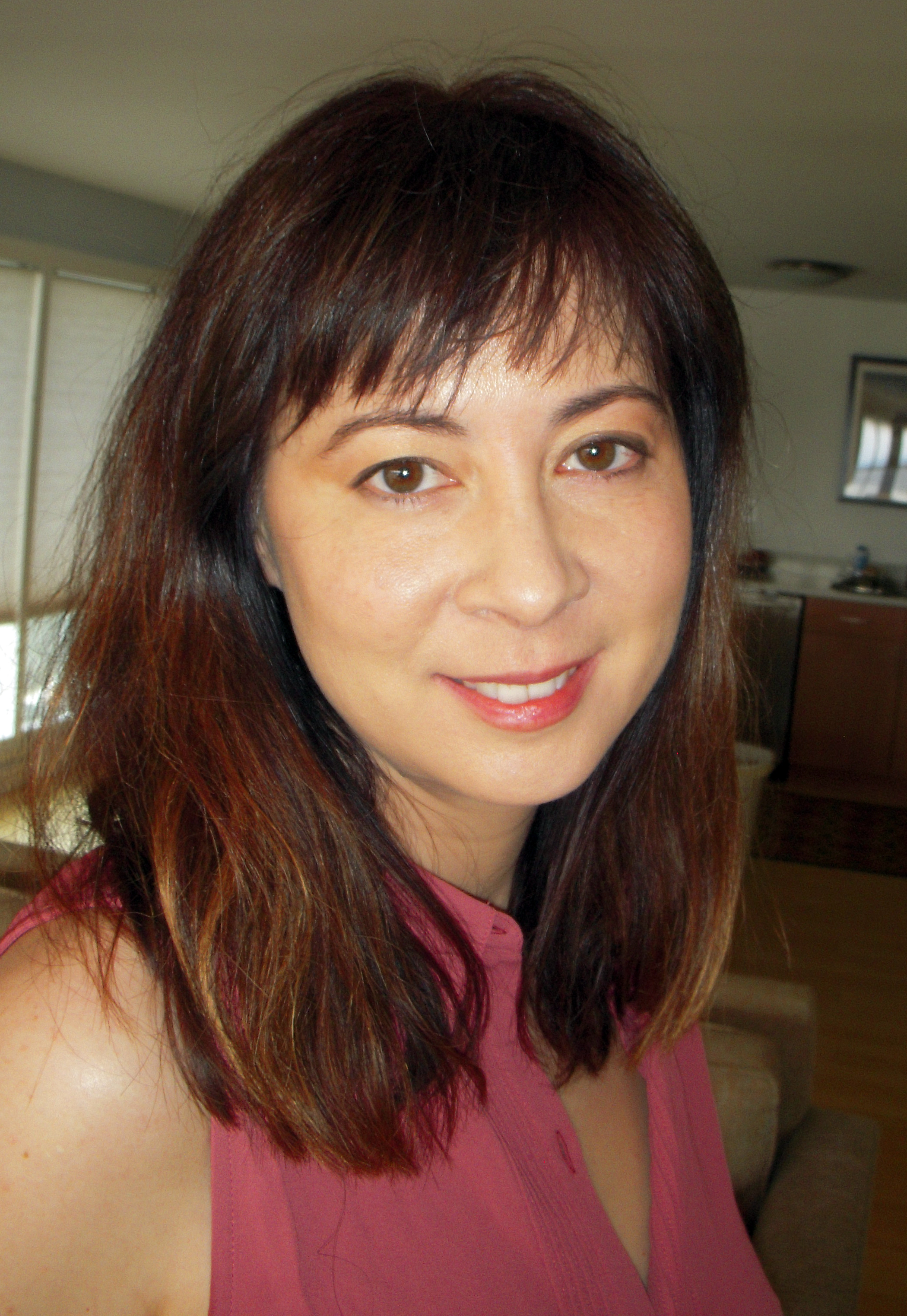
For the seventh installment of our Winners on Winning series, we spoke with Paisley Rekdal, the winner of the 2013 University of North Texas Rilke Prize for her poetry collection, Animal Eye, published in 2012 by the University of Pittsburgh Press. The $10,000 prize is given annually to a midcareer poet. Animal Eye was also a finalist for the Kingsley Tufts Poetry Prize and the Balcones Poetry Prize. Rekdal's previous books include an essay collection, The Night My Mother Met Bruce Lee; a hybrid-genre memoir, Intimate; and three previous books of poetry, A Crash of Rhinos, Six Girls Without Pants, and The Invention of the Kaleidoscope. She teaches at the University of Utah. 

What kind of impact has winning the Rilke Prize had on your career?
The Rilke Prize relieved me of certain fears about the current direction of my writing, in particular the kinds of aesthetic interests and experiments with which I was, and am now, engaged. That kind of validation is probably the biggest reward any prize can give, outside of a sudden influx of cash. In terms of connections, the Rilke prize put me in direct contact with Bruce Bond, Corey Marks, and Lisa Vining at UNT, which led to some wonderful conversations over my week there about art and reading, the state of the lyric, and the best place to buy cowboy boots. As for what the prize itself allowed me to do financially, it helped pay for a new roof, which (considering my bathroom ceiling that winter was literally uddered with snowmelt-filled paint balloons) was a true blessing.

Has winning this award, or previous awards, changed the way you approach your work?
Like any good American or egomaniac, I love awards, but I can't write for them. I don’t think anyone does. In terms of the seriousness with which I take my work, however, prizes have certainly given me the confidence to be more ambitious.

Have you ever entered a contest that you didn't win?
I can’t begin to list all the contests that I’ve entered and haven’t won. The upside of being a 95% loser, 5% winner (if I’m lucky that year) is that I’ve learned how to brush off the rejection and continue to write, even within hours of a serious disappointment. Disappointment is, in fact, a great thing for a writer (if by "great" we also mean "getting kicked in the groin"), since it forces you either to learn how to enjoy the writing process itself or give up. Over the years, I’ve also been a judge for small and large contests across the nation, and these experiences have taught me that, once you’ve winnowed the best manuscripts down to a small handful, picking a single winner is frighteningly arbitrary. Being a finalist or semifinalist really is a good sign, as I tell my students: it means that your skills are recognizable, even if they aren’t the ones the judge-of-the-moment loves most.

What advice would you offer to writers thinking of submitting to writing contests?
Gird your loins. And take nothing—whether it’s failure or success--personally.

For more Winners on Winning, read the current issue of Poets & Writers Magazine, and check back here every Wednesday for a new installment.

Underwater

5.27.14

Have you ever thought about what it would be like to live underwater? How would the days be different? Imagine a scenario in which humans have adapted to underwater life, and write a poem about what such a life would be like. Consider the kinds of evolutionary changes that would need to occur (gills, webbed hands and feet, etc.), the new predators to face, and the new scenery to enjoy.

Deadline Approaches for Thurber House Residency Award

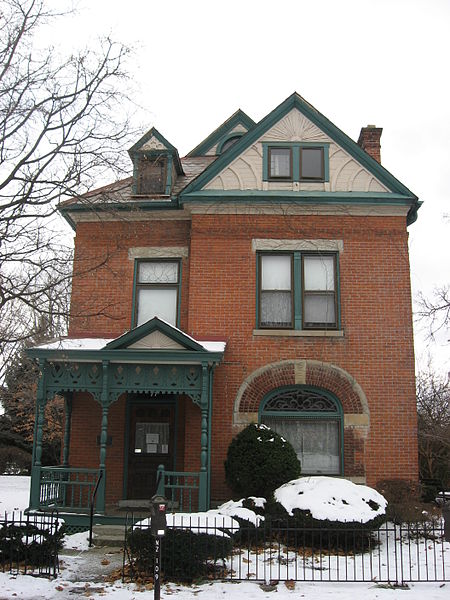
Submissions are currently open for the Thurber House’s John E. Nance Writer-in-Residence award. The four-week residency is offered from September to October 2014 to a fiction writer or nonfiction writer who has had a book published within the past three years. The resident will be provided with a $4,000 stipend and a two-bedroom apartment in the former home of fiction writer and cartoonist James Thurber in Columbus, Ohio. Travel and food are not included. The resident is also asked to participate in three community outreach activities offered by the Thurber House, such as giving readings or teaching writing classes.

To apply, submit two copies of a book published in the past three years, along with three short stories, essays, or chapters of a novel or book of nonfiction with an optional table of contents totaling no more than 50 pages by June 2. There is no entry fee. Self-published books are not eligible. Submissions should be mailed with the required entry form to Thurber House, 77 Jefferson Avenue, Columbus, OH 43215. The resident will be chosen by July 7.

Born and raised in Columbus, Ohio, James Thurber (1894-1961) was a prolific humorist, short story writer, and cartoonist. Though he spent most of his career in New York City, Thurber attended college in Ohio and worked at the Columbus Dispatch as a reporter from 1920 to 1924. He is buried in Columbus’s Greenlawn Cemetery.

Established in 2012 by Sally Crane, the annual John E. Nance Writer-in-Residence award is named after John Nance, a photojournalist who was the Thurber House writer-in-residence in 1995 and 1998. Previous residents include fiction writer Katrina Kittle and creative nonfiction writer Liza Monroy.

Pages

Subscribe to Poets & Writers RSS