Booker Prize Shortlist Announced

The Man Booker Foundation has announced the shortlist for the 2015 Man Booker Prize for Fiction, which this year includes two American writers—Anne Tyler and Hanya Yanagihara—as well as debut novelist Chigozie Obioma. The annual award is given for a book of fiction written in English and published in the United Kingdom during the previous year. The winner receives £50,000 (approximately $77,000), and will be announced in London on October 13.

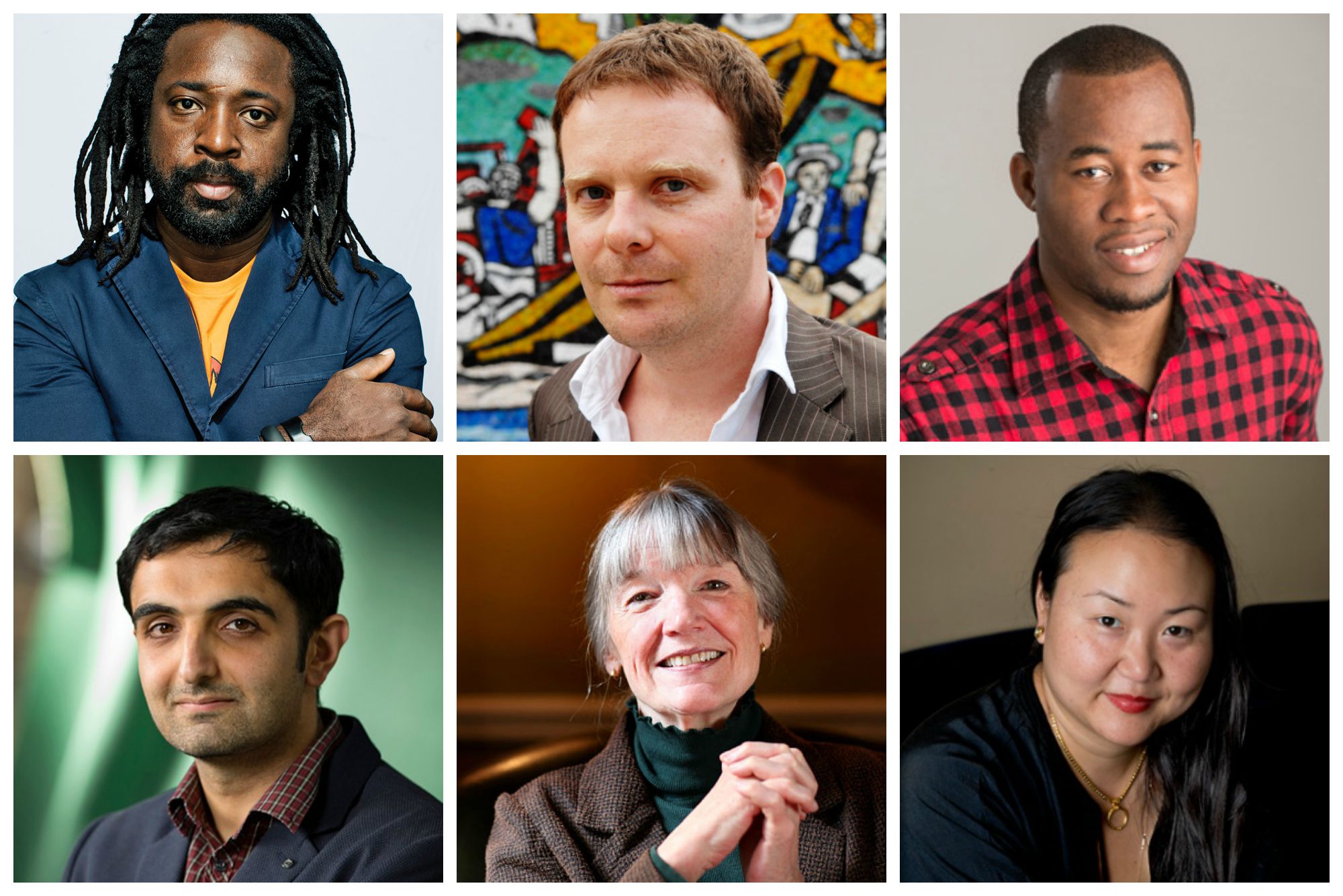
The six shortlisted authors are Marlon James of Jamaica for A Brief History of Seven Killings (Riverhead Books); Tom McCarthy of the United Kingdom for Satin Island (Knopf); Chigozie Obioma of Nigeria for The Fisherman (Little, Brown); Sunjeev Sahota of the United Kingdom for The Year of the Runaways (Knopf); Anne Tyler of the United States for A Spool of Blue Thread (Knopf); and Hanya Yanagihara of the United States for A Little Life (Doubleday). The shortlisted authors will each receive £2,500 (approximately $3,800).

The five finalists were selected from a longlist of thirteen authors; Ellah Wakatama Allfrey, John Burnside, Sam Leith, Frances Osborne, and Michael Wood judged. “The writers on the shortlist present an extraordinary range of approaches to fiction,” said Wood, who is the chair of judges. “They come from very different cultures and are themselves at very different stages of their careers.”

First awarded in 1969, the Man Booker Prize is one of the literary world’s most prestigious awards for fiction. The prize, which was previously given to writers from the United Kingdom, Ireland, or Zimbabwe, was expanded last year to include writers of any nationality writing in English. Australian writer Richard Flanagan won the 2014 prize for The Narrow Road to the Deep North.

Clockwise from top left: Marlon James (Cameron Wittig), Tom McCarthy (Ulf Andersen), Chigozie Obioma, Hanya Yanagihara (Sophia Evans), Anne Tyler (Clara Molden), Sunjeev Sahota (Murdo MacLeod)

Fake Fruit Factory

Patrick Wensink's new novel, Fake Fruit Factory, which was released today by Curbside Splendor, follows a cast of characters in an eccentric small town in Ohio.

New Supplies

9.15.15

As kids, the prospect of getting new school supplies always seemed to brighten back-to-school woes. This week, imagine what you would pack in a backpack to prepare yourself for the school of life. Make a list of five "supplies" that you can picture yourself using every day—they can be practical tools, made-up magic potions, or even intangible thoughts or mantras. Write a poem in which you describe the supplies with concrete details, exploring how having each one easily accessible at all times would vastly improve your prospects.

Dynamism and Redefinitions: The Asian American Literary Review's A Lettre Fellowship

R. A. Villanueva is the author of Reliquaria (University of Nebraska Press, 2014), winner of the Prairie Schooner Book Prize. A founding editor of Tongue: A Journal of Writing & Art, he currently lives in London, England.

Here in London the rain has paused and the sun, for once, feels keen to crash through the cloud banks which so often crown the city. I think now of two markers, one of geography and the other of time: Washington, D.C. is nearly 3,700 miles and an ocean west of me; and, since September has begun, “Asian American Literature Today” at the Library of Congress took place just over four months ago.
Such resonances are due in large part to the occasion for our gathering and who traveled (from across the U.S. and abroad) to be there. Cathy Linh Che, Eugenia Leigh, Ocean Vuong, and I were awarded The Asian American Literary Review’s inaugural A Lettre Fellowship and devoted the better part of last year each writing with/to established poets, allowing the dynamics of our curiosities, uncertainties, and fascinations drive our correspondences “by letters." Taken as a whole, the experience proved to be as emotional as it was formally innovative. These mentorships and convergences, after all, were happening in the shadow of our debut books and as each of us dealt with tectonic shifts in our lives apart from our writing.

This, by the way, was our methodology: after the AALR paired Cathy with Rick Barot, Eugenia with Julie Enzer, Ocean with Arthur Sze, and me with Ray Hsu, we were free to talk through the spring and fall of 2014. To build "community across literary generations," honesty and idiosyncrasy were encouraged. The exchange between Ocean and Arthur Sze, for instance, feels truly epistolary, with suites of poems and personal stories being traded. My back-and-forth with Ray Hsu seems more associative and roving in comparison, taking the shape of a series of handwritten reflections, Vimeo links and iPhone photos, Post-it Note collages and notebook scans.

Ultimately, the “Asian American Literature Today” event was meant to be the culmination of that project, an enactment of the AALR’s aspiration to represent “a space for all those who consider the designation 'Asian American' a fruitful starting point for artistic vision and community.”

Editor and Smithsonian APA Center Initiative coordinator Lawrence-Minh Bùi Davis brought that vision to life in remarkable ways. He invited partnerships with the Library of Congress Poetry and Literature Center, the University of Maryland Asian American Studies Program, and opened the room to the greater public. This event was also funded by the Readings & Workshops Program at Poets & Writers.
The result was a powerful crossing of voices and a widening of perspectives. Before our reading, we circled up chairs to host an informal conversation about the editorial process, distinctions between writing and publishing, academia and art. We discussed how Cathy, Eugenia, Ocean, and I arrived at this moment together as friends and as peers; we discussed how organizations such as Kundiman, Cave Canem, CantoMundo, VONA, and Poets & Writers support the development of work aware of—and activated by—a very real world beyond our poems.

Ai Weiwei asserts that “[t]he intention to separate art from politics is itself a very political intention.” When it finally came time to move to the lectern and later, to respond to questions about connections with other communities, other struggles, we hoped to trouble such separations. In sharing selections by African American writers along with our own poems and in affirming the work of #BlackPoetsSpeakOut, “Asian American Literature Today” embodied a heart-fraught awareness of these markers—one of geography and again, one of time: Baltimore is only forty miles north of Washington, D.C., and when we read on May 4 in the wake of protests for Freddie Gray, Jr. while a state of emergency remained in effect and the National Guard was still in the process of drawing down.

Which is to say, perhaps what makes contemporary Asian American literature so vital is its refusal to ignore history, to stay quiet, or to pledge allegiance to outworn expectations.

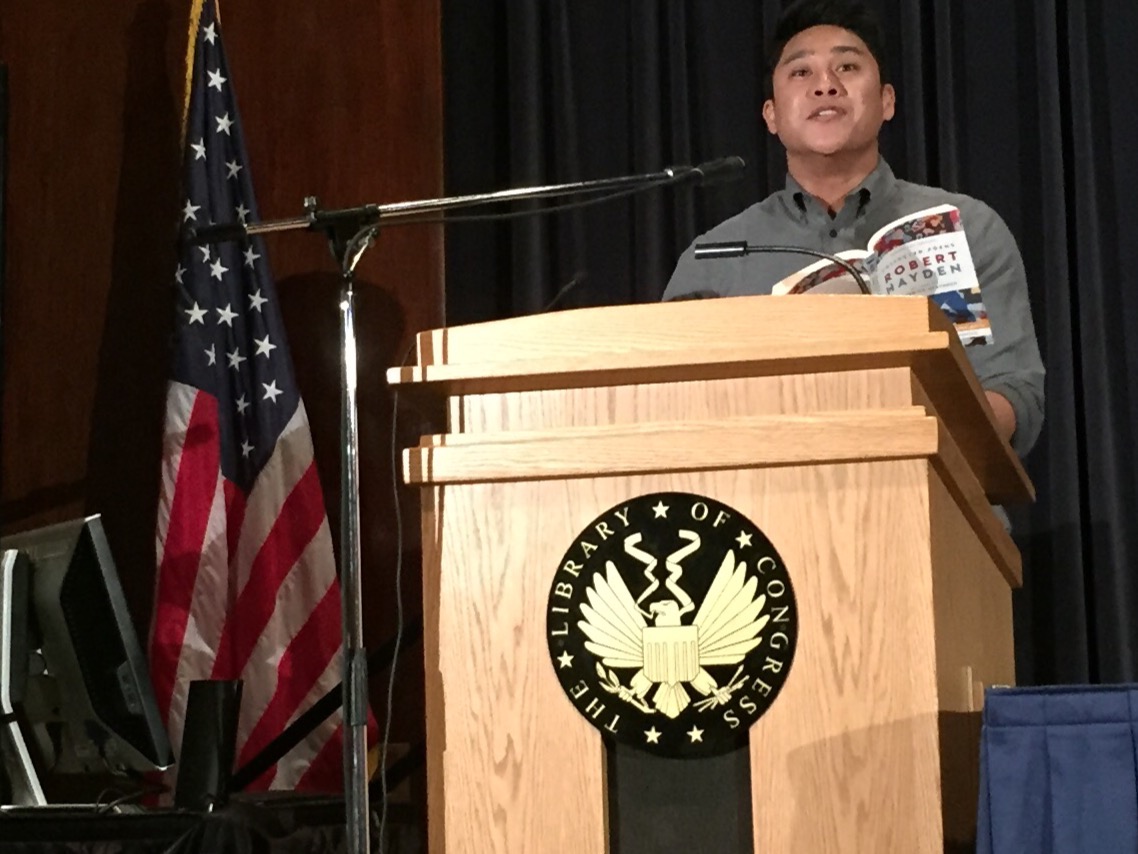
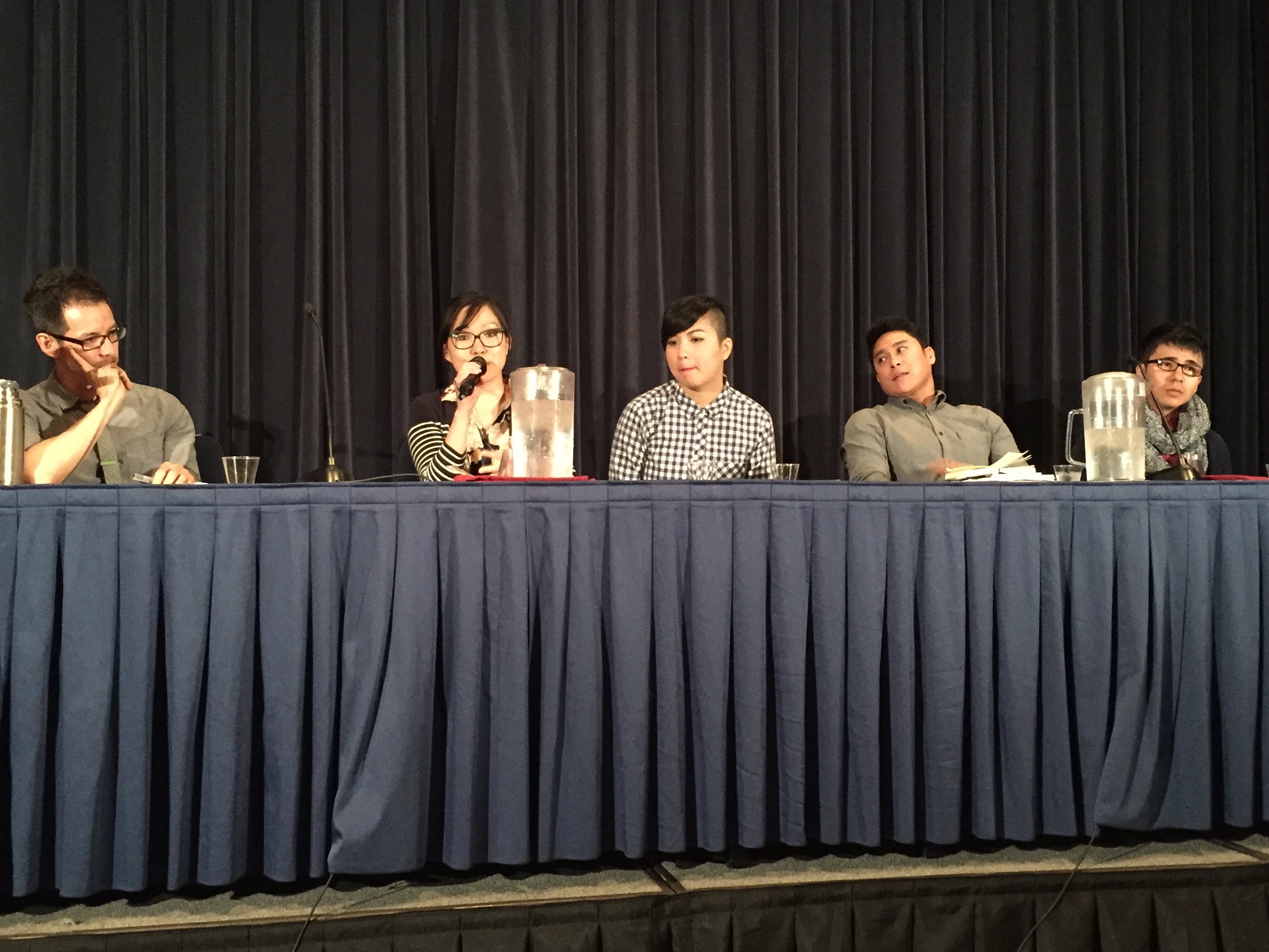
Photo: (top) R. A. Villaneuva. (bottom) Lawrence- Minh Bui Davis, Eugenia Leigh, Cathy Che, R. A. Villaneuva, Ocean Vuong. 

Photo Credit: A'Lelia Bundles.

Support for Readings & Workshops in Washington, D.C. is provided by an endowment established with generous contributions from the Poets & Writers Board of Directors and others.  Additional support comes from the Friends of Poets & Writers.

Salman Rushdie

"What happens if you take the fantastic and the historical and bind them into the same book?" The award-winning author speaks with PBS NewsHour's Jeffrey Brown about the mix of magic and reality in his latest novel, Two Years Eight Months and Twenty-Eight Nights (Random House, 2015).

Winners of Academy of American Poets Prizes Announced

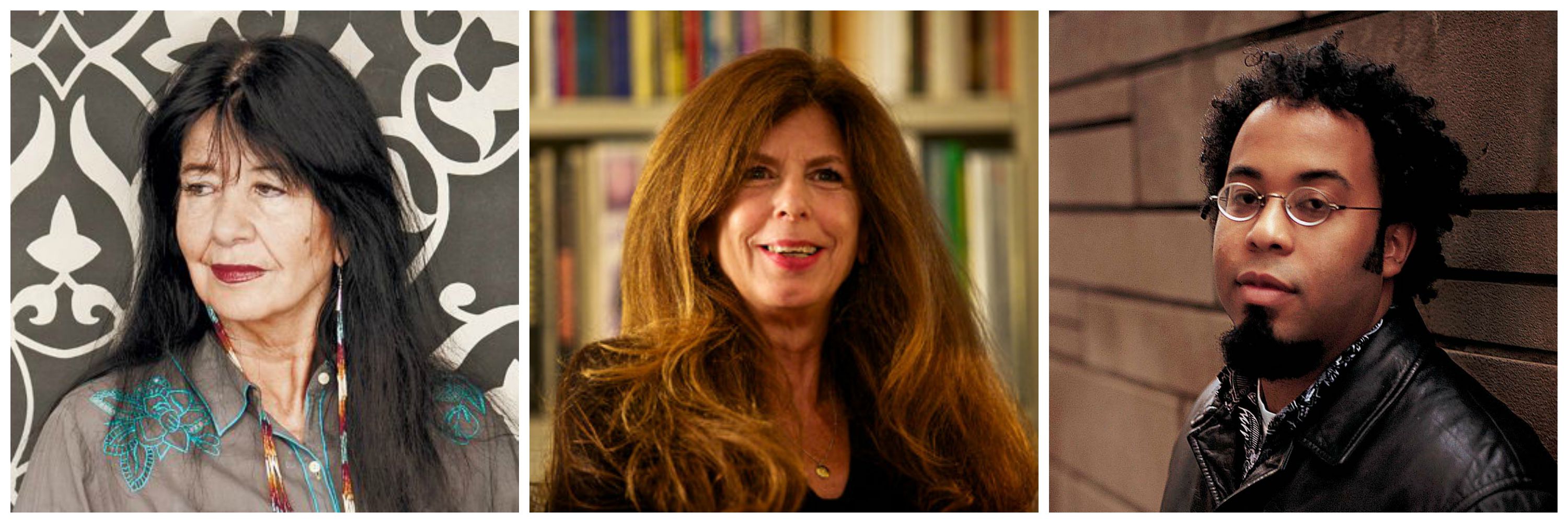
The Academy of American Poets announced yesterday the recipients of the 2015 Academy of American Poets Prizes, which honor poets at various stages in their careers. The organization awarded more than $200,000 in prizes this year to poets including Joy Harjo, Marie Howe, Kevin Young, Todd Portnowitz, Kathryn Nuernberger, and Roger Greenwald.

Joy Harjo received this year’s Wallace Stevens Award, given annually in recognition of “outstanding and proven mastery in the art of poetry.” The award, established in 1994, carries a $100,000 stipend. Past winners include John Ashbery, James Tate, and Adrienne Rich. Harjo is the author of several poetry collections, most recently Conflict Resolution for Holy Beings (Norton, 2015). Harjo was chosen by the Academy’s Board of Chancellors; Academy chancellor Alicia Ostriker said of Harjo, “Her visionary justice-seeking art transforms personal and collective bitterness to beauty, fragmentation to wholeness, and trauma to healing.”

Marie Howe received the 2015 Academy of American Poets Fellowship, an annual prize of $25,000 given for “distinguished poetic achievement.” The winner is nominated and chosen by the Board of Chancellors. Howe is the author of three poetry collections, most recently The Kingdom of Ordinary Time (Norton, 2009). Academy chancellor Arthur Sze said, “[Howe’s] poems are acclaimed for writing through loss with verve, but they also find the miraculous in the ordinary and transform quotidian incidents into enduring revelation.”

Kevin Young won the Lenore Marshall Poetry Prize for his collection Book of Hours (Knopf, 2014). The $25,000 prize is given annually for a poetry collection published in the United States during the previous year. Marie Howe, A. Van Jordan, and Donald Revell judged. Jordan said, “Book of Hours exemplifies what poetry can do in the world when language works at its full power.”

Todd Portnowitz received the Raiziss/de Palchi Translation Fellowship for his translation from the Italian of of poet Pierluigi Cappello’s Go Tell It to the Emperor: Selected Poems. The biennial fellowship recognizes “outstanding translations of modern Italian poetry into English,” and offers an award of $25,000 and a five-week residency at the American Academy in Rome. Adria Bernardi, Luigi Fontanella, and Giuseppe Leporace judged. “Portnowitz, in his tireless and remarkably refined effort," said Leporace, "has brilliantly grasped and then seamlessly transposed into English all the imagery and linguistic complexities contained in the work at hand.”

Kathryn Nuernberger is the recipient of the James Laughlin Award for her poetry collection The End of Pink (BOA Editions, 2016). The annual prize recognizes a “superior second book of poetry by an American poet,” and carries with it a cash award of $5,000, as well as a weeklong residency at the Betsy Hotel in Miami. Roger Greenwald won the Harold Morton Landon Translation Award for his book Guarding the Air: Selected Poems by Gunner Harding (Black Widow Press, 2014). Bill Johnston judged. The $1,000 award is given annually for a poetry collection translated from any language into English that was published during the previous year.

Established in 1934, the Academy of American Poets is the largest nonprofit organization supporting the work of American poets.

Photos: Joy Harjo, Marie Howe (credit: Benjamin Norman), Kevin Young

Poems of New York City

Elementary school students at PS 193 in Brooklyn collaborated with Puppetry in Practice, a nonprofit organization promoting literacy in schools, to create these stop-motion animation films featuring four poems about New York City.

Pages

Subscribe to Poets & Writers RSS