



International Translation Day, Folio Prize Suspended, and More
Book banned in New Zealand to be published in the U.S; an interview with Valeria Luiselli; National Book Foundation’s 5 Under 35 honorees announced; and other news.
Jump to navigation Skip to content
Book banned in New Zealand to be published in the U.S; an interview with Valeria Luiselli; National Book Foundation’s 5 Under 35 honorees announced; and other news.
The National Book Foundation announced its annual 5 Under 35 honorees this morning. Now in its tenth year, the program honors five young fiction writers, who were selected this year by previous 5 Under 35 honorees.
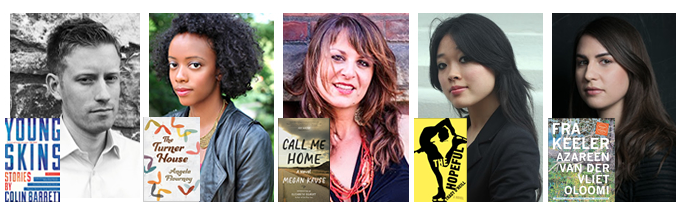
This year’s 5 Under 35 are:
Colin Barrett, author of Young Skins (Black Cat), selected by Paul Yoon
Angela Flournoy, author of The Turner House (Houghton Mifflin Harcourt), selected by ZZ Packer
Megan Kruse, author of Call Me Home (Hawthorne Books), selected by Phil Klay
Tracy O’Neill, author of The Hopeful (Ig Publishing), selected by Fiona Maazel
Azareen Van der Vliet Oloomi, author of Fra Keeler (Dorothy), selected by Dinaw Mengestu
Since 2006, the National Book Foundation’s 5 Under 35 program has honored writers in the early stages of their careers, including Téa Obreht, Karen Russell, and Justin Torres. The honorees each receive a cash prize of $1,000, and will be celebrated at a ceremony in New York City on November 16, hosted by LaVar Burton.
“It’s all failure in the making of art.” Poet Ellen Bryant Voigt, recipient of a 2015 MacArthur Fellowship, talks about a poem’s inevitable failure, the exhilaration of writing, and the challenge of artistic reinvention.

John Drury’s Creating Poetry is a straightforward, comprehensive guide to writing verse. In sections such as “Preparing,” “Sight,” “Movement,” and “Sources of Inspiration,” Drury walks readers through his taxonomy of poetry and process from inspiration to completion, with plenty of examples, prompts, and challenges along the way.
Autumn leaves are a pleasurable part of the season, until it’s time to rake them up. Write a story about a character who rakes her neighbors’ lawns for extra cash. Have her deliver a short narrative about each home she visits. Delve into how these narratives relate to one another and whether they are intertwined. Do they reveal a greater story about the neighborhood that has been hidden until now? Does your narrator uncover secrets about her neighbors or her home?
MacArthur Genius fellows announced; Daniel Handler and wife give $1 million to Planned Parenthood; confessional writing’s legacy; and other news.
The MacArthur Foundation announced today that poet Ellen Bryant Voigt, poet and novelist Ben Lerner, and journalist and nonfiction writer Ta-Nehisi Coates are among the recipients of 2015 MacArthur Fellowships. They will each receive $625,000 over the course of five years. The no-strings-attached fellowships, also known as “genius grants,” are awarded annually to “talented individuals who have shown extraordinary originality and dedication in their creative pursuits and a marked capacity for self-direction.”
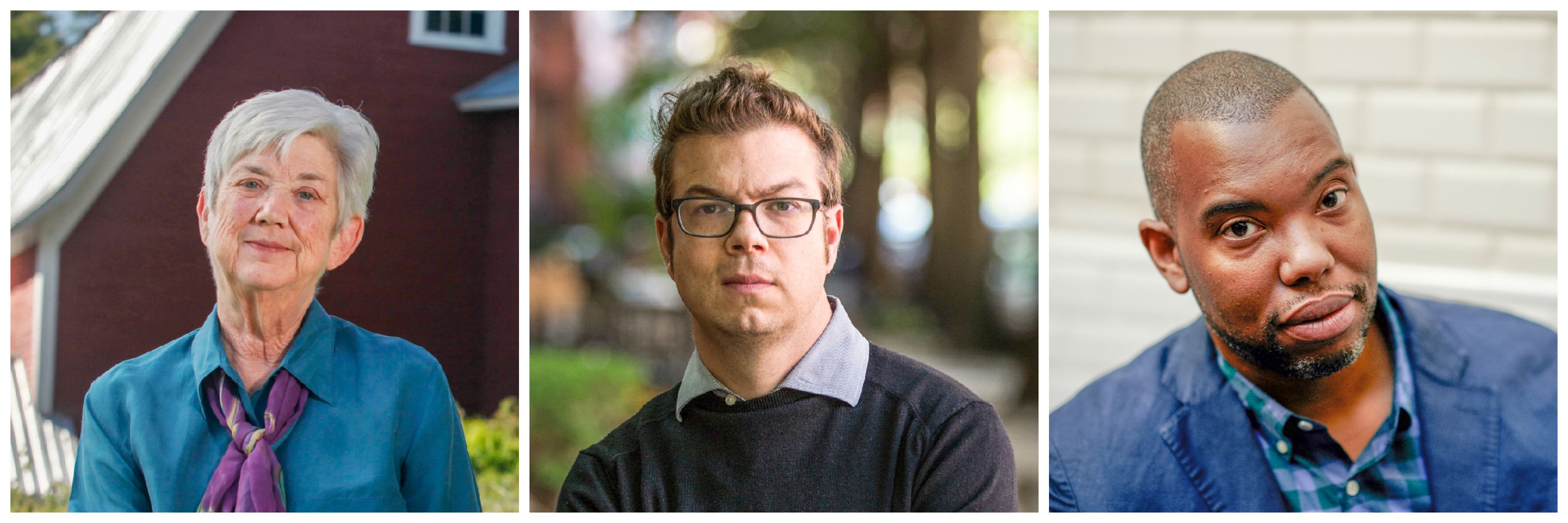
Ellen Bryant Voigt, 72, is the author of eight poetry collections, most recently Headwaters (Norton, 2013), and two books on the writer’s craft, most recently The Art of Syntax: Rhythm of Thought, Rhythm of Song (Graywolf Press, 2009). The MacArthur Foundation states that her poetry “meditates on will and fate and the life cycles of the natural world while exploring the expressive potential of both lyric and narrative elements…. A poet of sustained excellence and emotional depth, Voigt continues to advance American literary culture through her ongoing experimentation with form and technique.” Voigt also started the first low-residency MFA Program at Goddard College in 1976; the program later moved to Warren Wilson College in 1981. Voigt lives in Cabot, Vermont.
Ben Lerner, 36, is the author of two novels, most recently 10:04 (Faber & Faber, 2014), and three poetry collections, most recently Mean Free Path (Copper Canyon Press, 2010). Lerner has also published an art book with Thomas Demand, Blossom (Mack Books, 2015). The MacArthur Foundation says: “Bringing to the novel a poet’s relentless engagement with language and a critic’s analytical incisiveness, Lerner makes seamless shifts between fiction and nonfiction, prose and lyric verse, memoir and cultural criticism, conveying the way in which politics, art, and economics intertwine with everyday experience.” Lerner lives in New York City where he teaches at Brooklyn College.
Ta-Nehisi Coates, 39, is a national correspondent for the Atlantic, and the author of the memoir The Beautiful Struggle (Penguin, 2008), and the book-length essay Between the World and Me (Penguin, 2015), which was recently longlisted for the National Book Award in nonfiction. “A highly distinctive voice, Coates is emerging as a leading interpreter of American concerns to a new generation of media-savvy audiences and having a profound impact on the discussion of race and racism in this country,” states the MacArthur Foundation. Coates lives in Washington, D.C.
Established in 1970, the Chicago-based MacArthur Foundation has awarded over nine hundred fellowships since its inception, including the twenty-four awarded this year. The grants are given to professionals in a variety of fields, including science, history, visual art, music, journalism, literature, and public service. Recent literature recipients include graphic memoirist Alison Bechdel and poets Terrance Hayes and Khaled Mattawa in 2014; fiction writers Karen Russell and Donald Antrim in 2013; and fiction writers Junot Díaz and Dinaw Mengestu in 2012.
Photos from left to right: Voigt, Lerner, Coates (Credit: John D. & Catherine T. MacArthur Foundation)
Oregon's poet laureate Peter Sears introduces his project Expanding Voices, which aims to provide more opportunities for poets in Oregon from diverse global communities to share their work and heritage.
In “To Autumn,” John Keats personifies the season through descriptions of landscape and life in agrarian England. Write an ode that personifies a modern vision of autumn. Use characteristics of contemporary life: perhaps a new school year, a harvest we no longer see, football and its violence, costumes and horror, or our obsession with pumpkin spice. Explore what these aspects reveal about our present-day relationship to nature and the seasons. Does the idyllic character of Keats’s poem endure?
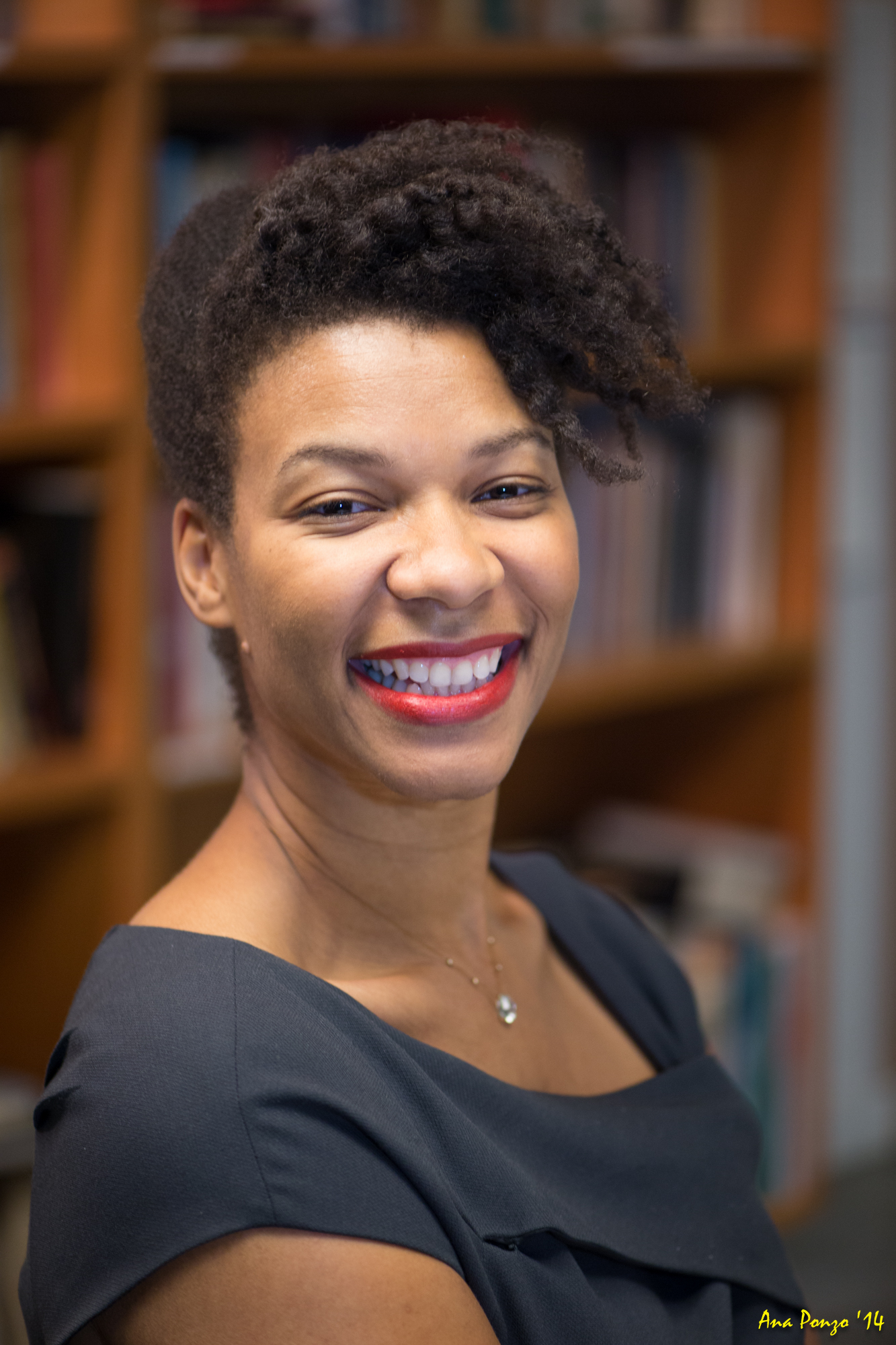
Ashaki M. Jackson is a social psychologist and poet living in Los Angeles who has worked with youth through research, evaluation, and creative arts mentoring for over a decade. Her poetry has appeared in Eleven Eleven, Inch Magazine, and Rkvry Quarterly, among other publications. This year, Jackson was one of the instructors for 826LA's Words, Spoken summer writing workshops for teens, which Poets & Writers has been cosponsoring for the past five years. She blogs about her experience below.
 “El Padre de Sunset Boulevard,” I announced, “will you please take the ring?”
El Padre is a high school freshman. I met him and his sister one year prior, during an 826LA summer camp when I was a guest instructor. This year, I was invited to be the core instructor, responsible for introducing students—familiar and new—to another world in creative writing for five consecutive mornings. Our goal: the manifesto.
To begin, I wanted each student to assume a plucky persona to use while writing. This would ease the fear of facing a blank page and sharing drafts with peers. I provided students a die and a numbered list of incredibly ridiculous titles with which they created their luchador (Mexican wrestler) names.
¡El Hurican Incognito!
¡Karate Chop #1!
¡Chicharron de Ramen!
“What is a chicharron de ramen, miss?” one student asked. “Frighteningly delicious,” I replied.
This year, we would all be wrestlers grappling with words and craft. When it was time for students to share their work, I would call their monikers and invite them to the ring (any classroom area where luchadors read their work aloud to peers).
Manifestos require good knowledge of personal values or a passion to advocate for something greater. I selected the manifesto because it offered an activity in pieces and called for action. Each day we worked through key elements—who I am, where I’m from, and what I believe.
On day one, we each jotted down broad statements about ourselves on Post-it notes then stuck them to one classroom wall. I invited small groups to visit the wall, grab a few notes written by their peers that were relevant to their self definitions, then rewrite those statements in their own words and spirits. “I love pizza” became: “My world revolves around that saucy bread.” “I’m from LA” became: “I was born in the middle of palm trees.”
On day two, we subverted our origin stories with guidance from Eduardo Galeano’s Genesis (Nation Books, 2010). Students documented where they were from, then fortified their magnificence by including a magical element. Stars were fish scales from an ancient underwater era, and one student lived in a house teetering on a hill of coffee grounds. We pushed through the writing together, carefully, to create personally meaningful statements on who we are and what we want out of life. Similar to the qualities of any decent luchador, the resulting manifestos were colorful, tender, and risky.
Moving through the activity together fostered closeness among the luchadors as they explored themselves in writing. Equally vital for the week’s success was the space in which we worked. 826LA has, for years, provided students an environment wherein they are able to be duly youthful, curious, and safe. It also allowed me the latitude to implement a nontraditional lesson plan that revealed the luchadors’ true, soft faces. As one lithe luchador searching for his rhythm in the class shared: “An amethyst is just as pretty... next to a diamond, but that doesn’t mean people will see it.” We are all better for the grapple.
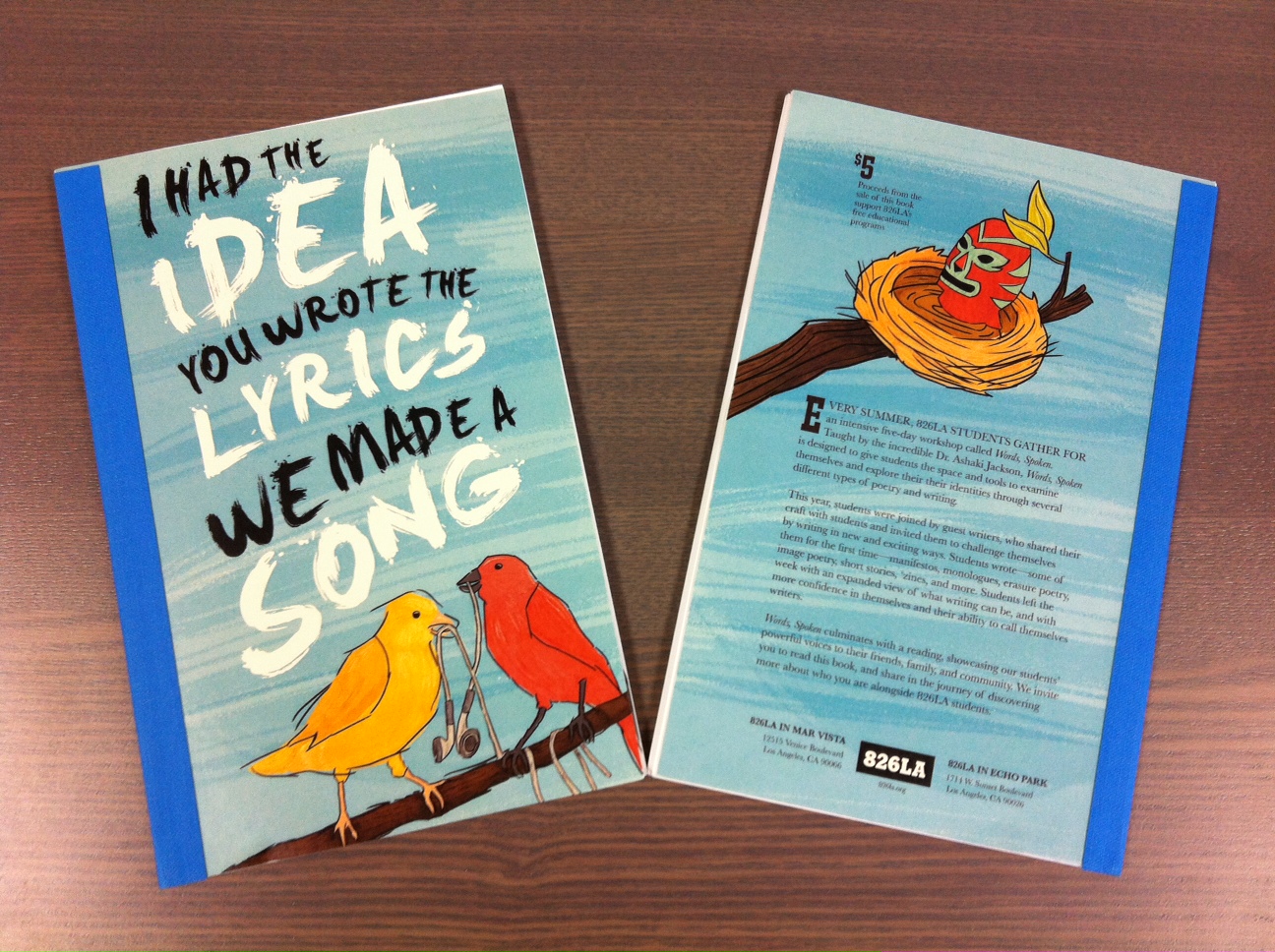
Photo 1: Ashaki M. Jackson; credit: Ana Ponzo. Photo 2: The Words, Spoken workshop anthology published by 826LA; credit: Jamie FitzGerald.
Major support for Readings & Workshops in California is provided by the James Irvine Foundation and the Hearst Foundations. Additional support comes from the Friends of Poets & Writers.
