Find details about every creative writing competition—including poetry contests, short story competitions, essay contests, awards for novels, grants for translators, and more—that we’ve published in the Grants & Awards section of Poets & Writers Magazine during the past year. We carefully review the practices and policies of each contest before including it in the Writing Contests database, the most trusted resource for legitimate writing contests available anywhere.
Find a home for your poems, stories, essays, and reviews by researching the publications vetted by our editorial staff. In the Literary Magazines database you’ll find editorial policies, submission guidelines, contact information—everything you need to know before submitting your work to the publications that share your vision for your work.
Whether you’re pursuing the publication of your first book or your fifth, use the Small Presses database to research potential publishers, including submission guidelines, tips from the editors, contact information, and more.
Research more than one hundred agents who represent poets, fiction writers, and creative nonfiction writers, plus details about the kinds of books they’re interested in representing, their clients, and the best way to contact them.
Find publishers ready to read your work now with our Open Reading Periods page, a continually updated resource listing all the literary magazines and small presses currently open for submissions.
Since our founding in 1970, Poets & Writers has served as an information clearinghouse of all matters related to writing. While the range of inquiries has been broad, common themes have emerged over time. Our Top Topics for Writers addresses the most popular and pressing issues, including literary agents, copyright, MFA programs, and self-publishing.
Our series of subject-based handbooks (PDF format; $4.99 each) provide information and advice from authors, literary agents, editors, and publishers. Now available: The Poets & Writers Guide to Publicity and Promotion, The Poets & Writers Guide to the Book Deal, The Poets & Writers Guide to Literary Agents, The Poets & Writers Guide to MFA Programs, and The Poets & Writers Guide to Writing Contests.
Poets & Writers lists readings and other literary events held online and in person. Whether you are an author on a book tour or the curator of a reading series, the Literary Events Calendar can help you find your audience.
Research newspapers, magazines, websites, and other publications that consistently publish book reviews using the Review Outlets database, which includes information about publishing schedules, submission guidelines, fees, and more.
Well over ten thousand poets and writers maintain listings in this essential resource for writers interested in connecting with their peers, as well as editors, agents, and reading series coordinators looking for authors. Apply today to join the growing community of writers who stay in touch and informed using the Poets & Writers Directory.
Since our founding in 1970, Poets & Writers has served as an information clearinghouse of all matters related to writing. While the range of inquiries has been broad, common themes have emerged over time. Our Top Topics for Writers addresses the most popular and pressing issues, including literary agents, copyright, MFA programs, and self-publishing.
Find a writers group to join or create your own with Poets & Writers Groups. Everything you need to connect, communicate, and collaborate with other poets and writers—all in one place.
Well over ten thousand poets and writers maintain listings in this essential resource for writers interested in connecting with their peers, as well as editors, agents, and reading series coordinators looking for authors. Apply today to join the growing community of writers who stay in touch and informed using the Poets & Writers Directory.
Find information about more than two hundred full- and low-residency programs in creative writing in our MFA Programs database, which includes details about deadlines, funding, class size, core faculty, and more. Also included is information about more than fifty MA and PhD programs.
Whether you are looking to meet up with fellow writers, agents, and editors, or trying to find the perfect environment to fuel your writing practice, the Conferences & Residencies is the essential resource for information about well over three hundred writing conferences, writers residencies, and literary festivals around the world.
Poets & Writers lists readings and other literary events held online and in person. Whether you are an author on a book tour or the curator of a reading series, the Literary Events Calendar can help you find your audience.
Discover historical sites, independent bookstores, literary archives, writing centers, and writers spaces in cities across the country using the Literary Places database—the best starting point for any literary journey, whether it’s for research or inspiration.
From in-person events held in cities across the country to virtual events available to all, Poets & Writers Live offers a more tangible connection to the community of writers through celebrations of authors featured in the pages of Poets & Writers Magazine, including readings and conversations with the debut authors in our annual debut poets roundup, First Fiction, The New Nonfiction, and 5 Over 50 and acclaimed authors such as Garth Greenwell, Douglas Kearney, Karen Russell, and Clint Smith.
Establish new connections and enjoy the company of your peers using our searchable databases of MFA programs and writers retreats, apply to be included in our directory of writers, and more.
Each year the Readings & Workshops program provides support to hundreds of writers participating in literary readings and conducting writing workshops. Learn more about this program, our special events, projects, and supporters, and how to contact us.
The Maureen Egen Writers Exchange Award introduces emerging writers to the New York City literary community, providing them with a network for professional advancement.
Find information about how Poets & Writers provides support to hundreds of writers participating in literary readings and conducting writing workshops.
Bring the literary world to your door—at half the newsstand price. Available in print and digital editions, Poets & Writers Magazine is a must-have for writers who are serious about their craft.
View the covers and contents of every issue of Poets & Writers Magazine, from the current edition all the way back to the first black-and-white issue in 1987.
Find details about every creative writing competition—including poetry contests, short story competitions, essay contests, awards for novels, grants for translators, and more—that we’ve published in the Grants & Awards section of Poets & Writers Magazine during the past year. We carefully review the practices and policies of each contest before including it in the Writing Contests database, the most trusted resource for legitimate writing contests available anywhere.
Every day the editors of Poets & Writers Magazine scan the headlines—publishing reports, literary dispatches, academic announcements, and more—for all the news that creative writers need to know.
In our weekly series of craft essays, some of the best and brightest minds in contemporary literature explore their craft in compact form, articulating their thoughts about creative obsessions and curiosities in a working notebook of lessons about the art of writing.
The Time Is Now offers weekly writing prompts in poetry, fiction, and creative nonfiction to help you stay committed to your writing practice throughout the year. Sign up to get The Time Is Now, as well as a weekly book recommendation for guidance and inspiration, delivered to your inbox.
Ads in Poets & Writers Magazine and on pw.org are the best ways to reach a readership of serious poets and literary prose writers. Our audience trusts our editorial content and looks to it, and to relevant advertising, for information and guidance.
Start, renew, or give a subscription to Poets & Writers Magazine; change your address; check your account; pay your bill;
report a missed issue; contact us.
Poets & Writers is pleased to provide free subscriptions to Poets & Writers Magazine to award-winning young writers and to high school creative writing teachers for use in their classrooms.
Read select articles from the award-winning magazine and consult the most comprehensive listing of literary grants and awards, deadlines, and prizewinners available in print.
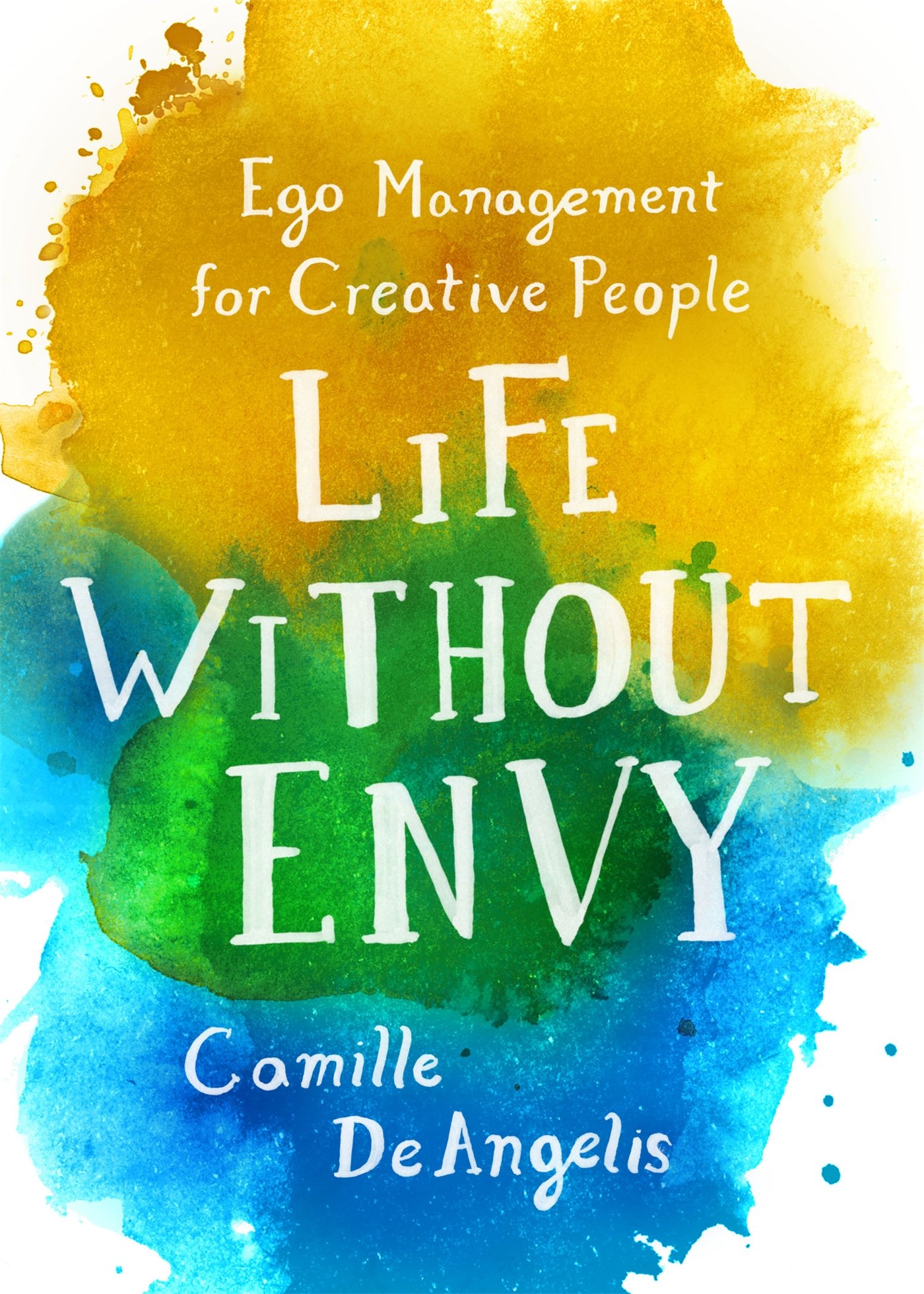
“We must grow to become enough for ourselves, to fill our own vacancies. We must slay our own demons on our own terms.... You have to be kind to yourself so that you can keep on making your art....” In Life Without Envy, writers and creative thinkers of all types and levels of experience will learn how to slay their creative demons. DeAngelis’s helpful tips, inspiring anecdotes, and practical exercises demonstrate how to overcome feelings of negativity and competition, find support in community, and build a healthy, happy mindset as an artist.
This week, write a scene in which the main character is watching the presidential debates on television with another character and a confrontation arises over a disagreement of opinions. Have these characters just met, or are they old friends? Do their differing politics come as a surprise to the reader, or to each other, or are they expected? Politics aside, what does the disagreement reveal about the characters’ respective personalities, emotional states, and motives in relation to the narrative? Consider incorporating this scene for a short story you’ve written in the past or are currently working on in order to deepen a relationship.
“A sentence just came out of nowhere and it said: ‘So here I am, upside down in a woman.’” In a conversation with Christopher Beha at the 92nd Street Y, Ian McEwan discusses the origins of his new novel, Nutshell (Nan A. Talese/Doubleday, 2016), which is narrated by a fetus.
Hollywood has a long tradition of remaking films and television shows from decades gone by, including recent or forthcoming reboots of The Magnificent Seven, Die Hard, Full House, The Fresh Prince of Bel Air, Point Break, MacGyver, Twin Peaks, Splash, and Mary Poppins. Write a remake of a poem written between the 1960s and 1980s. Select two major elements to retain from the original poem such as setting, narrative voice, overarching formal structure, or emotional progression, and then give it a fresh, new spin by altering other aspects of the poem.
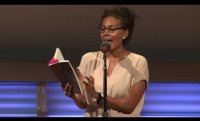
“Maybe he will be the boy who studies stars. / Maybe he will be (say it) / the boy on the coroner's table / splayed & spangled / by an officer's lead as if he, too, weren't made / of a trillion glorious cells & sentences. Trying to last.” Aracelis Girmay reads an excerpt from her new collection, The Black Maria (BOA Editions, 2016), at the 2016 Split This Rock Poetry Festival.
James Patterson cancels publication of novel The Murder of Stephen King; Lidia Yuknavitch reimagines Joan of Arc; PEN releases report on China’s censorship of foreign journalists; and other news.
In this film adaptation of Rosalie Ham's debut gothic novel, The Dressmaker (Penguin Books, 2015), Kate Winslet stars as Tilly Dunnage, who returns to a small Australian town to take care of her ailing mother.
This morning, the MacArthur Foundation announced the twenty-three recipients of its 2016 fellowships. Also known as “Genius Grants,” the annual fellowships of $625,000 each—which are distributed to recipients over a period of five years—are given to individuals who “have shown extraordinary originality and dedication in their creative pursuits and a marked capacity of self-direction.”
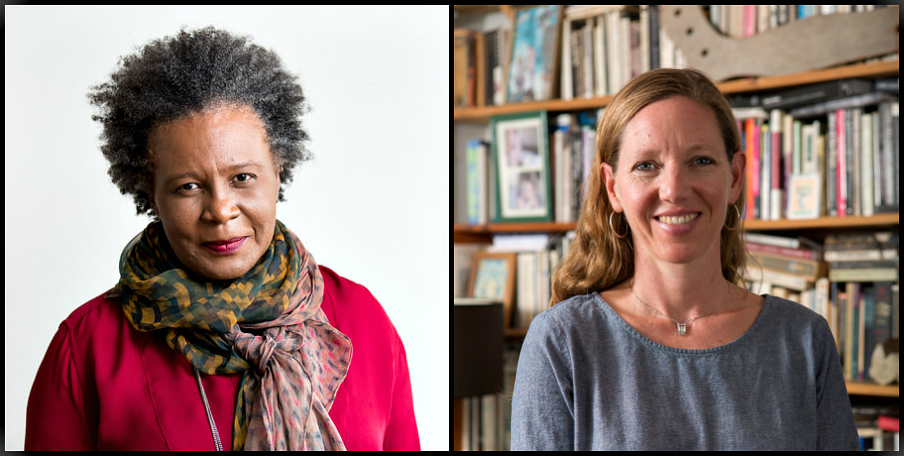
The author of five books, Claudia Rankine is “a poet illuminating the emotional and psychic tensions that mark the experiences of many living in twenty-first-century America,” the announcement stated. Her award-winning 2014 collection, Citizen: An American Lyric, interrogates racially charged violence through poetry, documentary prose, and images to “convey the heavy toll that the accumulation of these day-to-day encounters exact on black Americans.”
Maggie Nelson has written five books of creative nonfiction, including The Red Parts (2007), Bluets (2009), The Art of Cruelty (2011), and The Argonauts (2015), as well as several poetry collections. The MacArthur Foundation writes that Nelson is “forging a new mode of nonfiction that transcends the divide between the personal and the intellectual and renders pressing issues of our time into portraits of day-to-day lived experience.”
Now in its thirty-fifth year, the MacArthur Fellows Program encourages exceptional individuals across a broad range of fields to pursue their creative, intellectual, and professional projects. Fellows are recommended by external nominations, and then chosen by an anonymous selection committee; there is no application process. Between twenty and thirty fellows are selected each year.
For a complete list of this year’s recipients and more details about the fellowships, visit the MacArthur Foundation website.
(Photos from left: Claudia Rankine, Maggie Nelson)