Claudia Rankine Awarded “Genius Grant,” Books on the American Immigrant Experience, and More
New Yorker profiles Librarian of Congress Carla Hayden; a reflection on Langston Hughes’s “I, Too”; Emma Donoghue on Emily Dickinson; and other news.
Tags:
Jump to navigation Skip to content
New Yorker profiles Librarian of Congress Carla Hayden; a reflection on Langston Hughes’s “I, Too”; Emma Donoghue on Emily Dickinson; and other news.
“I think if you say that art and politics, or religion and politics, mustn’t mix, don’t mix, that is itself a political statement,” novelist Mohsin Hamid said in an interview in the Financial Times in 2011. While there are many writers who choose not to overtly link their creative work to politics, there is also a long history of political art: work that engages with patriotism or protest by poets such as W. H. Auden, Adrienne Rich, Wole Soyinka, and Walt Whitman. Do politics ever figure into your own creative writing? Why or why not? In this presidential-election season, whether you are engaged and informed by politics or try to avoid the topic altogether, take a moment to examine the history of your personal relationship with politics. Write an essay that explores how your interest in or aversion to the topic might have been affected by your childhood upbringing and environment—family, friends, or local groups and organizations—and the reasons behind your choice to either integrate or separate politics from your creative work.
Robert A. Caro receives National Book Foundation lifetime achievement award; fiction writer Brit Bennett on her debut novel; comic book authors publish book to benefit Orlando victims; and other news.
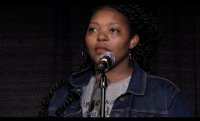
“But what I really want to say is we gone fall into the night like we fell into each other and it won't hurt no more.” Mahogany L. Browne, author of the poetry collection Smudge (Button Poetry, 2016), reads “Redbone Shames the Devil” for the Button Poetry Live series in June 2016.
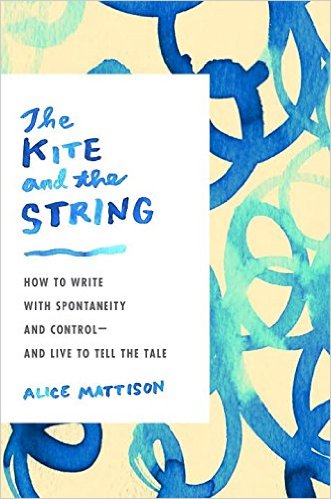
In this spirited guide to navigating the writing life, Alice Mattison—author of six novels, four story collections, and a collection of poems—urges writers to let playfulness and spontaneity “breathe life” into their work (letting the kite move with the wind) while being mindful of practical considerations such as finding trusted readers and setting appropriate goals for publication (holding the string). Mattison, who teaches at the Bennington Writing Seminars, walks readers through the stages of writing, from early inspiration to first draft to revision, all the while making clear that writing well is not nurtured by rules and instructions but rather a combination of spontaneity, clear judgment, and positive attitude.
In Washington Irving’s story “The Legend of Sleepy Hollow,” Ichabod Crane attends an autumnal harvest feast, where he listens to local townspeople recounting ghost stories. Later that night, on his fateful ride home, he encounters the Headless Horseman. The ending of the story is left open to interpretation: Is the Headless Horseman a ghoulish spirit, or is it actually Crane’s rival in love, dressed in disguise and further exaggerated by Crane’s haunted, overactive imagination? Write a ghost story in which you play with this ambiguity between the mundane and the supernatural, perhaps manipulating the observations and emotions of your main character, the stability of the story’s setting, or the sequence of events that unfolds. How does blurring the lines between human folly and otherworld menace imbue your storytelling with a sense of dread or horror?
Hilton Als on Edward Albee; Athens named World Book Capital 2018; the lost and found poetry of Misuzu Kaneko; and other news.
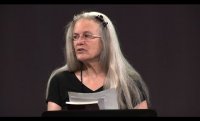
In this TEDx Talk, Sharon Olds speaks about the moments “in between” that have inspired her life and poetry, and reads from her collection Stag's Leap (Knopf, 2012), as well as her poem “Ode to the Hymen.” Olds's latest collection, Odes (Knopf, 2016), is featured in Page One in the September/October issue of Poets & Writers Magazine.
Pine, oak, cedar, birch, aspen, fir, maple. Joshua, jacaranda, palm. There are thousands of species of trees in the world; some are found in many regions and some in only one place. There are trees that grow fruits and nuts; there are desert trees and tropical trees. Robert Frost, H. D., Denise Levertov, Federico García Lorca, William Shakespeare, and many others have all written poems about trees. Spend some time studying a specific tree in your neighborhood, paying close attention to its shapes and sounds, its colors, smells, and textures. Perhaps make a sketch of it, or research it online or at the library. Then write a series of short poems about this one tree, trying to approach each poem from a different angle—exploring rhythm and sound, for instance, or your personal memories and associations.
Prize-winning playwright Edward Albee has died; Ottessa Moshfegh on writing her Man Booker shortlisted novel Eileen; how long it took authors to write their famous novels; and other news.