Bob Dylan Wins Nobel Prize, the Poetics of Haunting, and More
Claudia Rankine on black glamour; Dave Eggers launches music project to protest Trump campaign; debut novelist Max Porter on writing and editing; and other news.
Jump to navigation Skip to content
Claudia Rankine on black glamour; Dave Eggers launches music project to protest Trump campaign; debut novelist Max Porter on writing and editing; and other news.
In a surprising decision out of Stockholm this morning, singer-songwriter Bob Dylan was awarded the Nobel Prize in Literature for, in the words of the Swedish Academy, which administers the prize, “having created new poetic expressions within the great American song tradition.”
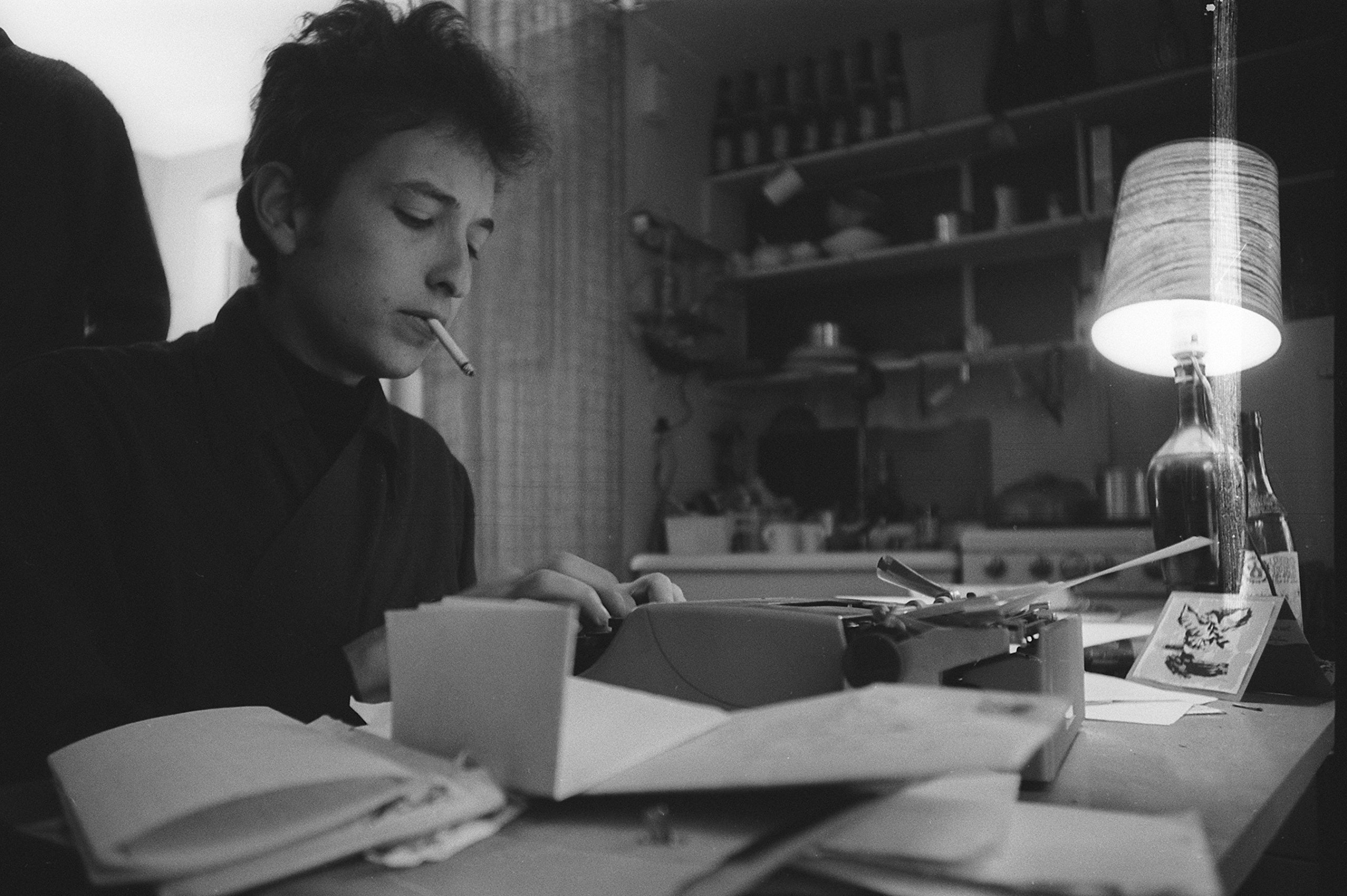 Dylan, 75, is the first musician to win the award, and the first American to win since novelist Toni Morrison, in 1993. The decision comes as something of a shock to the literary world: Although Dylan has been included in prize predictions for the past few years—along with perennial favorites Don DeLillo, Haruki Murakami, Ngugi wa Thiong’o, and the poet Adonis—his chances were considered outside at best, as, some argue, his work misses the mark in the categories that the prize traditionally honors—poetry, novels, and short stories.
In the wake of the announcement, the literary Internet is grappling with this very question. At Literary Hub, Lisa Levy considers Dylan's artistic identity and the “Poet vs. Songwriter vs. Showman” debate. At the Guardian, meanwhile, Richard Williams defends the Academy’s decision, extolling the many reasons why Bob Dylan deserves the Nobel.
Naturally, many writers also took to Twitter as the announcement came in. Salman Rushdie tweeted: “From Orpheus to Faiz, song & poetry have been closely linked. Dylan is the brilliant inheritor of the bardic tradition. Great choice.” Mary Karr also showed support of the decision:
Congrats to Dylan on his Nobel--first American since Toni Morrison. Dangit, good for him! https://t.co/JXGJhFw8QB
— Mary Karr, Author (@marykarrlit) October 13, 2016
Others were not so supportive.
I totally get the Nobel committee. Reading books is hard.
— Gary Shteyngart (@Shteyngart) October 13, 2016
The Washington Post rounds up more writers’ responses to the Nobel decision.
Dylan, who was born Robert Allen Zimmerman in Duluth, Minnesota, in 1941, has written and recorded dozens of albums “revolving around topics like the social conditions of man, religion, politics and love,” the Academy writes. “The lyrics have continuously been published in new editions, under the title ‘Lyrics.’” In addition to his records, Dylan has also produced experimental work like Tarantula, a 1971 collection of prose poetry, and the 1973 compliation Writings and Drawings. The first volume of his autobiography, Chronicles, was published in 2004.
The Nobel Prize in Literature has been awarded since 1901 to writers who have produced “the most outstanding work in an ideal direction.” In that time, 114 writers have received the award. (Only 14 have been women. This year, every Nobel Prize, across all disciplines, went to men.) Belarussian journalist Svetlana Alexievich won last year’s prize; French novelist Patrick Modiano won in 2014; and Canadian short story writer Alice Munro won in 2013. The annual prize carries with it a purse of 8 million Swedish kronor, or approximately $900,000.
In announcing the prize this morning, Sara Danius, a literary scholar and the permanent secretary of the Swedish Academy, called Dylan “a great poet in the English-speaking tradition,” comparing him to Homer and Sappho. When asked if the decision to award the prize to a musician meant an expansion of the definition of literature, Danius responded, “The times they are a-changing, perhaps.”
What do you think? Weigh in with a comment below, or send us a tweet @poetswritersinc.
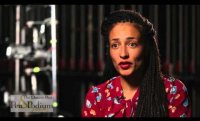
“The serious part of it is having a great capacity to be alone—that really is the key...” Zadie Smith talks about the writing life and inspiration, her identity as a writer, and how her routines have changed in a video for Denver Post's Pen & Podium series. Smith's new novel, Swing Time (Penguin Press, 2016), is featured in Page One in the November/December issue of Poets & Writers Magazine.
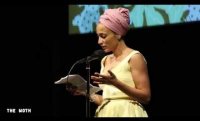
“Often my subjects are the simplest things in the world: joy, family, the weather, houses, streets—nothing fancy. And when I sit down with these subjects, my aim is clarity...” In her acceptance speech for the 2014 Moth Award, Zadie Smith shares her perspective on storytelling and how it has changed over the years. Smith’s fifth novel, Swing Time (Penguin Press, 2016), is featured in Page One in the November/December issue of Poets & Writers Magazine.
As creative nonfiction writers, we face the difficult task of trying to capture people we know, often intimately, as characters. Here’s a prompt to help. Pick someone in a piece you’ve been working on. Choose the sense memory that best personifies your relationship with that person, the one moment or event that most purely embodies your particular dynamic. Write it as a scene. From that scene (my mom teaching me to bake bread as a little girl), list the qualities (capable, patient, encouraging) that person embodied and the emotions you felt (reverent, curious, happy). Every time you write a scene with this person, think about how the actions and dialogue exemplify the qualities and emotions on your list. Or if it is a scene in which this person behaves in a surprising way, focus on how the qualities and emotions in that scene are the opposite of your expectations.
This week’s creative nonfiction prompt comes from Sarah Tomlinson, author of the father-daughter memoir, Good Girl (Gallery Books, 2015). Read Tomlinson’s installment of Writers Recommend for more inspiration.
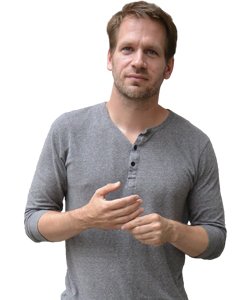
John Freeman, founder and editor of the new biannual Freeman’s, discusses his goals for the journal, including durability, an international focus, expansive themes, and superlative storytelling.

At community writing centers across the country, new workshop models offer sustained support for writers undertaking book-length projects, including novels and memoirs, satisfying a demand left unmet by MFA programs and shorter-term writing courses.
Authors Guild offers new Emerging Writer Membership; authors’ favorite scary stories; the legacy of Ursula K. Le Guin; and other news.
Cynthia Nixon plays the role of Emily Dickinson in Terence Davies’s biopic A Quiet Passion, which explores the nineteenth-century poet’s relationships and writing life. The film, also starring Keith Carradine and Jennifer Ehle, premiered at the 2016 Berlin Film Festival.

Measures of Astonishment is a collection of essays by thirteen of Canada’s most notable poets, first presented in lectures from 2002 to 2015 as part of the League of Canadian Poets’ Anne Szumigalski Lecture Series. Poets including Margaret Atwood, Anne Carson, Robert Currie, and Gregory Scofield offer their unique and distinctive perspectives on poetry, sharing insights about its craft and exploring its far-reaching meanings.