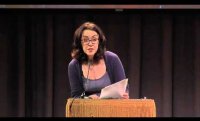
Emma Tao White was born in Shanghai and came to the United States at age ten, living in the Midwest until she completed her education. For twenty years, she juggled a medical career and managed a family of five children. In her forties, she returned to school and became a licensed clinical psychologist. She now lives in San Francisco, where for the last ten years, she has facilitated writing groups for seniors in senior centers, senior housing, and adult day health centers including the P&W–supported Project Access at the Coronet Apartments. Over the same time period, she has been writing her own life stories.
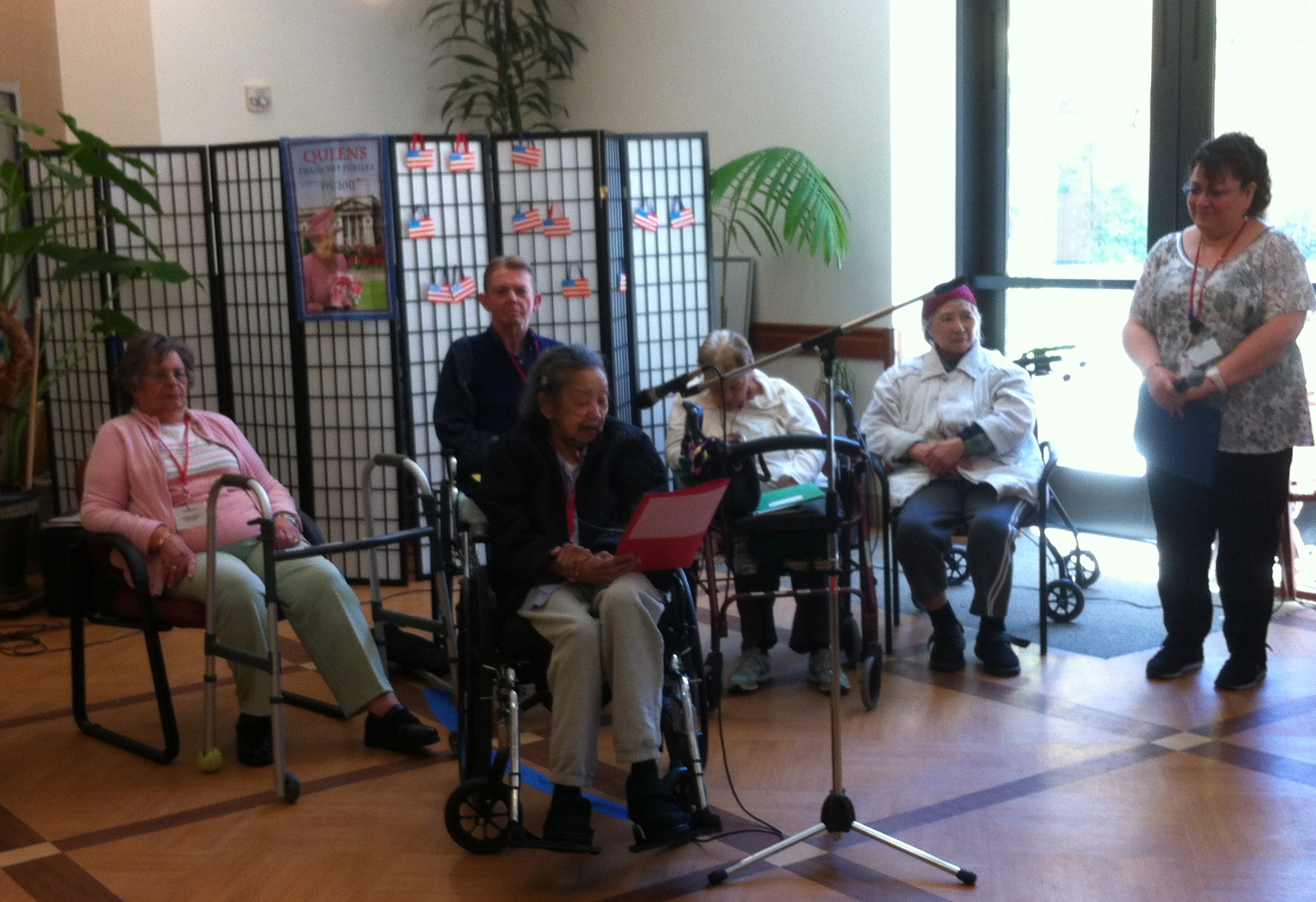
For several years, I’ve facilitated writing groups at adult day health centers and senior apartment buildings where the participants range from the elderly and/or disabled with good cognitive and physical functioning to those who have approached dementia and need assistance with the physical act of writing. Writing abilities range from retired professional writers to those who need assistance to write due to brain injury, muscle disease, or arthritis.
One of the most enthusiastic writers, who I have dubbed “Happy Camper,” has a severe stutter. Each week, he writes a page or more detailing the highlights of his week. With public transportation, he often gets around the entire Bay Area. He frequently expresses joy and appreciation for this group: “I am glad we have an outlet to explore and put down our thoughts and ideas on our journey of life.”
Another writer I call the “Doughnut Man” developed Baker’s Lung from making doughnuts for over thirty years. Since he was still too young for social security, he went on to a second career as a security guard. A few years ago he had a stroke that left him with expressive aphasia that hampered his ability to find and say words. With persistent effort, he has noticeably improved. He shared in his writing how after trying different jobs as a young man, he found doughnut making the most satisfying.
After having a stroke about twenty years ago, one woman uses the class to practice her handwriting. Her concentration is admirable whether she is practicing her name, numbers, or the ABCs. Another participant writes romantic poems in Spanish, based on song lyrics she remembers from her youth. And yet another participant began her autobiography years ago, and at ninety-two, she still has the ambition to write a book about her colorful life that began in Scotland when her father, a graduate student from China, married his landlady’s daughter. She stopped work on her manuscript just as the Cultural Revolution was to begin.
One of our most prolific writers is a professional entertainment writer in her home country. In the beginning, she wrote about her delight with her cat and how they live together. Then she began to write about her childhood, her health, and what she finds satisfying as she ages. She said she does not want to just “extend arms and open mouth” in her old age.
Among the various immigrant groups in the Bay Area, the elderly Asian immigrants arrived at different ages, some when they were young while others were brought over by their children who came first to study and become established. They get the most pleasure from being around family on weekends and holidays, eating and laughing together. Because many of them live in social circles of other Asian immigrants, they do not see the upheaval of having survived wars and traversed continents as worthy writing material. Or perhaps they have buried their traumatic memories and moved on.
One man recounted how he arrived in this country with his young children and worked for the same company until he retired. After being widowed, he’s very content living with his son. One day, tears streamed down his face as he wrote about how he wished he could see more of the world with his wife, a longing perhaps he had not acknowledged before.
Those who write gain a sense of satisfaction in being able to put their thoughts down on paper, and have a place to voice their feelings and opinions, and at the same time, preserve their precious memories. With the realization that their time on earth is finite, this activity provides a means to leave a part of themselves to others. With their varied backgrounds, the writing group gives them a chance to write and share the rich and full lives they have lived and are living.
Photo: Senior writers reading. Photo credit: Emma Tao White.
Major support for Readings & Workshops in California is provided by the James Irvine Foundation and the Hearst Foundations. Additional support comes from the Friends of Poets & Writers.