Writers Request Pardon for Snowden, Toni Morrison on Post-Election America, and More
Anti-fascist reading list; Paul Celan film; remembering short story writer William Trevor; and other news.
Tags:
Jump to navigation Skip to content
Anti-fascist reading list; Paul Celan film; remembering short story writer William Trevor; and other news.
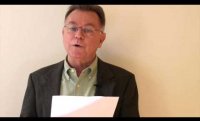
“Giving is, first and every time, hand to hand, / Mine to yours, yours to mine.” Alberto Ríos reads his poem “When Giving Is All We Have” as part of Dear Poet, an educational project for the Academy of American Poets.
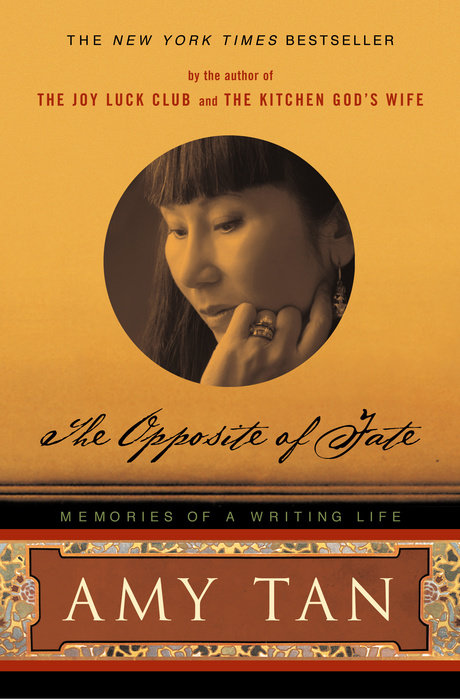
The Opposite of Fate: Memories of a Writing Life is a collection of Amy Tan’s essays, interviews, and musings tracing her journey to become a novelist. Throughout over thirty essays, including “My Love Affair with Vladimir Nabokov,” “The Ghosts of My Imagination,” and “Five Writing Tips,” Tan shares inspiring and humorous insights about the connections between life and art, underscores the transformative power of storytelling, and explores the importance of empathy in the life of a writer.
“During the day, as I worked, I clarified daydreams, rehearsed thoughts. Phrases rose up, and as I shoveled compost, mulched garlic, or turned over the soil, the phrases turned too…. The world’s margins shrank but also grew luminous. After working outside in my body all day long, my mind felt brightly lit.” In “Turning the Soil” in the November/December issue of Poets & Writers Magazine, Tess Taylor writes about her revelatory experience volunteering at a farm while at a writing residency in southwestern Massachusetts. Try to carve out a few hours this week to spend engaged in an activity that is very different from—and outside of—your usual working environment. Get your hands dirty in a garden or park, sit quietly in a library, or people-watch at an airport or train station. Allow your mind to roam over unexpectedly fresh images and phrases that surface, and then write a series of flash fiction pieces inspired by your time spent “outside.”
Planning to do some writing over the holiday weekend? Have something ready to submit? Here are a few upcoming deadlines for prose writers (and a few more for poets, too)—including publication prizes for individual stories and essays, chapbook and full-length book awards, and academic fellowships.
Narrative Fall Story Contest: A prize of $2,500 and publication in Narrative is given annually for a short story, a short short story, an essay, or an excerpt from a longer work of prose of up to 15,000 words. A second-place prize of $1,000 and publication is also awarded.
Deadline: November 30
Entry Fee: $24
Fish Publishing Short Story Prize: A prize of €3,000 (approximately $3,360) and publication in the annual Fish Publishing anthology is given annually for a short story of up to 5,000 words.
Deadline: November 30
Entry Fee: $25
Arcadia Press Chapbook Prize: Three prizes of $1,000 each, publication by Arcadia Press, 25 author copies, and distribution to Arcadia subscribers are given annually for a poetry, fiction, and nonfiction chapbook of 15 to 45 pages.
Deadline: November 30
Entry Fee: $20
W. Y. Boyd Literary Award: A prize of $5,000 is given annually by the American Library Association for a novel published in 2016 that is set in a period when the United States was at war.
Deadline: December 1
Entry fee: None
Langum Prize in American Historical Fiction: A prize of $1,000 is given annually by the Langum Charitable Trust for a book of historical fiction published in 2016.
Deadline: December 1
Entry fee: None
Fine Arts Work Center in Provincetown Writing Fellowships: Seven-month residencies at the Fine Arts Work Center in Provincetown, Massachusetts, are given annually to four poets and four fiction writers who have not published a full-length book in any genre. Each fellowship includes a private apartment and a monthly stipend of $750. For fellowships from October 1, 2016, through April 30, 2017, using the online submission system submit up to 35 pages of fiction (include a synopsis if submitting a novel), a personal statement
Deadline: December 1
Entry Fee: $50
Stanford University Wallace Stegner Fellowships: Ten two-year fellowships, five in poetry and five in fiction, are given annually to emerging writers. Each fellowship includes a $26,000 annual stipend, a tuition waiver, and health insurance. Submit 10 to 15 pages of poetry or a fiction manuscript of up to 9,000 words, composed of two short stories, one short story and a novel excerpt, or a novel excerpt.
Deadline: December 1
Entry Fee: $85
Visit the contest websites for complete guidelines and submission details. Check out our latest roundup of poetry deadlines, and for more upcoming contests in poetry, fiction, and nonfiction, visit our Grants & Awards database and Submission Calendar.
Zadie Smith’s new novel to be adapted for television; an interview with poet Jericho Brown; fiction writer Garth Greenwell on James Baldwin’s influence; and other news.
“Understand we have never seen an apple, so we are completely free from apples.” In this 2014 video of the first PEN DIY series event, Natalie Diaz breaks down five personal steps to writing about family, and discusses her poetry with Mike Albo.
In the early twentieth century, anthropologist Franz Boas published claims that the Eskimo languages had dozens or more words for snow—claims that have been pored over and analyzed, debunked and reaffirmed, and criticized and clarified in countless investigations since. Think of a natural or cultural phenomenon, such as a certain type of food, or an emotion, that you believe deserves or warrants a larger vocabulary. Write a poem that presents these new words—perhaps compound words of your own invention—along with their definitions and an exploration of why these articulations are significant to you.
As the month of November winds down, the deadline approaches for several poetry contests. Whether you’re looking to submit a single poem or a full collection, here are contests with a deadline of November 30—all of which offer a prize of at least $1,000 and publication.
If you have a full-length poetry manuscript ready to send out, consider submitting to the National Federation of State Poetry Societies Stevens Poetry Manuscript Competition; the White Pine Press Poetry Prize; the Bear Star Press Dorothy Brunsman Poetry Prize, given to a writer residing in a state west of the central time zone; the Bright Hill Press Poetry Book Competition; or the Burnside Review Press Book Prize, judged by Ada Limón. The Cider Press Review Book Award is also open for submissions and will be judged by Anne Harding Woodworth; the winner will receive $1,500 and publication.
The University of Georgia Press is also accepting submissions of full-length poetry manuscripts to its Georgia Poetry Prize; in addition to $1,000 and publication, the winner will receive travel expenses to give readings at the University of Georgia, Georgia Tech, and Georgia State University, with a $1,000 honorarium for each event. David Bottoms will judge.
For writers looking to publish their first book of poetry, the BOA Editions A. Poulin Jr. Poetry Prize is open for submissions. The winner will receive $1,500 and publication; Brenda Shaughnessy will judge. New Issues Poetry & Prose is also open to submissions for its annual Poetry Prize. The winner will receive $2,000 and publication; David Rivard will judge.
For poets over the age of fifty, check out the Two Sylvias Press Wilder Series Book Prize. Kelli Russell Agodon and Annette Spaulding-Convy will judge.
The University of North Texas’s Rilke Prize is given for a poetry collection published in the previous year by a mid-career poet. The winner will receive $10,000 plus airfare and lodging to give readings at the University of North Texas and the Dallas–Fort Worth Metroplex in April 2017. U.S. poets who have published at least two previous poetry collections are eligible.
And if you only have a few polished poems, not to worry! Poetry International is accepting submissions for its annual C. P. Cavafy Poetry Prize, given for a single poem. The Munster Literature Center Gregory O’Donoghue International Poetry Prize, given annually for a poem, includes €1,000; publication in Southword; a weeklong residency at the Tyrone Guthrie Centre in Annaghmakerrig, Ireland; and up to €600 in travel expenses, as well as lodging and meals, to give a reading at the Cork International Poetry Festival in Cork, Ireland, in February 2017. Mary Noonan will judge.
Visit the contest websites for complete guidelines and submission details. For more upcoming contests, visit our Grants & Awards database and Submission Calendar.
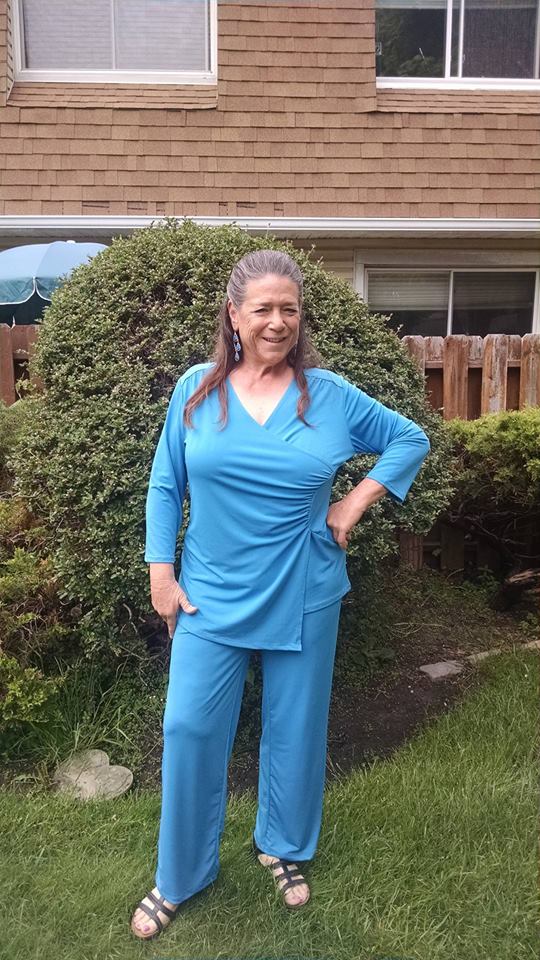
Joan Gerstein, originally from New York, has lived in California since 1969. A retired educator and psychotherapist, Gerstein has been writing poetry since elementary school, and her writing is featured in multiple San Diego publications as well national and international periodicals. She has volunteered to teach creative writing to incarcerated veterans at the county jail for almost two years and finds it stimulating and extremely rewarding. She has led the workshop for veterans at the Vista jail for six years. Her poetry has been published in Tidepools, Magee Park Poets Anthology, A Year in Ink, Summations, and the San Diego Poetry Annual. She served as the editor of the special Veteran's Section of the San Diego Poetry Annual 2015-16. San Diego Entertainment & Arts Guild partnered with Gerstein recently for a series of P&W–supported veteran workshops.
 What makes your workshops unique?
The veterans are in a specially designed program called Veterans Moving Forward and are required to participate in all classes including my creative writing workshop. As such, the men have a wide range of writing skills and interest in the writing process. There is also much fluidity because new participants enter weekly and some depart. I offer a combination of workshops such as poetry, memoir, fiction writing, and if there are requests, classes focused on grammar and sentence and paragraph structure. I also offer my editing, typing, and submission services for those who either wish to enter a contest or are writing something of which they want my feedback. Because they are currently incarcerated and have little access to computers, I meet individually with those men, edit and type up their material, get their approval of final product, and if relevant, submit their entries to various periodicals and veteran anthologies.
What techniques do you employ to help shy writers open up?
Attending the workshop is mandatory but participation varies. I offer a vast number of different exercises to ensure that everyone can hopefully respond to at least some. Sharing of work with the group is voluntary. I often suggest that men work in pairs or groups to allow more reserved men to participate without undue attention. While they are doing assignments, I make a point of walking around the room and working individually with men who rarely share with the group.
What has been your most rewarding experience as a teacher?
The men are extremely appreciative as a group and individually. I look forward to and thoroughly enjoy my weekly workshops and feel especially rewarded when I work individually with the writers, and their submissions are accepted.
What affect has this work had on your life and/or your art?
I’m not sure this has affected my work except as possible subject matter to use in my writing, however the experience has enriched my life and given me a greater understanding of the challenges facing discharged military. My students range from men in their young twenties to veterans of the Vietnam War, of every race and background, from all over the United States as well as foreign countries. I have definitely gained a greater appreciation of their sacrifices and challenges.
What are the benefits of writing workshops for veterans?
This is a creative outlet for many. For men who already enjoy writing and do it regularly, it is an opportunity to hone their craft and a showcase for them to share their material. If they want, I work with the men individually to fine-tune their writing. I offer several opportunities for the men to submit poetry and prose to various contests or veteran publications. For all the men, I hope to expose them to various styles of writing as well as many writers. For example, I may read excerpts from A Place to Stand by Jimmy Santiago Baca, so the men can see that anyone can overcome odds including incarceration, and even become a great writer. The various exercises we do, individually and in small and large groups, encourage critical thinking. Most participants, even those that insist they “can’t write,” will find some success and surprise themselves.
Photo: Joan Gerstein Photo credit: Joan Gerstein
Major support for Readings & Workshops in California is provided by the James Irvine Foundation and the Hearst Foundations. Additional support comes from the Friends of Poets & Writers.