All Day Is a Long Time by David Sanchez
David Sanchez reads from his novel, All Day Is a Long Time, published in January 2022 by Mariner.
Jump to navigation Skip to content
The agent answers questions about attracting agents using self-published books and whether to use a summary or a writing sample to pitch a memoir.
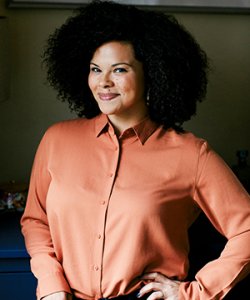
“Listen to me. I am telling you / a true thing. This is the only kingdom.” In this installment of Ours Poetica, a series produced by the Poetry Foundation in collaboration with Complexly, chef and author of Salt Fat Acid Heat: Mastering the Elements of Good Cooking Samin Nosrat reads Aracelis Girmay’s poem “Elegy.”
Aracelis Girmay’s poem “Elegy,” from her second poetry collection, Kingdom Animalia (BOA Editions, 2011), begins with a question: “What to do with this knowledge that our living is not guaranteed?” The poem’s speaker finds hope in the natural world as a way of answering this existential question: “Perhaps one day you touch the young branch / of something beautiful. & it grows & grows.” Write a poem that seeks to answer what it means to be impermanent. What do you wish to leave behind?
“I don’t call it sleep anymore. / I’ll risk losing something new instead,” reads Natalie Diaz from her poem “From the Desire Field” in this Graywolf Press virtual event celebrating her collection Postcolonial Love Poem, for which she won the 2021 Pulitzer Prize in poetry.
“Writing has always been a pleasure. Even as a boy at school I looked forward to the class set aside for writing a story,” reads Abdulrazak Gurnah, winner of the 2021 Nobel Prize in Literature, from his lecture titled “Writing,” in which he discusses his earliest memories of reading and writing, as well as how his observations of colonization and immigration influenced his desire to write.
“When you start writing, you start from your own readings.” Moroccan author Yassin Adnan speaks about how writing begins with reading and discusses the seeds of his first novel, Hot Maroc (Syracuse University Press, 2021,) in this virtual event with translator Alexander E. Elinson and author Laila Lalami, hosted by Elliott Bay Book Company.
In “Blood, Sweat, Turmeric,” an essay published in Guernica, Shilpi Suneja writes about getting her first period while on a train ride to visit her grandmother in Bombay and being shamed by her family for staying out in public during her “dirty days.” This story begins a personal and historical study of the myths behind cleanliness and dirtiness in Indian culture and the way these forces intersect with gender, culture, and class. “I must’ve copied the phrase ‘Cleanliness is next to godliness’ in my cursive-writing exercise books at least a thousand times as a child,” she writes. Write an essay about a family value that was imposed on you as a child. How did upholding this value affect you later as an adult?
“Hip-hop is Ralph Ellison, who once said the blues is like running a razor blade along an open sore.” In this audio recording from the 1996 album Flippin’ the Script: Rap Meets Poetry released by Mouth Almighty Records, author and critic Greg Tate reads his poem “What Is Hip Hop?” The influential journalist and author of Flyboy in the Buttermilk: Essays on Contemporary America (Simon & Schuster, 1992), died at the age of sixty-three on December 7, 2021.
In his iconic, postmodern short story “Borges and I,” Jorge Luis Borges recounts living alongside a second version of himself, to whom he is slowly “giving over everything.” The story is known for its brevity—at about one page long—and its sense of compression, as Borges describes this struggle between self and persona. “I like hourglasses, maps, eighteenth-century typography, the taste of coffee and the prose of Stevenson; he shares these preferences, but in a vain way that turns them into the attributes of an actor,” he writes. Write a story about the push and pull between the self you present to the world and the self you know. Is there conflict or cooperation?