Wild Centuries

12.28.21

“You are a hundred wild centuries // And fifteen, bringing with you / In every breath and in every step // Everyone who has come before you,” writes Alberto Ríos in his poem “A House Called Tomorrow,” in which he challenges readers to consider their place in building a better world. In the poem, fitting for the new year, Ríos writes about the weight of the past, then sounds a hopeful note: “Look back only for as long as you must, / Then go forward into the history you will make.” Write a poem about your relationship to the past—your connection to the “wild centuries” of history as well as your own personal past, from early childhood to recent years marked by the private and public transformations of time. Try to include your own revelations along with the inspiration that propels you forward into a new tomorrow.
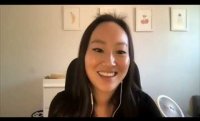
Writing F(r)iction: Crystal Hana Kim

Caption: 

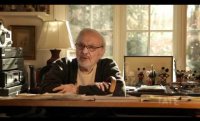
“I’ve learned to be a lot more flexible and I can write basically anywhere.” Crystal Hana Kim talks about writing after having a baby during the pandemic in this episode of the Writing F(r)iction podcast hosted by author Michael Johnston. Kim’s essay “How to Keep Going” is featured in the January/February issue of Poets & Writers Magazine.

Genre: 

Nochebuena

12.23.21

In American movies like the 1983 classic A Christmas Story, the children are sent off to bed on Christmas Eve with everything leading up to the magic of the morning of the twenty-fifth when the family wakes up to open presents under the tree. On the other hand, the Feast of the Seven Fishes and Nochebuena are celebrated on December 24 with families enjoying copious feasts, music, dancing, and cocktails. Write an essay inspired by a memorable Christmas Eve, whether it was quiet or festive. Was there merriment or anticipation in the air?

Child’s Play

12.22.21

In a 2009 interview for Newsweek, renowned children’s book writer Maurice Sendak is asked the following question: “What makes a good kids’ story?” At first Sendak dismisses the question saying that he just writes the books, but then remembers the experience of hearing stories told by his parents when he was a child with his siblings. “My parents were immigrants and they didn’t know that they should clean the stories up for us. So we heard horrible, horrible stories, and we loved them, we absolutely loved them.” This week, write a short story inspired by a particularly gruesome or frightening story you heard as a child. Whether by word of mouth or from a book, how will you adapt your terrifying tale to the plot line of a short story?

Inventions

12.21.21

“I once thought I was / my own geometry, / my own geocentric planet,” writes Paul Tran in their poem “Copernicus,” one in a series of poems titled after inventors and scientific concepts. In many of the poems, the theory or invention is used as a metaphor for a given speaker’s emotional struggle, such as in “Hypothesis,” in which Tran writes: “I could survive knowing / that not everything has a reason” and in the first lines of “Galileo”: “I thought I could stop / time by taking apart / the clock.” This week, write a poem named after an inventor or theory. How can you personalize a scientific subject and cast it through a lyrical light?

Remembering bell hooks

Caption: 

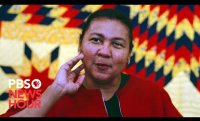
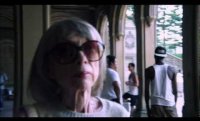
“There’s so many young people, the first time they start to think seriously about class, about sexuality, about gender, about identity, about vulnerability, about spirituality is through her work,” says Princeton University professor Imani Perry about the legacy of bell hooks in this PBS NewsHour video commemorating the influential critic, author, and feminist scholar and activist who died at the age of sixty-nine on December 15, 2021.

Pages

Subscribe to Poets & Writers RSS