A Feeling of History

9.22.22

Following the start of the COVID-19 pandemic in March 2020, Twitter user @aardvarsk tweeted: “I am tired of being a part of a major historical event.” The tweet gained over 60,000 retweets and 263,000 likes, and like anything popular these days, eventually turned into a meme. The expression, and versions of it, have spread online over the past two years noting the fatigue of many living through this time of multiple pandemics, war, and political and economic instability. Write an essay that reflects on the exhaustion of living through major historical moments. Consider how people a century ago were feeling and what might be said of the 2020s in the future.

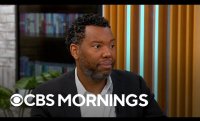
Ta-Nehisi Coates on Anti-Racist Books Being Banned

Caption: 

“For most of American history, African American authors have not had the purchase on the American conscience that they have right now,” says Ta-Nehisi Coates about the rise of banning books with themes about race including his own memoir, Between the World and Me (One World, 2015), as well as Ibram X. Kendi’s How to Be Antiracist (One World, 2019) and The 1619 Project: A New Origin Story (One World, 2021) by Nikole Hannah-Jones in this 2021 CBS Mornings interview. “This is really about white children now being exposed to ideas that I think were previously segregated.”

My Banned Book

9.21.22

In an essay featured in the September/October 2022 issue of Poets & Writers Magazine, Jonathan Evison writes about the banning of his 2018 novel, Lawn Boy, and the morning he found out that parents were protesting the inclusion of his novel in a Texas high school library. Evison awoke to several threatening messages on his social media accounts which included one that read: “There’s a special place in hell for people like you. I hope you burn.” This week, write a story from the perspective of a writer whose book is banned and targeted by a group of parents and local politicians. In what unexpected way is your protagonist’s life changed by this sudden fame?

Before the Storm

9.20.22

In her poem “The Quiet,” which appears in a recent issue of the London Review of Books, Jorie Graham disrupts traditional expectations of a poem by aligning the text to the right of the page. Graham creates an atmosphere of tension by describing a metaphysical storm, and later in the poem, a literal one. She writes: “as wind comes up and we feel our soul turn frantic / in us, craning this way and that, yes the soul can twist, can winch itself into knots, / why not, there is light but no warmth.” This week, write a poem that creates visual tension by aligning the text to the right. Is there a storm in your life that could serve as inspiration?

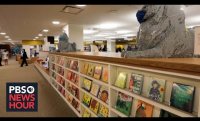
Book Bans Challenge Freedom of Speech

Caption: 

“They are not just a challenge in an individual school system or library, but legislation being introduced in statehouses that would affect the availability of books all over the state in every school and library.” In this PBS NewsHour video, Jeffrey Brown speaks with PEN America CEO Suzanne Nossel about the intensifying efforts across the United States to ban specific books related to LGBTQIA+ issues, race, and freedom of speech.

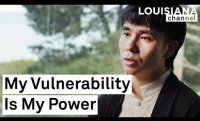
Ocean Vuong on Teaching and Writing

Caption: 

“When I write, I feel much larger than the limits of my body,” says Ocean Vuong, author of Time Is a Mother (Penguin Press, 2022), in this interview with his Danish translator Caspar Eric at the Louisiana Museum of Modern Art in Denmark. “There is a mystery you tap into that is much bigger.”

Genre: 

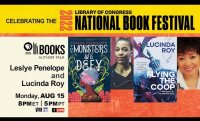
Author Talk With Leslye Penelope and Lucinda Roy

Caption: 

“The greatest trailblazer for me, in some ways, was my local library,” says Lucinda Roy, author of Flying the Coop (Tor Books, 2022), in this discussion with Leslye Penelope, author of The Monsters We Defy (Orbit, 2022), and journalist Angie Miles about speculative fiction and creating strong empowered female heroines for this virtual event celebrating the 2022 Library of Congress National Book Festival.

Genre: 

Skip to Risk

9.15.22

In “The Enduring Allure of Choose Your Own Adventure Books,” an essay published in the New Yorker this week, Leslie Jamison writes about her childhood obsession with Choose Your Own Adventure books and how they offered readers the chance to inhabit more daring versions of themselves. The essay is written like a Choose Your Own Adventure story, with the end of each section offering a choice to continue reading or to jump to another section. Inspired by Jamison’s essay, write a personal essay in the form of a Choose Your Own Adventure story. What choices will you allow your readers to make, and how will these choices affect the trajectory of what is revealed?

Pages

Subscribe to Poets & Writers RSS