Wesley Chu on The Art of Prophecy

Caption: 

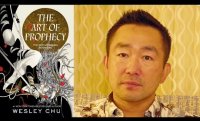
“It took me a long time, a lot of books under my belt before I could finally sit down and say, I am now skilled enough and experienced enough and confident enough to write The Art of Prophecy.” In this video, Wesley Chu speaks about his love of fantasy and Wuxia, and combining these genres in his new novel, The Art of Prophecy (Del Rey, 2022), the book he’s always wanted to write.

Genre: 

Carmen Maria Machado at the Kelly Writers House

Caption: 

“You were not always just a You. I was whole—a symbiotic relationship between my best and worst parts—and then, in one sense of the definition, I was cleaved.” In this reading at the Kelly Writers House in 2020, Carmen Maria Machado reads from her debut memoir, In the Dream House (Graywolf Press, 2019).

Pages Matam on Spoken Word

Caption: 

“I no longer want to do this thing of speaking for the voiceless, it’s about passing the microphone and allowing those people to finally speak for themselves.” In this video produced by the Guardian Labs, author and spoken word artist Pages Matam talks about the power of poetry and creating spaces where shared experiences can act as both inspiration and a catalyst for change.

Hiding a Truth

9.29.22

In “Oral History,” an essay published in Astra Magazine online, Yiyun Li recounts when she was invited by her child’s third grade class to share a story of what her life was like in the third grade. Instead of telling the true story of a teacher’s cruel punishment of a fellow student and the betrayal and ostracism she experienced as a result, she fabricates a story about the lantern festival she attended. Li writes: “How else could I have contributed to their education? Had I chosen to tell them a true story, I would have inflicted cruelty, too.” Inspired by Li’s decision, write a personal essay about a time you chose to conceal the truth to protect someone. What were the circumstances behind this decision, and what were you trying to protect them from?

Natasha Trethewey’s Windham-Campbell Lecture

Caption: 

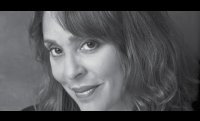
“That’s one of the reasons I write. I’ve needed to create the narrative of my life, its abiding metaphors, so that my story would not be determined for me.” In this 2022 video, former U.S. Poet Laureate Natasha Trethewey delivers the annual Windham-Campbell Lecture “Why I Write” for the prize ceremony at Yale University.

Thanatology

9.28.22

In a recent episode of the science podcast Ologies, host Alie Ward speaks with Cole Imperi, founder of the School of American Thanatology and a leading expert on death, dying, and grief. Ward talks about her experience with her father’s death and asks Imperi about the Kübler-Ross model, also known as the five stages of grief: denial, anger, bargaining, depression, and acceptance. Imperi discusses the common misconception that these stages are experienced by all in a linear order, and that in fact, many may not experience all the stages and some may switch from one stage to another and return to one again. This week, write a story in which a character grieves over the loss of something or someone. Use the Kübler-Ross model as inspiration to plot out your character’s development.


After the Movie

Caption: 

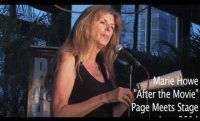
“My friend Michael and I are walking home arguing about the movie. / He says that he believes a person can love someone / and still be able to murder that person.” Marie Howe reads her poem “After the Movie,” which appears in her collection The Kingdom of Ordinary Time (Norton, 2008), in this 2014 video for the Page Meets Stage series in New York City.

Genre: 

To the Harvest

9.27.22

In Ross Gay’s poem “To the Fig Tree on 9th and Christian,” neighbors gather around “the canopy / of a fig its / arms pulling the / September sun to it” and relish in the riches of the tree’s bounty, an uncommon occurrence for a typical city street corner. Gay writes, “soon there were / eight or nine / people gathered beneath / the tree looking into / it like a / constellation pointing / do you see it.” This week, inspired by autumn as the season of the harvest, write a poem in which you describe a joyful scene centered around a fruit-bearing plant or tree. How does this experience serve as an escape from the worries of your daily life?

Northwest Passages Book Club: Putsata Reang

Caption: 

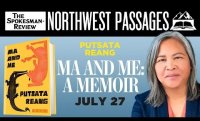
Putsata Reang speaks about her life as the daughter of a Cambodian refugee family and her debut memoir, Ma and Me (MCD Books, 2022), in this interview with NAACP president and Spokesman-Review columnist Kiantha Duncan for the Northwest Passages Book Club in Spokane. Reang is featured in “The New Nonfiction 2022” in the September/October issue of Poets & Writers Magazine.

Pages

Subscribe to Poets & Writers RSS