Ten Questions for Elisa Gabbert

“I come up with a form and then find a way to ‘translate’ my thoughts into the form. It wasn’t always like that, but that’s the way it is now. I used to think in lines.” —Elisa Gabbert, author of The Word Pretty
Jump to navigation Skip to content
“I come up with a form and then find a way to ‘translate’ my thoughts into the form. It wasn’t always like that, but that’s the way it is now. I used to think in lines.” —Elisa Gabbert, author of The Word Pretty
Ross Gay reads from his forthcoming essay collection, The Book of Delights (Algonquin Books, 2019), at a 2017 reading in Washington, D.C. for the Field Office. Gay is featured in “Portraits of Inspiration” in the January/February issue of Poets & Writers Magazine.
In Amanda Hess’s New York Times essay “The End of Endings,” she writes about how in our current age of “the prequel, the reboot, the reunion, the revival, the remake, the spinoff,” the logic of the Internet contributes to a timeline where nothing ends, a time when scrolling through social media continues indefinitely, an age of never-ending online content. Whereas in the past, “we needed stories to end so we could make sense of them.” Write a personal essay that extends a previously explored subject or experience to investigate what came before or after, or that offers a different version or perspective.
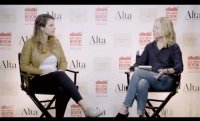
“If you’re on Twitter and Facebook and sharing there, there’s no pressure of concealment, and I think good memoir comes out of that place.” Dani Shapiro, whose fifth memoir, Inheritance: A Memoir of Genealogy, Paternity, and Love (Knopf, 2019), is featured in Page One in the January/February issue of Poets & Writers Magazine, talks with Literary Hub’s Emily Temple about how social media could have an adverse effect on writing and storytelling.

An essayist discusses the five journals that first published the essays in her debut collection, Five Plots.
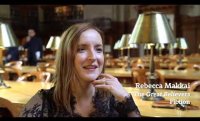
In this video from the New York Public Library, 2018 National Book Awards finalists, including Rebecca Makkai, Hanne Ørstavik, and Jeffrey C. Stewart, sit down to answer questions about their favorite books and which fictional character they’d want to hang out with.
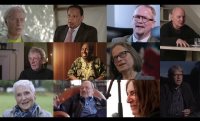
“Be very patient, even patient with chaos,” Lydia Davis advises writers in this compilation of interviews by Louisiana Channel. Seasoned writers from around the world, including Alaa Al Aswany, Umberto Eco, Richard Ford, Patti Smith, and Ngũgĩ wa Thiong’o, also offer their thoughts on how to keep writing.
Gwydion Suilebhan announced as PEN/Faulkner Foundation’s new executive director; Russian writer Andrei Bitov had died; Joyce glasses and Yeats book fetch high prices at auction; and other news.
In The Library Book, published by Simon & Schuster in October, Susan Orlean’s lifelong love of reading and books propels her toward an exploration of libraries, as well as the personal stories of librarians. In the process of turning an eye toward one specific subject, Orlean delves into larger themes of obsessions, collecting, and memory as they pertain to universal human tendencies and to her own life. Think of a broad subject of particular interest to you and write a personal essay about it that incorporates different types of nonfiction, including elements of memoiristic writing, historical research, interviews, and primary-source documents. Examine the ways in which the formation and collection of your own memories joins with other voices and stories to create a chorus.
Teju Cole joins Harvard creative writing faculty; Ingram rumored to make bid to buy Baker & Taylor retailing arm; New Yorker and Vulture critics share their favorite books of 2018; and other news.