Poets & Writers Blogs

January 31 Contest Roundup for Poets

Poets! Polish those poems and full-length manuscripts this weekend and consider submitting to the following contests, all with a deadline of January 31. Each contest offers a prize of at least $1,000:

New Millennium Awards: A prize of $1,000 and publication in New Millennium Writings is given twice yearly for a poem. Alexis Williams Carr and Don Williams will judge. Entry fee: $20.

Crazyhorse Literary Prize: A prize of $2,000 and publication in Crazyhorse is given annually for a poem. Erika Meitner will judge. Entry fee: $20.

Center for African American Poetry and Poetics’ Fellowship in Creative Writing: A two-year fellowship, including an annual stipend of $48,000 and health benefits, at the Center for African American Poetry and Poetics (CAAPP) at the University of Pittsburgh will be given biennially to a poet. Poets with an MFA or PhD in creative writing who have not published more than one book and have knowledge of African American or African diasporic poetry and poetics are eligible. Entry fee: none.

Autumn House Press Rising Writer Contest: A prize of $1,000 and publication by Autumn House Press is given annually for a debut poetry collection by a writer age 33 or younger. Stacey Waite will judge. Entry fee: $25.

Money for Women/Barbara Deming Memorial Fund’s Individual Artist Grants for Women: Grants of up to $1,500 each are given to feminist poets who are citizens of the United States or Canada. Entry fee: $25.

Schaffner Press Nicholas Schaffner Award for Music in Literature: A prize of $1,000 and publication by Schaffner Press is given annually for a poetry collection that “deals in some way with the subject of music and its influence.” Entry fee: $25.

Hurston/Wright Foundation’s Award for College Writers: A prize of $1,000 is given annually for a poem by a Black college student. Entry fee: $25.

Iowa Review Awards: A prize of $1,500 and publication in Iowa Review is given annually for a group of poems. Kiki Petrosino will judge. Entry fee: $20.

Winter Anthology Writing Contest: A prize of $1,000 and publication in Winter Anthology is given annually for a group of poems. Entry fee: $11.

Visit the contest websites for complete guidelines, and check out Grants & Awards database and Submission Calendar for more contests in poetry, fiction, and creative nonfiction.

Please log in to continue.
LOG IN
Don’t yet have an account?
Register for a free account.

Kingsley & Kate Tufts Poetry Awards Finalists Announced

Ten finalists have been selected for the 2019 Kingsley & Kate Tufts Poetry Awards. The Kingsley Tufts Poetry Award offers a prize of $100,000 to a mid-career poet, while the Kate Tufts Discovery Award offers a prize of $10,000 for a first book by an emerging poet. Both prizes are given for books published in the previous year.

This year’s finalists for the Kate Tufts Discovery Award are Tyree Daye for River Hymns (American Poetry Review Press), Diana Khoi Nguyen for Ghost Of (Omnidawn Publishing), Justin Phillip Reed for Indecency (Coffee House Press), Vanessa Angélica Villarreal for Beast Meridian (Noemi Press), and Javier Zamora for Unaccompanied (Copper Canyon Press).

The finalists for the Kingsley Tufts Poetry Award are CAConrad for While Standing in Line for Death (Wave Books), Terrance Hayes for American Sonnets for My Past and Future Assassin (Penguin Books), Brenda Hillman for Extra Hidden Life, Among the Days (Wesleyan University Press), Dawn Lundy Martin for Good Stock Strange Blood (Coffee House Press), and Craig Santos Perez for from unincorporated territory [lukao] (Omnidawn).

Timothy Donnelly chaired the judging committee this year. Winners will be announced in February.

The Kingsley Tufts Poetry Award was established in 1992 by Kate Tufts at Claremont Graduate University; the Kate Tufts Discovery Award followed in 1993. The awards are given to provide recognition, visibility and financial support to poets.

Please log in to continue.
LOG IN
Don’t yet have an account?
Register for a free account.

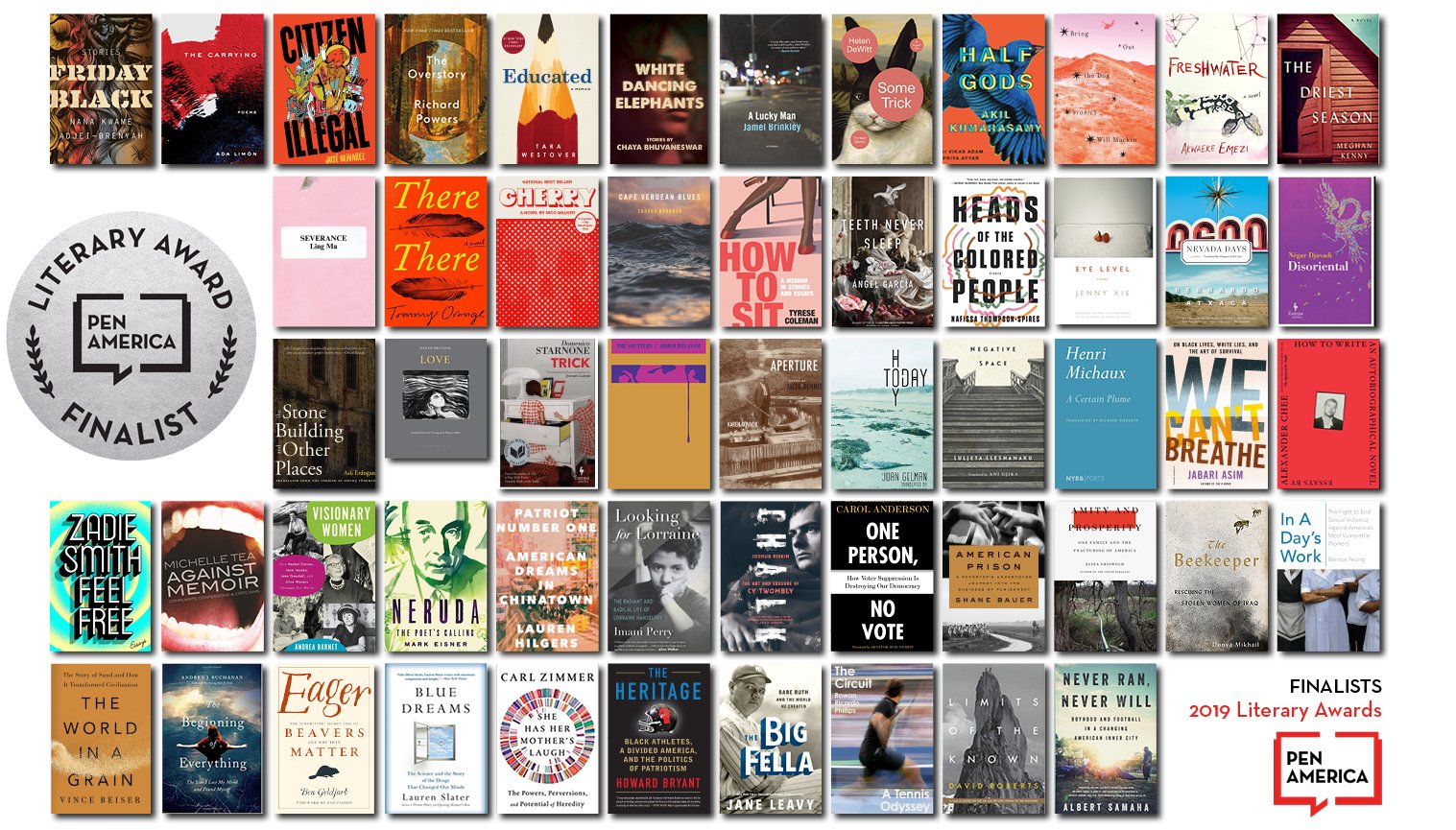
PEN America Announces Finalists for 2019 Literary Awards

This morning PEN America announced the finalists for its 2019 Literary Awards, which showcase the best books of poetry, fiction, nonfiction, and translation published in the previous year. More than $370,000 in prize money will be awarded to the winning writers, who will be announced at a ceremony in New York City on February 26. This year more than 50 percent of the finalists are debut writers and authors published by small presses.

The $75,000 PEN/Jean Stein Book Award recognizes a book-length work in any genre. The 2019 finalists are Nana Kwame Adjei-Brenyah for Friday Black (Mariner Books), Ada Limón for The Carrying (Milkweed Editions), José Olivarez for Citizen Illegal (Haymarket Books), Richard Powers for The Overstory (Norton), and Tara Westover for Educated (Random House).

The finalists for the PEN/Hemingway Award, which includes $25,000 and a residency at the Ucross Foundation in Wyoming, are Akwaeke Emezi for Freshwater (Grove Press), Meghan Kenny for The Driest Season (Norton), Ling Ma for Severance (Farrar, Straus and Giroux), Tommy Orange for There There (Knopf), and Nico Walker for Cherry (Knopf).

The PEN/Bingham Prize, which was previously awarded for a first book of fiction, will now be awarded for a debut story collection. The finalists for the $25,000 award are Chaya Bhuvaneswar for White Dancing Elephants (Dzanc Books), Jamel Brinkley for A Lucky Man (Graywolf Press), Helen DeWitt for Some Trick (New Directions), Akil Kumarasamy for Half Gods (Farrar, Straus and Giroux), and Will Mackin for Bring Out the Dog (Random House).

The PEN Open Book Award, worth $5,000, will be conferred to an author of color for a book-length work of any genre. The finalists are Shauna Barbosa for Cape Verdean Blues (University of Pittsburgh Press), Tyrese Coleman for How to Sit: A Memoir in Stories and Essays (Mason Jar Press), Ángel García for Teeth Never Sleep (University of Arkansas Press), Nafissa Thompson-Spires for Heads of the Colored People (Atria), and Jenny Xie for Eye Level (Graywolf Press).

The PEN/Diamonstein-Spielvogel Award for the Art of the Essay is given to a collection of essays that exemplify the form. The finalists for the $10,000 award are Jabari Asim for We Can’t Breathe: On Black Lives, White Lies, and the Art of Survival (Picador), Alexander Chee for How to Write an Autobiographical Novel (Houghton Mifflin Harcourt), Brian Phillips for Impossible Owls (FSG Originals), Zadie Smith for Feel Free (Penguin Press), and Michelle Tea for Against Memoir (Feminist Press).

Visit the website for a complete list of finalists, including those for PEN awards in nonfiction, biography, translation, poetry in translation, and literary science writing.

Established in 1963, the PEN America Literary Awards have honored hundreds of writers. Layli Long Soldier, Jenny Zhang, and Alexis Okeowo were among the 2018 winners.

Please log in to continue.
LOG IN
Don’t yet have an account?
Register for a free account.

Dominican Writers Association Presents Julian Randall and Gabriel Ramirez

Mariela Regalado is a relambia who loves to tell stories, specifically about her experiences as a Dominican American growing up between New York and Santiago, Dominican Republic. As director of college counseling at Brooklyn’s Juan Morel Campos Secondary School, she was named Hometown Hero in Education by the Daily News for her work with students in Brooklyn and the Bronx. Her writing has appeared in Remezcla, Fierce, La Galería Magazine, Harvard Latinx Law Review, St. Sucia, the Manhattan Times, and the Bronx Free Press.

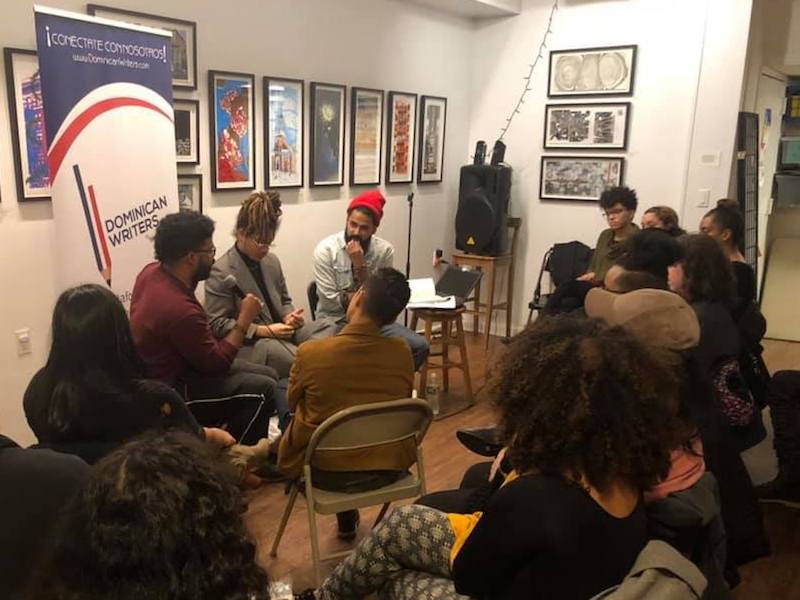
On December 20 the Dominican Writers Association, with support from Poets & Writers’ Readings & Workshops program, hosted a crucial conversation centered on the idea that there are missing voices from the literary canon that deserve to be amplified. The decision to host the event at Word Up Community Bookshop, a multilingual, nonprofit community bookstore run by volunteers in the Washington Heights neighborhood of New York City, was an easy one as they share many of the same values as the Dominican Writers Association, an organization created and run by writers of Dominican heritage in New York City that aims to support and foster the development of creative writers.

Writer and teacher JP Infante, who hosts a regular series at Word Up, led the conversation between poets Julian Randall and Gabriel Ramirez. The chairs were set up in a semicircle and the two guests sat in the center. Infante opened the conversation by introducing Julian Randall, a living queer Afro-Dominican poet from Chicago and MFA candidate in poetry at the University of Mississippi.

Randall’s debut poetry collection, Refuse (University of Pittsburgh Press, 2018), won the 2017 Cave Canem Poetry Prize. While browsing the shelves of new and used books before the event, I spoke briefly to Randall, who was wearing a burgundy T-shirt with white bold letters that spelled out the word REPARATIONS. I asked what reparations meant to him and he replied: “It means to me, a redress of grievances, a possibility for a new beginning.... There are certain ways in which we’ve been deprived; even of the ability to begin narratives where we would like to begin them. It means the ability to revise history.”

Gabriel Ramirez is a queer Afro-Latinx poet, activist, youth mentor at Urban Word NYC, and MFA candidate in poetry at the University of Mississippi. The first question of the night was: “What is a poet? What is the function of a poet?” Ramirez replied: “What isn’t a poet? What is it to be a breathing archive?” Ramirez’s work is moving and inspiring with intergenerational moments weaved carefully into his writing. His outfit that evening, a black-and-white checkered suit belonging to his late grandfather adorned with gold accessories that were made in the Dominican Republic, also paid homage to his roots.

The intimate conversation between these poets was shared with a kind audience who embraced them like family. There was a shared connection and a feeling of being seen, validated through the words of poets and writers who demonstrated through their stories and pieces that we are not alone.

Attendees were able to chime in during the conversation and asked for clarification in the answers given by Randall and Ramirez, and some were even comfortable enough to share their own anecdotes. I was filled with solid encouragement that there is a space for Latinx writers. To close the event, both Randall and Ramirez delighted us with a reading of their respective works, bringing to life the challenges and struggles they have both experienced as queer Latinx writers.

Support for the Readings & Workshops Program in New York City is provided, in part, by public funds from the New York State Council on the Arts, and the New York City Department of Cultural Affairs, with additional support from the Frances Abbey Endowment, the Cowles Charitable Trust, and the Friends of Poets & Writers.

Photos: (top) Mariela Regalado (Credit: NYC Toledo). (bottom) Julian Randall and Gabriel Ramirez with JP Infante (Credit: NYC Toledo).

Please log in to continue.
LOG IN
Don’t yet have an account?
Register for a free account.

National Book Critics Circle Award Finalists Announced

This morning the National Book Critics Circle (NBCC) announced the finalists for its 2018 awards. The awards are given annually for books of poetry, fiction, nonfiction, criticism, autobiography, and biography published in the previous year.

The finalists in poetry are Terrance Hayes for American Sonnets for My Past and Future Assassin (Penguin Books), Ada Limón for The Carrying (Milkweed Editions), Erika Meitner for Holy Moly Carry Me (BOA Editions), Diane Seuss for Still Life With Two Dead Peacocks and a Girl (Graywolf Press), and Adam Zagajewski for Asymmetry, translated by Clare Cavanagh (Farrar, Straus and Giroux).

The finalists in fiction are Anna Burns for Milkman (Graywolf Press), Patrick Chamoiseau for Slave Old Man, translated by Linda Coverdale (New Press), Denis Johnson for The Largesse of the Sea Maiden (Random House), Rachel Kushner for The Mars Room (Scribner), and Luis Alberto Urrea for The House of Broken Angels (Little, Brown).

The finalists in autobiography are Richard Beard for The Day That Went Missing: A Family’s Story (Little, Brown), Nicole Chung for All You Can Ever Know (Catapult), Rigoberto González for What Drowns the Flowers in Your Mouth: A Memoir of Brotherhood (University of Wisconsin Press), Nora Krug for Belonging: A German Reckons With History and Home (Scribner), Nell Painter for Old in Art School: A Memoir of Starting Over (Counterpoint), and Tara Westover for Educated (Random House).

The NBCC also announced that Tommy Orange has won the John Leonard Prize for his debut novel, There There (Knopf). The Nona Balakian Citation for Excellence in Reviewing was awarded to editor, columnist, and NPR Fresh Air book critic Maureen Corrigan, while Arte Público Press received the Ivan Sandrof Lifetime Achievement Award. Visit the NBCC website to read the full list of finalists, including those in the categories of general nonfiction, biography, and criticism.

Established in 1975, the National Book Critics Circle Awards are selected by the NBCC’s board of directors, composed of twenty-four editors and critics from leading print and online publications. Last year’s winners included poet Layli Long Soldier and novelist Joan Silber. The 2018 winners will be announced on March 14 at the New School in New York City.

Please log in to continue.
LOG IN
Don’t yet have an account?
Register for a free account.

Zócalo Public Square Poetry Prize Open for Submissions

Zócalo Public Square is open to submissions for its eighth annual Poetry Prize. The prize is awarded to a poem that “best evokes a connection to place.” The winner will receive $500 and a published interview with Zócalo.

Submissions are currently open; the deadline is February 4. To submit, send up to three poems to poetry@zocalopublicsquare.org. There is no entry fee. The editors will judge. For complete guidelines, visit the website.

The winner will be announced in March 2019. Previous winners include Charles Jensen for his poem “Tucson”; Matt Phillips for his poem “Crossing Coronado Bridge”; and Gillian Wegener for “The Old Mill Café.”

Established in Los Angeles in 2003, Zócalo Public Square is dedicated to connecting “people to ideas and to each other by examining essential questions in an accessible, broad-minded, and democratic spirit.”

Please log in to continue.
LOG IN
Don’t yet have an account?
Register for a free account.

2018 Maureen Egen Writers Exchange Winner in Poetry: The Literary Community

Anushah Jiwani graduated summa cum laude from Hendrix College with a BA in English–Creative Writing and International Relations. She is the 2018 recipient of the Maureen Egen Writers Exchange Award (WEX) for poetry sponsored by Poets & Writers. She took honors in the 2017 Southern Literary Festival Competition and won third place in the statewide 2017 Jeannie Dolan Carter Collegiate Poetry Contest sponsored by the Poets’ Roundtable of Arkansas. Jiwani also won the Fourth Annual Short Fiction Contest sponsored by the Hemingway-Pfeiffer Museum and Educational Center in 2017. Much of her writing centers on the duality of her Pakistani American identity and aims to provide a space for the immigrant voice.

In May of 2018, I found out that I was the recipient of Poets & Writers’ Maureen Egen Writers Exchange Award for poetry. In addition to a generous honorarium and a reading, Joshua Idaszak, the winner for fiction, and I would get the chance to meet with editors, authors, and publishers in New York City. Bonnie Rose Marcus worked tirelessly to arrange meetings, and welcomed us with open arms in November.

What I learned: editors, publishers, literary agents—they’re all just ordinary people. They want to know about you, and it’s as easy as one simple conversation. This prize creates the opportunity for that conversation to happen, with generous support from the team at Poets & Writers.

Through these conversations, many things became clear: internal relationships mattered, there would be little money in poetry, literary agents wanted novels over short stories, small presses are dedicated to their authors, and within all this business, community around writing was a precious thing.

Among others, I chose to meet with Paolo Javier, who works tirelessly to create community and accessibility around writing at Poets House, and Sarah Gambito, cofounder of Kundiman, who is seeking holistic points of entry and multidisciplinary forms for audience engagement.

These poets have been motivated by lack of opportunity or equity in the writing world, and are trying to create honest spaces for established and growing writers. We talked about embracing rejections, finding the right MFA programs, expanding community programs, the discipline required for publishing one’s work, and our love for literature.

As a writer, I learned an incredible amount about the inner workings of the literary world through this trip. But what was more significant, personally, was being able to connect with other writers of color who shared their experiences about navigating and succeeding in this sphere.

The Maureen Egen Writers Exchange Award is generously supported by Maureen Egen, a member of the Poets & Writers Board of Directors.

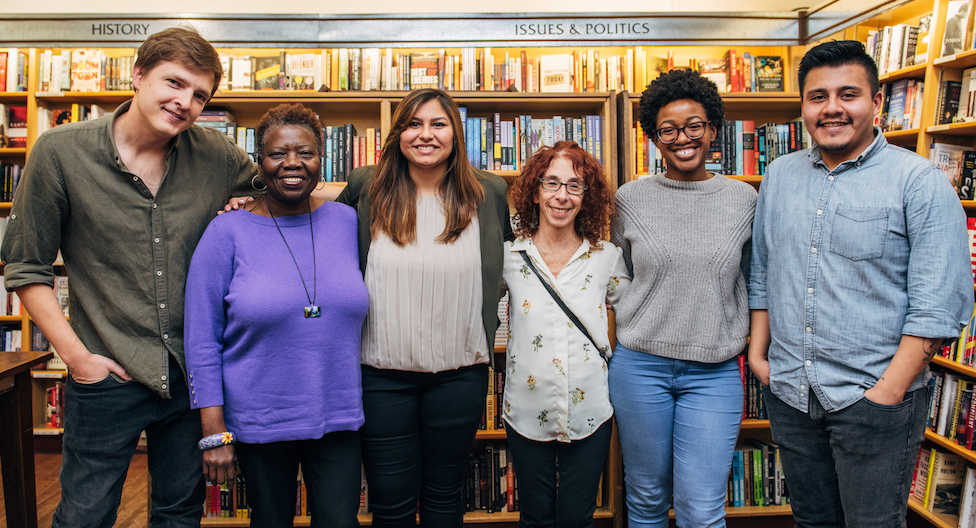
Photo: (left to right) Joshua Idaszak, 2018 WEX poetry judge Cheryl Boyce-Taylor, Anushah Jiwani, R&W (east) director Bonnie Rose Marcus, R&W fellow Arriel Vinson, and R&W program assistant Ricardo Hernandez (Credit: Christian Rodriguez).

Please log in to continue.
LOG IN
Don’t yet have an account?
Register for a free account.

Upcoming Prose Contest Deadlines for Writers

Looking to work on submissions over the weekend? The contests listed below have deadlines through January 15 and are open to writers of fiction and nonfiction:

Australian Book Review’s Calibre Essay Prize: A prize of AUD $5,000 (approximately $3,600) is given annually for an essay. A second-place prize of AUD $2,500 (approximately $1,800) is also given. The winners will be published in Australian Book Review. J. M. Coetzee, Anna Funder, and Peter Rose will judge. Entry fee: $18. Deadline: January 14.

Ellen Meloy Fund’s Desert Writers Award: A prize of $5,000 is given annually to enable a creative nonfiction writer “whose work reflects the spirit and passions for the desert embodied in Ellen Meloy’s writing” to spend creative time in a desert environment. Entry fee: None. Deadline: January 15.

BkMk Press’s Chandra Prize: A prize of $1,000 and publication by BkMk Press is given annually for a short story collection. Entry fee: $30. Deadline: January 15.

University of Texas in Austin’s Dobie Paisano Fellowships: Two residencies, cosponsored by the Texas Institute of Letters, at a rural retreat west of Austin are given annually to writers who are native Texans, who have lived in Texas for at least three years, or who have published significant work with a Texas subject. The six-month Jesse H. Jones Writing Fellowship is given to a writer in any stage of his or her career and includes a grant of $18,000. The four-month Ralph A. Johnston Memorial Fellowship is given to a writer who has demonstrated “publishing and critical success” and includes a grant of $25,000. Entry fee: $20; $30 to enter both competitions. Deadline: January 15.

PRISM’s Jacob Zilber Prize for Short Fiction: A prize of $1,500 CAD (approximately $1,130) and publication in PRISM is given annually for a short story. Entry fee: $40. Deadline: January 15.

Literal Latté’s K. Margaret Grossman Fiction Award: A prize of $1,000 and publication in Literal Latté is given annually for a short story. Entry fee: $10. Deadline: January 15.

Third Coast’s Fiction Contest: An award of $1,000 and publication in Third Coast is given annually for a short story. Deborah Reed will judge. Entry fee: $18. Deadline: January 15.

Visit the contest websites for complete submission details, including eligibility guidelines and length requirements. For a look at more writing contests with upcoming deadlines, visit our Grants & Awards database and submission calendar.

Please log in to continue.
LOG IN
Don’t yet have an account?
Register for a free account.

Milkweed Expands Midwestern Poetry Prize

Minneapolis–based independent publisher Milkweed Editions recently announced that its Lindquist & Vennum Prize for Poetry will continue under a new name, the Ballard Spahr Prize for Poetry. The annual books prize, which is open to poets living in the upper Midwest, has also been expanded to include Michigan on its list of eligible states of residence for entrants.

Established in 2011, the prize offers $10,000 and publication by Milkweed Editions for a collection of poetry by an emerging or established poet residing in Minnesota, Iowa, North Dakota, South Dakota, Wisconsin, or Michigan.

“This meaningful prize recognizes artistic excellence and rewards poets publicly and lucratively, and we are grateful for the vision and commitment of the Ballard Spahr Foundation to carry this prize forward in partnership with Milkweed,” said Daniel Slager, Milkweed’s publisher and CEO.

Submissions are currently open, and the deadline is February 15. Using the online submission system, submit a manuscript of at least 48 pages. There is no entry fee. Khaled Mattawa will judge.

Previous winners include Claire Wahmanholm for Wilder (2018); Caitlin Bailey for Solve for Desire (2017); Chris Santiago for Tula (2016); Jennifer Willoughby for Beautiful Zero (2015); Michael Bazzett for You Must Remember This (2014); Rebecca Dunham for Glass Armonica (2013); and Patricia Kirkpatrick for Odessa (2012).

Please log in to continue.
LOG IN
Don’t yet have an account?
Register for a free account.

Upcoming Poetry Contest Deadlines

Is it your New Year’s resolution to submit more of your poetry to contests and journals? Here are several poetry contests, all of which offer a cash prize of $500 to $2,000, with upcoming deadlines.

92Y Unterberg Poetry Center Discover Poetry Prizes: Four prizes of $500 each and publication in the Paris Review Daily are given annually for a group of poems. Winners also receive lodging and travel expenses to give a reading at the 92nd Street Y in New York City in May. Poets who have not yet published a full-length poetry collection are eligible. Timothy Donnelly and Mai Der Vang will serve as preliminary judges; Daniel Borzutzky, Randall Mann, and Patricia Smith will serve as final judges. Entry fee: $15. Deadline: January 11.

Colorado Review Colorado Prize for Poetry: A prize of $2,000 and publication by the Center for Literary Publishing is given annually for a poetry collection. Kazim Ali will judge. Entry fee: $25.Deadline: January 14.

BkMk Press Ciardi Prize: A prize of $1,000 and publication by BkMk Press is given annually for a poetry collection. Entry fee: $30. Deadline: January 15. 

WOMR/WFMR Community Radio Joe Gouveia Outermost Poetry Contest: A prize of $1,000 is given annually for a poem. Marge Piercy will judge. Entry fee: $15. Deadline: January 15.

Third Coast Poetry Contest: A prize of $1,000 each and publication in Third Coast is given annually for a poem. Leila Chatti will judge. Entry fee: $18. Deadline: January 15.

Asheville Poetry Review William Matthews Poetry Prize: A prize of $1,000 and publication in Asheville Poetry Review is given annually for a poem. Dorianne Laux will judge. Entry fee: $20. Deadline: January 15.

Wells College Press Chapbook Competition: A prize of $1,000, publication by Wells College Press, and 10 author copies is given annually for a poetry chapbook. The winner will also receive room and board to attend a launch party at Wells College in Fall 2019. Dan Rosenberg will judge. Entry fee: $20. Deadline: January 15.

Visit the contest websites for complete submission details, including eligibility guidelines and length requirements. For a look at more writing contests with upcoming deadlines, visit our Grants & Awards database and submission calendar


Please log in to continue.
LOG IN
Don’t yet have an account?
Register for a free account.

Twenty Year-End Contest Deadlines for Poets & Writers

Planning to write over the holidays? Finish your writing year up strong and head into 2019 resolved to send more work out into the world with the following contests in poetry, fiction, and nonfiction. The twenty contests below have deadlines at the end of December or in the first days of January.

Bauhan Publishing Monadnock Essay Collection Prize: A prize of $1,000, publication by Bauhan Publishing, and 50 author copies is given annually for an essay collection. Anne Barngrover will judge. Entry fee: $25. Deadline: December 31.

Bayou Magazine Poetry and Fiction Prizes: Two prizes of $1,000 each and a subscription to Bayou Magazine are given annually for a poem and a short story. Entry fee: $20. Deadline: January 1.

Boulevard Short Fiction Contest: A prize of $1,500 and publication in Boulevard is given annually for a short story by a writer who has not published a nationally distributed book. Entry fee: $16. Deadline: December 31.

Bright Hill Press Poetry Book Competition: A prize of $1,000, publication by Bright Hill Press, and 30 author copies is given annually for a poetry collection. Entry fee: $27. Deadline: December 31.

Crosswinds Poetry Contest: A prize of $1,000 and publication in Crosswinds is given annually for a poem. Tina Cane will judge. Entry fee: $20. Deadline: December 31.

Florida Review Jeanne Leiby Memorial Chapbook Award: A prize of $1,000 and publication by Florida Review is given annually for a chapbook of short fiction, short nonfiction, or graphic narrative. Entry fee: 25. Deadline: December 31.

Gemini Magazine Poetry Contest: A prize of $1,000 and publication in Gemini Magazine is given annually for a poem. The editors will judge. Entry fee: $7. Deadline: January 2.

Glimmer Train Family Matters Contest: A prize of $2,500, publication in Glimmer Train Stories, and 20 copies of the prize issue is given annually for a short story about families of any configuration. Entry fee: $18 Deadline: January 2.

Lascaux Review Prize in Short Fiction: A prize of $1,000 and publication in Lascaux Review is given annually for a short story. Entry fee: $10. Deadline: December 31.

Mississippi Review Prize: Three prizes of $1,000 each and publication in Mississippi Review are given annually for a poem, a short story, and an essay. Entry fee: $15. Deadline: January 1.

The Moth Poetry Prize: A prize of €10,000 (approximately $12,000) and publication in the Moth is given annually for a poem. Three runner-up prizes of €1,000 (approximately $1,200) each are also given. The winners will also be invited to read at an awards ceremony at the Poetry Ireland festival in Dublin in Spring 2019. Jacob Polley will judge. Entry fee: $13. Deadline: December 31.

New Rivers Press Many Voices Project Competition: Two prizes of $1,000 each and publication by New Rivers Press are given annually for a poetry collection and a book of fiction or creative nonfiction by an emerging writer. Entry fee: $25. Deadline: December 31.

Nowhere Magazine Travel Writing Contest: A prize of $1,000 and publication in Nowhere Magazine is given twice yearly for a poem, a short story, or an essay that “possesses a powerful sense of place.” Porter Fox will judge. Entry fee: $20. Deadline: December 31.

Press 53 Award for Short Fiction: A prize of $1,000, publication by Press 53, and 50 author copies is given annually for a story collection. Kevin Morgan Watson will judge. Entry fee: $30. Deadline: December 31.

Quercus Review Press Poetry Book Award: A prize of $1,000, publication by Quercus Review Press, and 15 author copies is given annually for a poetry collection. Sam Pierstorff will judge. Entry fee: $25. Deadline: December 28.

River Styx Micro-Fiction Contest: A prize of $1,500 and publication in River Styx is given annually for a short short story. Entry fee: $10. Deadline: December 31.

Tampa Review Danahy Fiction Prize: A prize of $1,000 and publication in Tampa Review is given annually for a short story. The editors will judge. Entry fee: $20. Deadline: December 31.

Tampa Review Prize for Poetry: A prize of $2,000 and publication by University of Tampa Press is given annually for a poetry collection. Entry fee: $28. Deadline: December 31.

Tupelo Press Dorset Prize: A prize of $3,000 and publication by Tupelo Press is given annually for a poetry collection. The winner also receives a weeklong residency at the Massachusetts Museum of Contemporary Art. Entry fee: $30. Deadline: December 31.

Whitefish Review Montana Award for Fiction: A prize of $1,000 and publication in Whitefish Review is given annually for a short story. Rick Bass will judge. Entry fee: $20. Deadline: January 1.

Visit the contest websites for complete submission details, including eligibility guidelines and length requirements. For a look at more writing contests with upcoming deadlines, visit our Grants & Awards database and submission calendar. Happy holidays, and happy submitting! 

Please log in to continue.
LOG IN
Don’t yet have an account?
Register for a free account.

Writing in Community

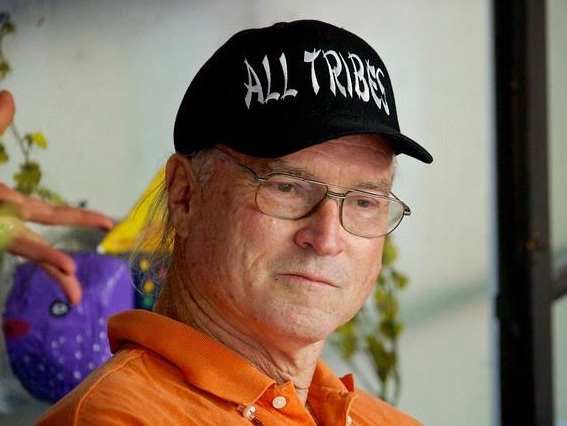
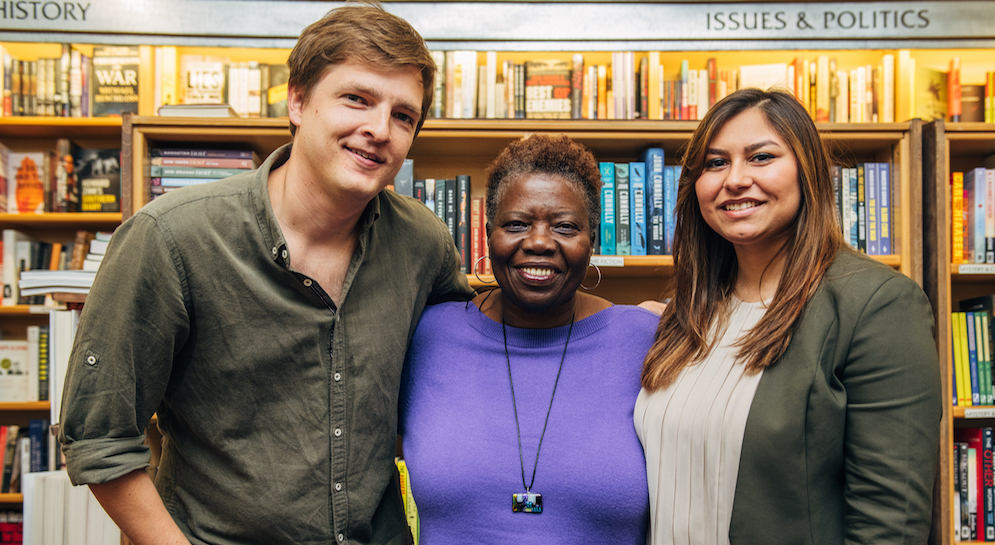
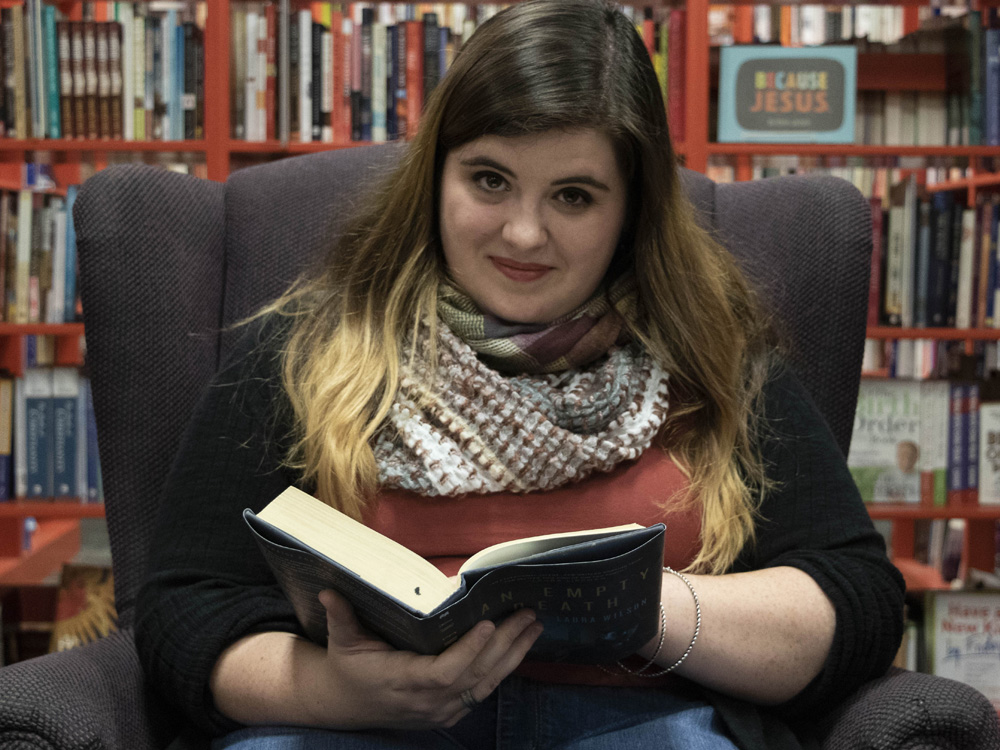
Jim Hornsby Moreno is a Vietnam veteran and an adopted member of the Smuwich Chumash tribe. He is the author of Dancing in Dissent: Poetry for Activism (Dolphin Calling Press, 2007), and two CDs of poetry and music: reversing the erased: exhuming the expunged (Dolphin Calling Press, 2016) and A Question From Love (Dolphin Calling Press, 2017). His poems have appeared in Tidepools, Magee Park Poets Anthology, the San Diego Poetry Annual, and others. Hornsby Moreno is a teaching artist with San Diego Writers, Ink, and on the advisory board of the Poetic Medicine Institute in Palo Alto, California.

On November 18 I facilitated a workshop at San Diego Writers, Ink called Gems of 10 Imagists: Masterpiece Poems of Imagism. The course description began with a quote from Wallace Stevens: In poetry, you must love the words, the ideas and the images and rhythms with all your capacity to love anything at all. This quote captures the essence of how I teach: Write from your heart. Don’t let your editor write your poem. Let your poet write the poem. Then, as many have said, turn it over to your (internal) editor so the craft can begin.
My workshops are not critique classes. I go out of my way in my course descriptions to make that point. I also point out that if you are looking for an audience for your poems, my workshops are not for you. I teach poetry as discovery, as Joy Harjo often describes her writing process. Or as Julia Alvarez wrote: I write to find out what I am thinking. I write to find out who I am. I write to understand things.

After one of my classes in San Diego’s Juvenile Hall I sent Joy one of my student’s poems. I had read “She Had Some Horses” in class, Joy’s poem from her book of the same name. The young woman had written a poem from her heart, obviously influenced by the Muscogee poet. Joy sent me a box of books and CDs with a short note thanking me for the poem. She also encouraged me to continue teaching. A nice prompt from a master prompter.

My workshops involve a lot of research. In the five years I lived on the Pala Reservation, I saw the differences and the similarities of tribes that were just a few miles down the highway from each other in San Diego’s North County. From that experience, my workshops have two parts. The first part exposed students to the poetry of e .e. cummings, Amy Lawrence Lowell, Ezra Pound, Wallace Stevens, and the founder of the Imagist movement T. E. Hulme, among others.

The second part of the workshop focused on poets from other genres, cultures, and generations that resonated with the poems of the Imagists: Sandra Cisneros, Joy Harjo, Octavio Paz, Lawrence Raab, Sonia Sanchez, and William E. Stafford. A three-hour workshop takes two to three weeks of research and is a labor of love finding the bridges that unite poets and people.

Writing in community is different than writing in solitude. When you find a safe space with an instructor that invites you to grow as a writer, your writing will take off because of the consciousness in the room and your innate talent as a storyteller, waiting for you to take on the blank page. Write from your heart and listen to your muse.

Support for Readings & Workshops in California is provided by the California Arts Council, a state agency, and the National Endowment for the Arts, a federal agency. Additional support comes from the Friends of Poets & Writers.

Photo: Jim Hornsby Moreno (Credit: Jack Foster Mancilla)

Please log in to continue.
LOG IN
Don’t yet have an account?
Register for a free account.

Weekend Contest Deadlines

Planning to submit your work this weekend? The writing contests listed below all share a deadline of December 15, and offer opportunities for poets, fiction writers, and nonfiction writers looking to submit a single work or a full-length book.

Center for Book Arts Letterpress Poetry Chapbook Competition: A prize of $500 and letterpress publication by the Center for Book Arts is given annually for a poetry chapbook. The winner will also receive an additional $500 to give a reading with the contest judge at the Center for Book Arts in New York City in Fall 2019, and a weeklong residency at the Winter Shakers Program at the Millay Colony for the Arts in Austerlitz, New York. Edwin Torres will judge. Entry fee: $30.

LitMag’s Virginia Woolf Award for Short Fiction: A prize of $3,500 and publication in LitMag is given annually for a short story. A second-place prize of $1,000 will also be given. The winners will have their work reviewed by Sobel Weber Associates literary agency. The editors will judge. Entry fee: $20.

Public Poetry’s Poetry Contest: A prize of $1,000, publication in an e-book anthology, and an invitation to give a reading in Houston, Texas, is given annually for a poem on a theme. This year’s theme is “Enough.” Entry fee: $15; $20 for three poems.

Santa Fe Writers Project James Alan McPherson Award: A prize of $1,000 and publication by 2040 Books, an imprint of the Santa Fe Writers Project, is given annually for a book of fiction or creative nonfiction by a writer of color. Gish Jen will judge. Entry fee: $25.

Willow Books Literature Awards: Two prizes of $1,000 each and publication by Willow Books are given annually for a poetry collection and a book of fiction or creative nonfiction by writers of color. Entry fee: $25 for poetry; $30 for fiction or nonfiction.

Visit the contest websites for complete submission details, including eligibility guidelines and poem length requirements. For a look at more writing contests with upcoming deadlines, visit our Grants & Awards database and submission calendar.

Please log in to continue.
LOG IN
Don’t yet have an account?
Register for a free account.

2018 Maureen Egen Writers Exchange Winner in Fiction: Timeline

Joshua Idaszak is the winner of Poets & Writers’ 2018 Maureen Egen Writers Exchange Award (WEX) for fiction. His stories have appeared in Ploughshares, the Kenyon Review, TriQuarterly, and elsewhere. His fiction has won Boulevard magazine’s 2015 Short Fiction Contest for Emerging Writers, was a finalist for the 2015 Chicago Tribune Nelson Algren Award, and has been listed as distinguished by Best American Mystery Stories 2017. Idaszak received an MFA from the University of Arkansas, and has received support from the Fulbright Program and the Sewanee Writers’ Conference. He lives in Massachusetts and is at work on a story collection and a novel.

It was a misty, cool morning in May when I heard from Bonnie Rose Marcus that I had won the 2018 Maureen Egen Writers Exchange Award for fiction. I had just emerged from two days on the Lost Coast Trail and was standing in a small beachside parking lot in Shelter Cove, California, a town made famous (to me, at least) by the opening of Denis Johnson’s novel Already Dead. I had just completed my MFA from the University of Arkansas after four years in Fayetteville, teaching, studying, and writing fiction. I was in the midst of determining what came next—for my writing, for my life—when I listened to Bonnie’s voicemail.

Manhattan is not Shelter Cove. In place of redwoods were skyscrapers, and we were ascending them. Bonnie, director of Readings & Workshops (East) and the Writers Exchange, was our fearless leader. She shepherded Anushah Jiwani, the winner for poetry, and me around Manhattan for four days of meetings with agents and editors and poets and publishers.

At Penguin, we met Lee Boudreaux and asked about editing Ben Fountain’s fiction. At Ecco, Megan Lynch talked about Deborah Eisenberg’s short story collection Your Duck Is My Duck, and how a book and its cover come together. Jonathan Galassi of FSG recalled his time studying poetry under Elizabeth Bishop and Robert Lowell. I had carried poet Charles Wright’s Negative Blue during my Lost Coast walk, and I was excited to hear that FSG would be publishing Oblivion Banjo, a compendium of his work, next spring. Cheryl Boyce-Taylor, this year’s poetry judge for WEX, helped us celebrate at a wonderful dinner with our families after our Sunday reading at McNally Jackson in Soho.

Writing is solitary work. The drafting and revision often happen in quiet rooms, often alone. It can feel, sometimes, like we’re plucking the strings of our very own oblivion banjo. It was a joy to step outside of that: to sit across from Brigid Hughes and hear about her work to create space and time for writers through the fellowships and residencies of A Public Space, to hear Emily Nemens speak about her plans for the Paris Review, or to discuss possibilities for invigorating public readings with Sarah Gambito.

The trip was a reminder (or rather a series of reminders) that there are so many of us engaged in this calling. That we love books, love reading, love watching people and thoughts rise in language. And ultimately, that our work is vital, and always ongoing.

The Maureen Egen Writers Exchange Award is generously supported by Maureen Egen, a member of the Poets & Writers Board of Directors.

Photo: Joshua Idaszak, Cheryl Boyce-Taylor, and Anushah Jiwani (Credit: Christian Rodriguez).

Please log in to continue.
LOG IN
Don’t yet have an account?
Register for a free account.

Pine Reads Review Invites Dhonielle Clayton to Tucson

Christy Duprey is a graphic artist, and a staff writer and podcast producer for Pine Reads Review, an online publication for young adult literature showcasing new and established writers. She has also interned with Sonora Review and volunteered at the Champlain College Young Writers’ Conference. Currently a senior at the University of Arizona, Duprey created the podcast Pine Reads Pod Reviews, which invites their interns, and guest hosts, to review the best and latest young adult literature.

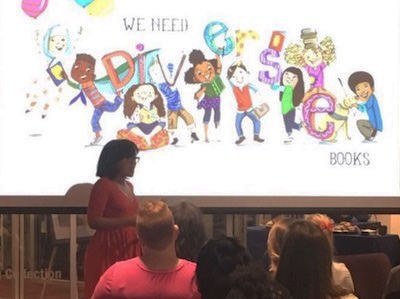
On September 27, author Dhonielle Clayton—cofounder of Cake Literary, a literary development company, and the chief operating officer of the nonprofit We Need Diverse Books—made quite the splash in the Sonoran Desert of Tucson, Arizona. Clayton, whose novel The Belles (Freeform, 2018) was recently recommended for the 2019 CILIP Carnegie Medal, came to Tucson at the invitation of Pine Reads Review and with the support of a grant from Poets & Writers’ Reading & Workshops program. She was able to organize two events at the University of Arizona, highlighting her accomplishments both as an author and an advocate for increasing diversity in children’s and young adult literature.

The evening event featured Clayton speaking about her journey into the literary world, focusing in particular on her mission to tell underrepresented stories. After an introduction from Pine Reads Review’s director Stephanie Pearmain, Clayton began by saying, “you can’t be what you can’t see,” pointing out that too few kids and teens see their own lives on the page. Not just lives centered around systemic struggles of race, sexuality, or disability, but lives that are about having fun. There are a great many stories out there of Black children facing down the horrors of slavery or civil rights abuses, she reminded the audience, but shockingly few about Black children discovering a magical land or going on a secret quest. When asked why her writing and the work published by her book developing company tend to skew more towards delightful adventure than inherited cultural pain, her answer was simple: “I want to create books that are just about kids doing fun stuff, and not dealing with drama.”

The evening talk attracted members of the community ranging from teenage fans to teachers and librarians, as well as local writers hoping for insight into the publishing industry.

In addition, Clayton held a workshop earlier in the day with the university’s publishing class to offer wisdom on the ins and outs of “the business” to juniors and seniors. In an environment where students are frequently pushed to—and often beyond—their breaking points, her advice was refreshing. She advocated for slowing down, for taking the time you need to get the writing right and take care of yourself. A round of chuckles followed her pronouncement: “There are days where you just have to be disgusting and watch Netflix, and then the next day you’re back to the grind.” It was a breath of fresh air to a room full of young writers hoping to enter an industry where burnout is common and stress levels are often high.

Clayton’s visit served as a reminder to aspiring writers that even when books are the focus, it’s the people who matter. She offered a vision of publishing that lifts others up. “As writers,” she said, “we have been given the great privilege to create something that gives people a space to explore who they are.”

Support for Readings & Workshops in Tucson is provided by an endowment established with generous contributions from the Poets & Writers Board of Directors and others. Additional support comes from the Friends of Poets & Writers.

Photos: (top) Christy Duprey (Credit: Victoria Pereira). (bottom) Dhonielle Clayton at the University of Arizona (Credit: Stephanie Pearmain).

Please log in to continue.
LOG IN
Don’t yet have an account?
Register for a free account.