




Masterpiece of the Day: Write Treatment Workshops
Maryann DeLeo is a filmmaker and writer. She has been attending the Write Treatment Workshops at Mount Sinai Beth Israel in New York led by Emily Rubin for more than two years.
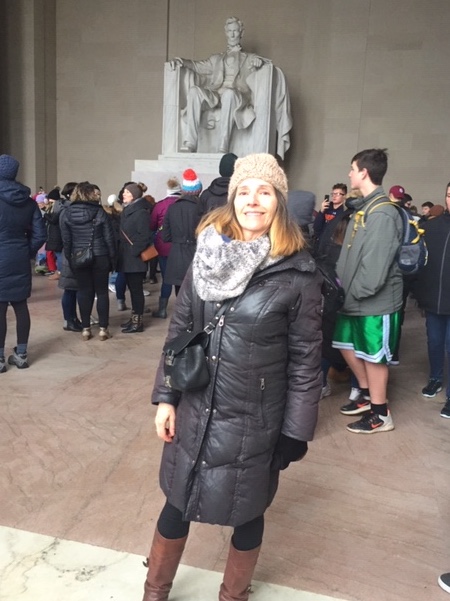 I was listening to a talk and the speaker said, “Are your days masterpieces? Make every day a masterpiece.” I thought of my days, and my first reaction was, No, my days are not masterpieces. Then I had a flash of Wednesdays at the writing workshop! Those days—they are masterpieces.
And it’s not just for the writing. It’s because of Emily Rubin, who leads the P&W–supported Write Treatment Workshops at Mount Sinai Cancer Centers. A fellow writer, Emily brings her love of literature, art, dance, theater, and music to the class. Her enthusiasm for the arts is evident with her weekly show-and-tell—holding up a catalogue from the latest exhibition she’s seen, or the playbill from a recent theater experience. She bursts into the room at Mount Sinai with so much to tell us about what’s happening in the world. I want to go to everything she tells us about. One student says to her, “You know about everything.”
Then Emily gets down to business: writing. She brings prompts that give us a way in to the writing or not. We can jump off from there, or we can go it alone writing about anything that comes up in our minds.
Each Wednesday she patiently unpacks our stories, one by one. She only looks slightly askance when a writer hems and haws about their “masterpiece” of the day. She wants each of us to stand tall and read with confidence.
I don’t know how she does it but she always finds something in the story that’s good storytelling, good writing. She takes the pages we write in our blue notebooks to heart. “You’re publishing your writing when you read it here,” she says. I breathe that in. If Emily says so, it is so. So we read, we publish, we get to be heard, by our own ears and by a dozen others.
We have created something, and Emily loves it into existence. It’s not that every piece will go on to loftier goals but for those minutes we read, we have Emily’s attention and all the other writers (although there is one writer who groans when he sees all I’ve written telling me, “You’ve written a novel!”). We have managed to get on our conference table soapbox and express who we are this day, this afternoon, these few hours. This is no small gift.
When I was in treatment for my cancer, I spent many afternoons lying on my bed, too weary to get myself up and out. Then I saw a flyer for one of Emily’s workshops. I didn’t go the first time I saw the flyer, but a seed was planted that maybe, someday, I could go. It was something to aspire to. When I get my energy back, I’m going, I told myself.
While still in treatment and fed up with lying about, there was that first Wednesday I got myself to the conference room at West Fifteenth Street. I was a bit shy but as soon as I saw Emily smiling, welcoming me into the room, the jitters went away. I became a regular. I’ve been attending the workshops for more than two years. I’m hooked. When I don’t go, I feel my day is not a masterpiece, something is missing from Wednesday.
I’ve filled many blue notebooks. I’m always startled at what comes out during the hours I’m writing. I didn’t know I thought that. Where did that come from? Some of my notebook writings move on, progress, and expand. And some I file away, to be continued.
I never just fling anything I write on Wednesday away. It’s all for something, even if it’s just for me to reflect on a part of my life I haven’t looked at before. It’s all part of my story.
There’s a quote Emily gave us by Natalie Goldberg that stays with me: “We are important and our lives are important, magnificent really, and their details are worthy to be recorded.... We were here; we are human beings; this is how we lived.”
Support for the Readings & Workshops Program in New York City is provided, in part, by public funds from the New York State Council on the Arts, and the New York City Department of Cultural Affairs, with additional support from the Frances Abbey Endowment, the Cowles Charitable Trust, and the Friends of Poets & Writers.
Photo: Maryann DeLeo at the 2019 Women’s March in Washington, D.C. (Credit: Eileen Kenny).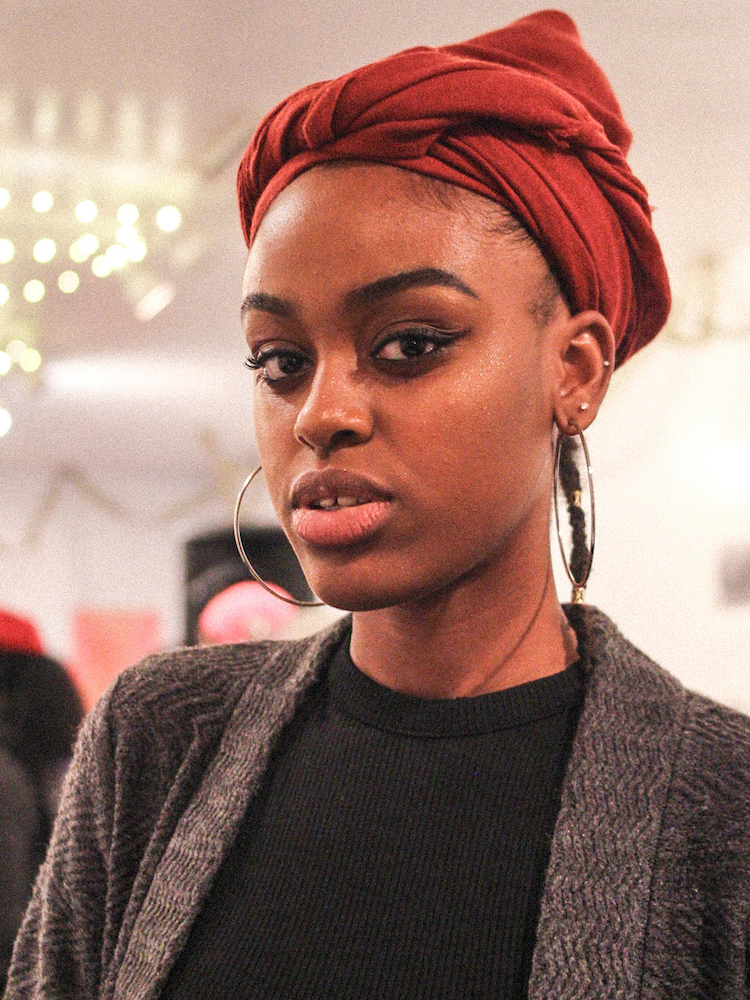 When I think of workshops, I think of them as discussions around a table a few hours every week until it’s time to showcase what we’ve learned. However, when I was asked to participate in New Settlement’s Silence Out Loud poetry workshop in the Bronx, I knew that the workshop would provide something more than just roundtable discussions. Poet and teacher Roya Marsh is no stranger to me. As the poet-in-residence at Urban Word NYC, she is the one responsible for bringing the female-identifying youths of the Bronx together to take part in these workshops.
 The mission of
  I didn’t know how badly I needed to be part of an Amherst Writers & Artists-method writing workshop until I’d begun cofacilitating one myself.
 Ms. Lodonia, a white-haired senior citizen, recites from memory a poem written by her mother. Ms. Charlotte comes with verses of a Halloween poem she’s penned and a meditation on her visit to India. Ms. Mary, Mr. Lloyd, and Ms. Quencell listen to lines of a ballad. Their faces brighten as they recall their youth, and Mr. Francis, who is blind, weighs every line, every lyric he hears. When he adeptly analyzes a verse, other workshop members nod in agreement. These were the participants who sat in my Friday workshop series last October and November at the
 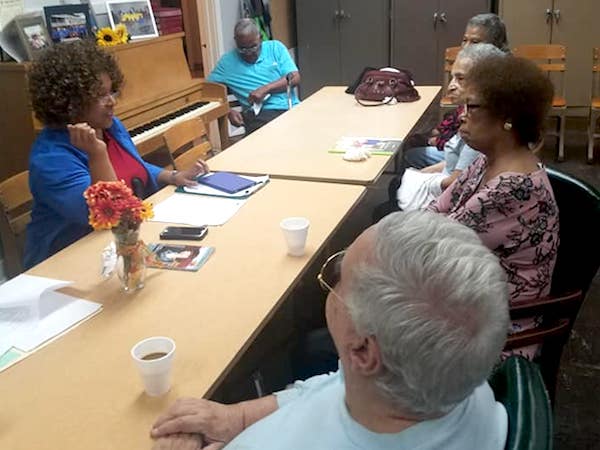 The first week, songs were narratives about fathers, the next week mothers, and by the last week, songs of political protest. Often, after a few bars, one or two seniors would start singing along, sometimes with great gusto which led to laughter and the sharing of life stories. Then I would introduce them to poems with the same themes as the song selections by both well-known and locally-known poets. Participants might observe a poem’s form or lack of form. Did they hear rhyme or feel a rhythm? What was the speaker’s attitude toward the subject, and did the poem move them? Seniors offered profound insight into darker poems as well as witty takes on lighter poems. I asked them to write a few lines of their own on the theme of the day or to try writing something in a similar style, blues for example.
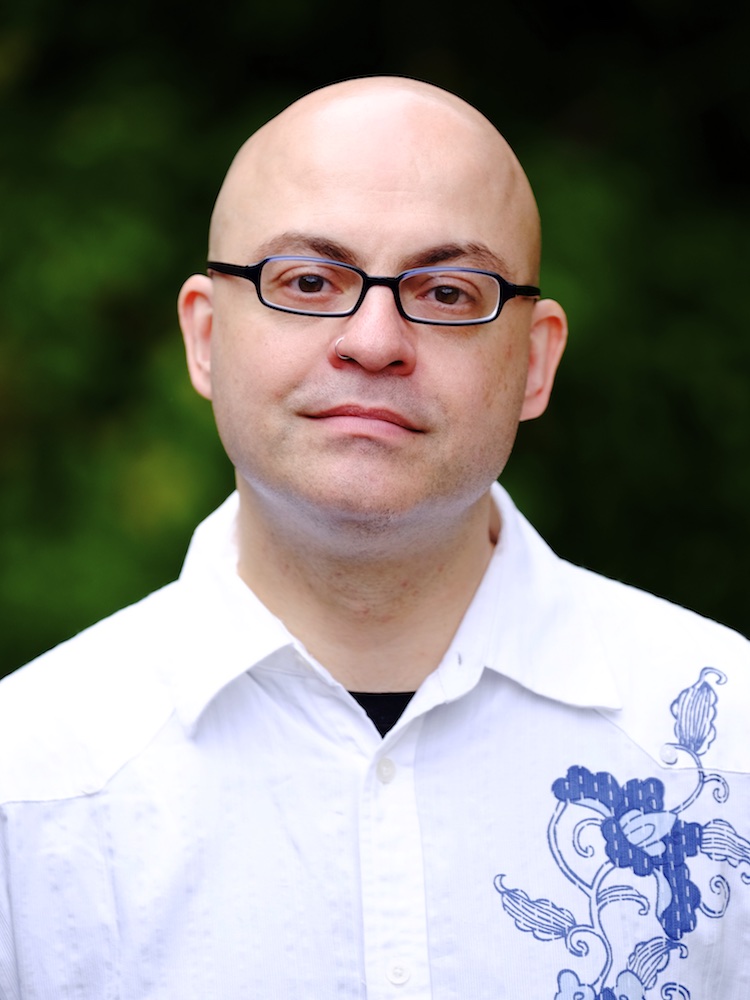 When Dr. Grisel Y. Acosta and I started the Latinx Poetry Reading Series at Bronx Community College (BCC) back in 2016, our intention was to provide the students in our Latino Literature classes the opportunity to have direct contact with some of the writers they were studying. What began simply as a means of adding dimension to our curriculums quickly became so much more.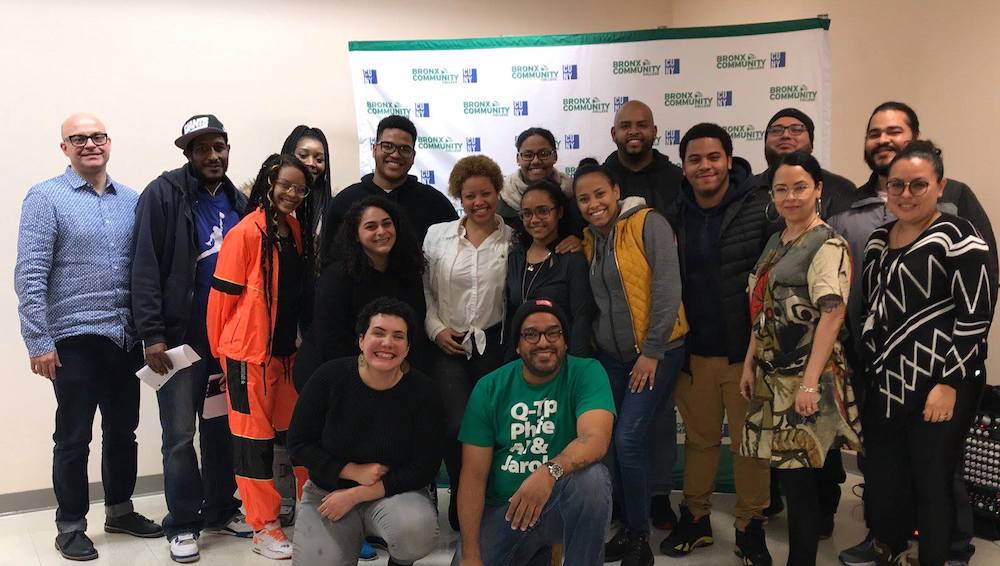

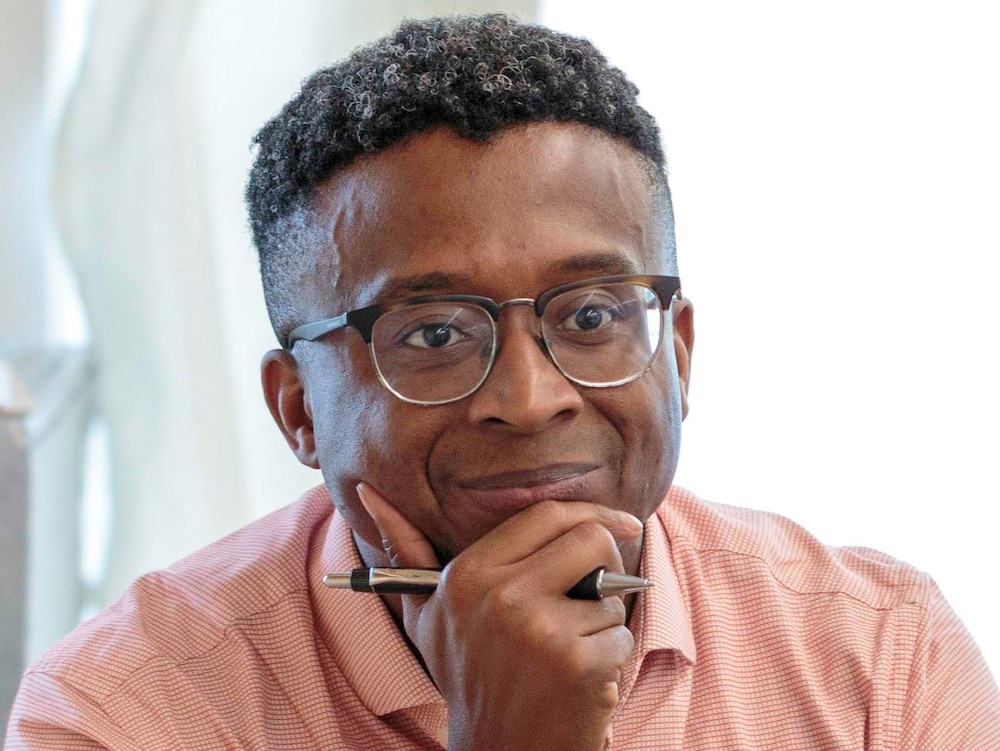 C is at least a full head taller than I am. His cropped blond hair looks even more yellow under the fluorescent lights of the library. I’ve mispronounced the word “thaumaturgic” while reading the class our example poem “canvas and mirror” by Evie Shockley. As soon as the word incorrectly leaves my mouth, C nearly yells to correct me and pronounce the word correctly. I thank him and keep it moving, trying not to smile and steal peeks at C following diligently along as we continue through the poem.
 Every week, in both of the sessions he attends, C tries my assignments and writes. He usually writes very short poems, so in the second session on Halloween, I challenged C to write a poem that filled a full page in his small notebook, which has the character Dory from Finding Nemo on its cover. C gladly accepted my challenge and began scribbling. I watched him as I walked around the room to help other students with the assignment. All of the focus in his body was applied to this assignment. He never looked up from his journal. I had never seen him write for this long without talking to me or other students.