




Reginald Dwayne Betts at LouderARTS
Washington, D.C.–based poet Reginald Dwayne Betts, author of Shahid Reads His Own Palm and the memoir A Question of Freedom, blogs about headlining at the P&W-supported reading series LouderARTS earlier this year.
The LouderARTS reading series at Bar 13 is classic. Walking towards it, you could miss it if you weren’t paying attention. The stairs leading up to the entrance had me thinking of a horror film, where the expected becomes something frightening. The door opens to dim lights, a large space filled with people, a bar wet with alcohol, and poetry banging against the walls.
 It’s only fair to admit that I’ve read at Bar 13 once before. Three, maybe four, years had passed since the last time I’d read there. The crowd seemed more aware of the little things that make a poet crave the mic. Patrick Rosal, author of the forthcoming Boneshepherds, was in the audience rubbing shoulders with young poets as they all enjoyed the moment with something cold to drink.
I sat at the bar for near an hour waiting for my turn, listening to the crowd scream out lines of their favorite poems. I get a little nervous reading after six or seven poets have read and the audience has already been read to for an hour or so.
It’s only fair to admit that I’ve read at Bar 13 once before. Three, maybe four, years had passed since the last time I’d read there. The crowd seemed more aware of the little things that make a poet crave the mic. Patrick Rosal, author of the forthcoming Boneshepherds, was in the audience rubbing shoulders with young poets as they all enjoyed the moment with something cold to drink.
I sat at the bar for near an hour waiting for my turn, listening to the crowd scream out lines of their favorite poems. I get a little nervous reading after six or seven poets have read and the audience has already been read to for an hour or so.
That night I read poems I’ll likely never read again. A suite of sorts, and the intimacy of the space allowed it to happen. I get all these images in my head when thinking about poetry and poetry readings. The one that nestles most comfortably is my imaginings of Bar 13. It isn’t just the alcohol. It isn’t just that Lynne Procope and Marie-Elizabeth Mali are both electric poets and excellent hosts. It isn’t the slam competition. It’s that all of those things fit perfectly into this intimate space where people come to listen.
Photo: Reginald Dwayne Betts. Credit: Rachel Eliza Griffiths.
Support for Readings/Workshops events in Washinton, D.C., is provided by an endowment established with generous contributions from the Poets & Writers Board of Directors and others. Additional support comes from the Friends of Poets & Writers.
 I still remember Raina’s final poem about her brother. Haunting, the poem has left a lasting impression. Many of her poems do this, give me pause. And January, January read the best sex poem I’ve heard in years! A poem so filled with yearning and the unexpected that I thought the audience would soon depart to find love in the rain. The audience stayed, and allowed me to read a poem or two.
 What makes your programs unique?
 All that to say, I love listening to stories of the District's past—about spots along the U Street corridor that once housed poetry, about Toni Asante Lightfoot’s legendary reading series, and nights when Holly Bass, Kenneth Carroll, Brian Gilmore, Brandon Johnson, Ernesto Mercer, Joel Dias-Porter, and others could be found with a sheaf of poems in hand burning the night sky. I dig those stories. I dig, too, that nostalgia is the curse that ruins us. While we celebrate the folks who have made marks on the cultural scene of the District, it seems much too easy to forget about the folks who are making marks right now.
 The poet-sage Matsuo Bashō, born 1644, wrote in memoriam of a friend, “never think of yourself / as someone who did not count— / festival of the souls.” Ueda translated this Japanese haiku into English. The poet-artist Marlene Mountain, born 1939, wrote “white sugar white flour white male”—no translation necessary: It was originally written in U.S. English. Mountain’s haiku reflects the three word-cluster device of classic one-line Japanese haiku as well as its device of image juxtaposition: The first and second word clusters are specific images; the third word cluster, “white male,” is metaphoric, resembling one (including males of color and all females) who, offering no nourishment, choose instead to promote oppressive practices that strip people and things of their inherent value. As Bashō’s tone was of his time and place, Mountain’s is of ours—and each poet agitates the soul: Will I be remembered? How will I remembered?
 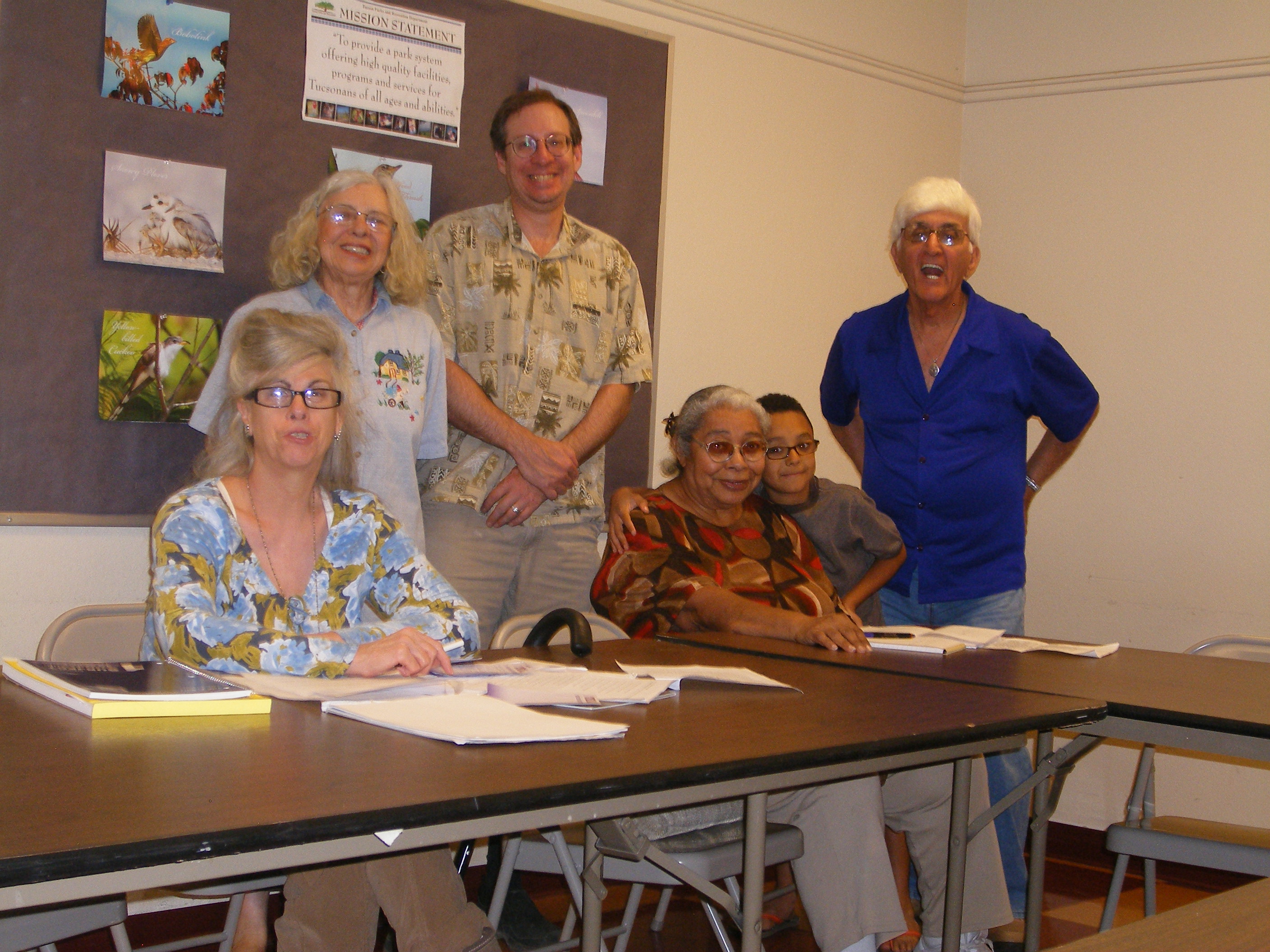 Workshop Two, focusing on the haiku of Marlene Mountain, explored how the initial haiku in U.S. English (introduced, arguably, in the 1950s) evolved into what is currently promoted in English as a form of ten-to-fourteen syllables. Throughout, but mostly in Workshop Three, attendees shared original work: One participant incorporated calligraphy; another haibun; another read haiku in German, demonstrating how sound patterns, even without sense, can convey emotion.
 Another program of note is the
  When
I was eight, my parents packed all five of us kids into an old, avocado-green
station wagon and drove us to Bakersfield
to pick onions. Once there, we toiled in the vicious heat, snapping enormous green
scissors, filling coarse brown sacks with dusty white onions. One foreman came by
every so often to halfheartedly shoo us kids off the field. Within minutes after
he disappeared, we’d run back to our parents to help with the onion picking or the
dragging of sacks that inevitably grew heavier with each added onion.
When
I was eight, my parents packed all five of us kids into an old, avocado-green
station wagon and drove us to Bakersfield
to pick onions. Once there, we toiled in the vicious heat, snapping enormous green
scissors, filling coarse brown sacks with dusty white onions. One foreman came by
every so often to halfheartedly shoo us kids off the field. Within minutes after
he disappeared, we’d run back to our parents to help with the onion picking or the
dragging of sacks that inevitably grew heavier with each added onion.  We gathered at