Whiting Creative Nonfiction Grants Announced, Tom Hanks the Writer, and More
Amazon releases waterproof Kindle; seventy-two writers pen letter in defense of Norton editor Jill Bialosky; a profile of Philip Pullman; and other news.
Jump to navigation Skip to content
Amazon releases waterproof Kindle; seventy-two writers pen letter in defense of Norton editor Jill Bialosky; a profile of Philip Pullman; and other news.
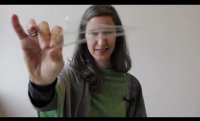
“I wanted to think about how silk would inform the structure of a poem.” Jen Bervin talks about a three-year exploratory project studying and creating interdisciplinary work around silk and poetry, and reads from her collection Silk Poems (Nightboat Books, 2017), which is featured in Page One in the November/December issue of Poets & Writers Magazine.
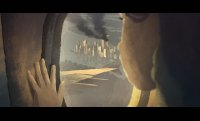
In this animated short film by Phil Borst, which was commissioned by the Washington Post, Victoria Chang reads the conclusion of her poem “The Boss Calls Us at Home.” Chang’s fourth book of poetry, Barbie Chang (Copper Canyon Press, 2017), is featured in Page One in the November/December issue of Poets & Writers Magazine.
A new volume of Sylvia Plath letters; Romanian poet Ana Blandiana receives Griffin Trust lifetime achievement award; E. L. James to publish another Fifty Shades of Grey novel; and other news.

Based at the University of Nebraska in Lincoln and led by Kwame Dawes, the African Poetry Book Fund supports and celebrates pan-African poetry.

With a new book of nonfiction, Bunk, a new job as director of a leading research center on black culture, and a new role as poetry editor of the New Yorker, Kevin Young is fully engaged in a personal program of moving multitudes.
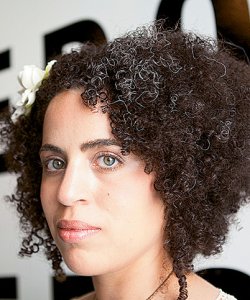
Poet Kiki Petrosino highlights five journals that first published poems appearing in her third collection, Witch Wife, out from Sarabande Books in December.
Nnedi Okorafor’s fantasy novels reinvent the genre; how One Story ended up publishing Tom Hanks; 2017 ALTA award winners announced; and other news.
In his poem “Rain,” Houston-based poet Kevin Prufer creates a distinctive atmosphere through repetition: “Rain made red leaves stick to car windows. / Rain made the houses vague. A car / slid through rain past rows of houses.” The poem begins innocently enough, but the accumulation of the word “rain” soon brings it into a nightmarish territory. Try choosing one word and letting its repetition guide you through a poem. The poem’s logic may need to contort itself in order to make room for the repetition, but that is the point—use a formal constraint to get your creative mind moving differently.
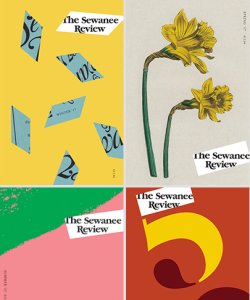
The country’s longest-running literary quarterly publishes its 500th issue with a new design, a new editor, and a new submissions platform, but the same old commitment to literary excellence.