Teen Writers Find Their Creative Voices

Christine Adler is the president of the Women’s Fiction Writers Association (WFWA) and former editor of Inkwell. Her articles, essays, poems, and book reviews have appeared in various print and online publications throughout the Northeastern United States and Canada. She has an MFA in Writing from Manhattanville College, and is represented by Ann Leslie Tuttle of Dystel, Goderich & Bourret LLC. Adler leads the Teen Creative Writers Workshop at Somers Library in Somers, New York, and is currently at work on her second novel.
The Teen Creative Writers Workshop at Somers Library was created for teens who love to write, those middle and high schoolers who’d tell you writing is their thing. We cover all genres—essays, fiction, fan fiction, poetry, you name it. We wanted to create a safe setting for writers where they can share their work and receive constructive feedback, while learning how to give helpful critiques to each other. We also discuss various genres and how to strengthen important elements in each one.

When a new writer attends the workshop for the first time, we talk briefly about how to give and receive feedback. This way, everyone knows we’re using the same guidelines and have the same goal in mind: to help each other improve. I give the group a prompt and have them write for a few minutes. Each student is then invited to share and read what they’ve just written, or read something they’ve brought with them. I also read what I write from the prompts and solicit feedback from the group.

Every writer knows it can be hard to separate your work from yourself, especially when opening up to criticism. If someone is still shy about reading, I ask them to trade work with another writer in the group and read each other’s work aloud. This gives the students an opportunity to experience reading to a group, and also helps illustrate that the critiques are focused on the writing, and not on the writer.

By far, my most rewarding experience as a teacher has been witnessing the enthusiasm expressed by the students. When we get into a discussion about books, or writing, or characters’ motivations they become so animated. It’s exciting to have them ask if we can meet weekly instead of biweekly, or if we can continue the workshop over the summer. Their interest shows me that they truly value the time spent, and enjoy learning the craft. I know they won’t all go on to become writers, but there was nothing like this for me in high school. If there had been, I might have had the confidence to start my writing career earlier in life. I love that I can be a resource to help these students start sooner if they wish.

Leading a group of young writers has greatly influenced my own art too. One thing I emphasize to the members is that we’re never done learning, in writing or in life. We can always improve. I’m strong at dialogue, but weaker at character development and world-building. Many of the teens write fantasy, and as a result are world-building wizards. I’ve learned a lot about world-building from them, and I often leave the workshop, go home, and dive into my work-in-progress. We share tips and tools with each other, encourage one another to keep writing, and together, we see our work getting better. For a writer, there’s nothing more inspiring.

Support for the Readings & Workshops Program in New York is provided, in part, by public funds from the New York State Council on the Arts, with additional support from the Friends of Poets & Writers.

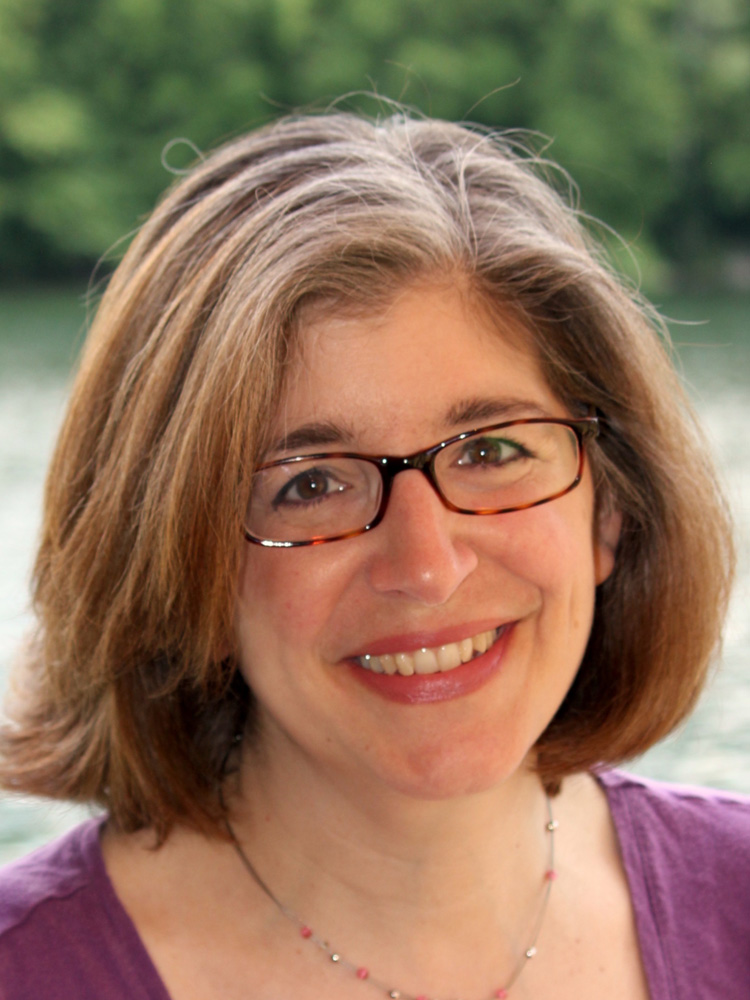
Photos: (top) Christine Adler (Credit: Alex Lindquist). (bottom) Teen Creative Writers Workshop participants (Credit: Tara Ferretti).

Daniel Borzutzky

Caption: 

Daniel Borzutzky, who won the 2016 National Book Award in poetry for The Performance of Becoming Human (Brooklyn Arts Press, 2016), reads poems from the collection at a reading for the finalists hosted by the New School. Borzutzky’s forthcoming poetry collection, Lake Michigan (University of Pittsburgh Press, 2018), is a series of nineteen lyric poems.

Genre: 

Patrick Melrose

Caption: 

Edward St. Aubyn’s Patrick Melrose novels, which were published between 1992 and 2011 by Picador and follow the saga of a dysfunctional upper-class English family, have been adapted into a five-part television miniseries with each episode based on a different novel in the series. Directed by Edward Berger, the series stars Benedict Cumberbatch, Holliday Grainger, and Jessica Raine.

Genre: 

Colson Whitehead on Rejections

Caption: 

“I became a writer once I realized no one liked my stuff. I just had no choice but to keep going and start a new novel.” In an interview for Louisiana Channel, Pulitzer Prize–winning author Colson Whitehead talks about how rejections of his first manuscript pushed him forward to pursue writing and why he enjoys exploring different genres.

The Journey

Brian Evans-Jones immigrated to southern Maine from Hampshire, U.K. in 2014. He received his BA in English Literature and Creative Writing from the University of Warwick, U.K., and was poet laureate of Hampshire, U.K. from 2013 to 2014. He received his MFA from the University of New Hampshire in 2016. His poems have appeared or are forthcoming in Outlook Springs, Stoneboat Literary Journal, and the Cafe Review. Evans-Jones is a juried teaching artist in both Maine and New Hampshire, and teaches poetry and creative writing in schools, colleges, and community venues.

You are a poet—or you think you are: perhaps you have never been sure. After all, you don’t have the four or five books to your name that you thought you’d have by now. A couple of competition wins, an award or two, yes, but no book. It seems so complicated, so difficult, this business of getting published. You live in a small town, in a rural state, far away from the publishing centers of America; the editors and poets who throng there seem so far above you.
But you try. You enter awards, send to magazines. The magazines all say no. In April, you get a missed call, a New York number—probably a scam. There is a voicemail, from “Bonnie.” It’s not a scam. You have won Poets & Writers’ Maureen Egen Writers Exchange Award—you are going to New York City.

Six months later, you arrive. The buildings are enormous, the streets teeming. You meet Bonnie Rose Marcus, director of Readings & Workshops (East) and the Writers Exchange, tiny and beaming, and go out for dinner with Joan Dempsey, the fiction winner, who fast becomes a good friend. Your nerves are tingling; you almost dread the thought of meeting your first guests tomorrow, these poets who have made it, who have books and books; these editors of famous magazines. What will you ask them, that won’t sound ridiculous? Will they look down on you, will they expect you to know all the poets and trends that you don’t?

Morning comes. Bonnie guides you; the streets seem less alien. The first meeting is with Patricia Carlin, poet and editor. You meet at a coffee shop, get a quiet table in the corner. You’re so nervous, you can’t remember what you said. It doesn’t matter. She’s gracious, interested, friendly. You talk about assembling collections, the benefits and downsides of small presses and regional presses, places to network. She asks if one of your winning poems is available for her magazine, and gives you her card.

Now you feel better. This is going to be okay—maybe even fun. In the next meetings, with agents and other fiction folk, you relax. From the sidelines, you see that all these people—big, important New York City people—are just people: interested in writers, passionate about literature, interested in you.

At dinner, editors from A Public Space, Four Way Books, and Hanging Loose Press discuss magazine life, small press life, poetry. You see that editors simply want their work to be thoughtfully read, the same as you do. Submissions, you realize, can be not a battle, but a communication—maybe even an offering. Someone will like your work—if you take the time to learn what they like first.

The days zoom by. Breakfast with a writer, coffee with an agent, lunch with another writer, tea with a publisher. You grow comfortable with the routine, with the city, with the important New York folk. You meet the president of Farrar, Straus and Giroux and feel entirely at your ease. You love hearing gossip about the Iowa Writers’ Workshop. Kate Angus tells you eight small presses she thinks would appreciate your aesthetic. The tour of the New Yorker offices is unforgettable.

Suddenly, it’s the end. You’re going home, to your small town, your green and quiet state. Nothing has changed there—but when you sit in your placid town library, New York feels close. You start work on your manuscript. You are a poet. You are ready.

The Maureen Egen Writers Exchange Award is generously supported by Maureen Egen, a member of the Poets & Writers Board of Directors.

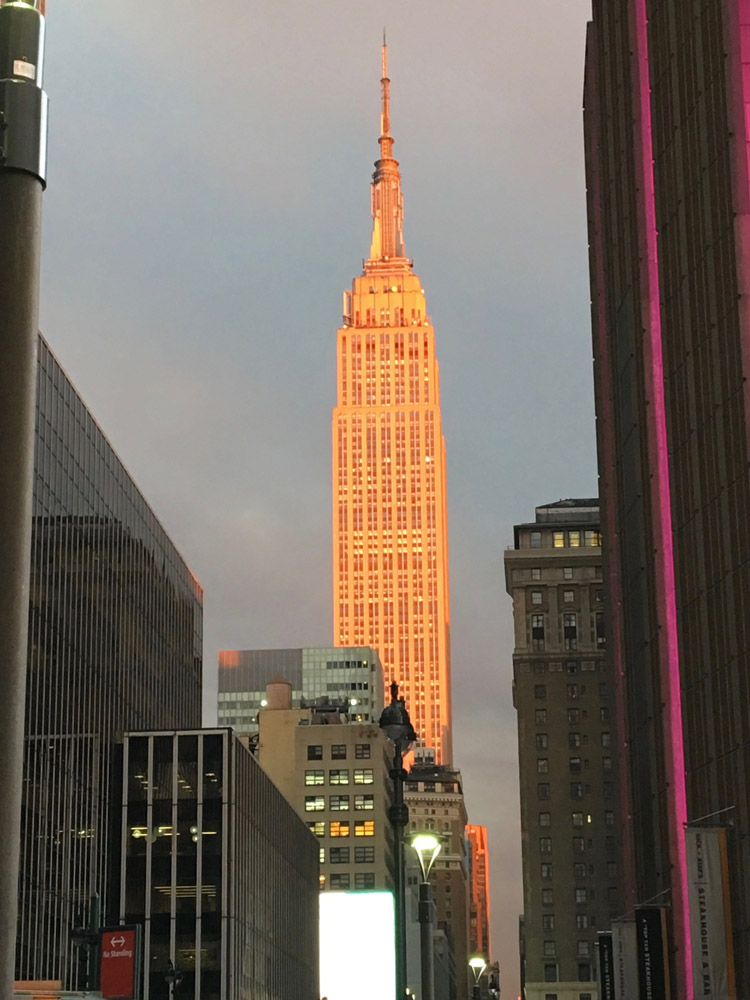
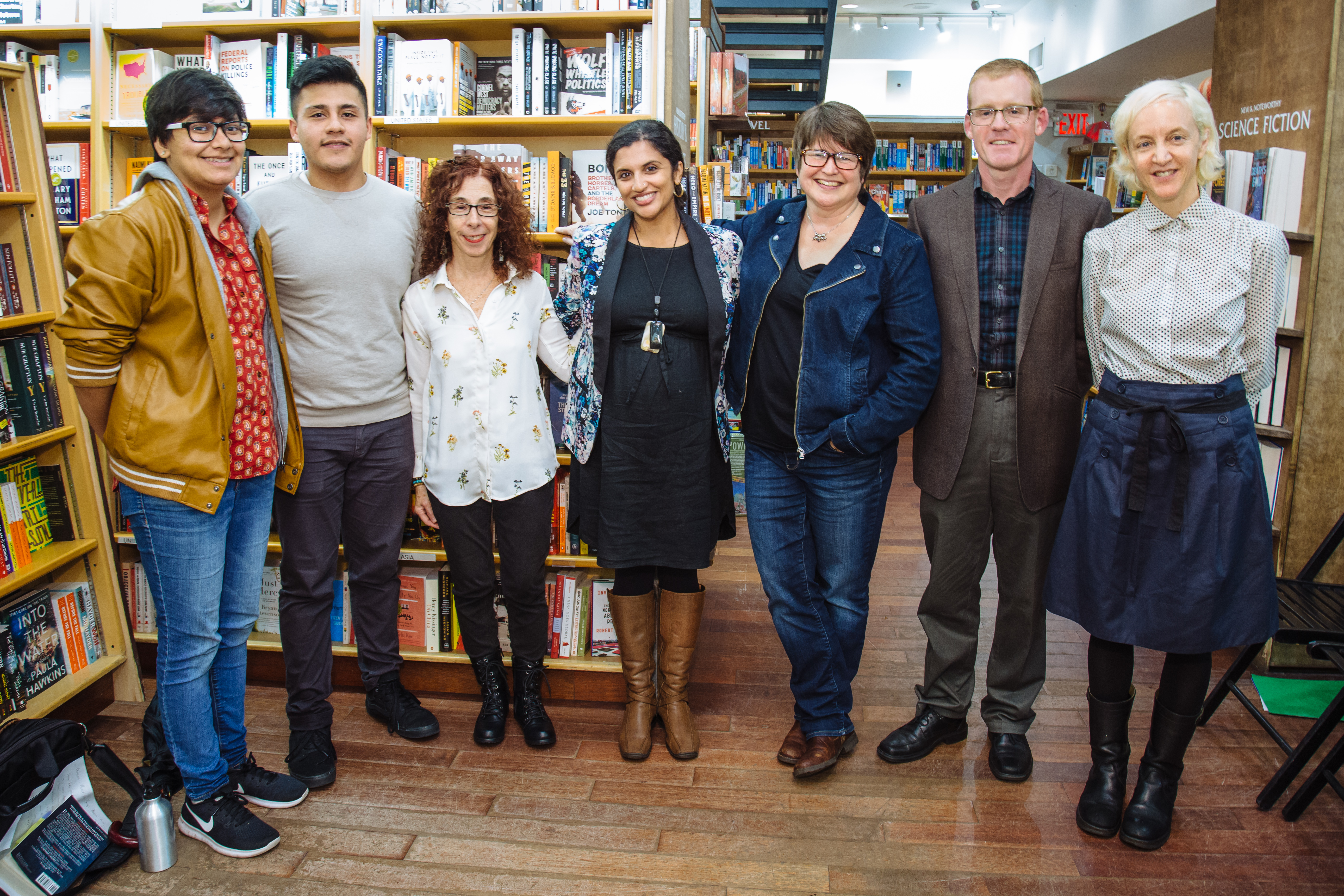
Photos: (top) New York City skyline (Credit: Brian Evans-Jones). (bottom, left to right) R&W fellow Sreshtha Sen, R&W program assistant Ricardo Hernandez, R&W (east) director Bonnie Rose Marcus, 2017 WEX fiction judge Tania James, Joan Dempsey, Brian Evans-Jones, and 2017 WEX poetry judge Cynthia Cruz (Credit: Margarita Corporan).

Jakarta, January

Caption: 

In this video, Sarah Kay reads her poem “Jakarta, January” at the Sheen Center for Thought & Culture in New York City. Kay is the author of No Matter the Wreckage (Write Bloody Publishing, 2016) and the forthcoming book, All Our Wild Wonder (Hachette, 2018), illustrated by Sophia Janowitz.

Genre: 

Karl Ove Knausgaard Answers the Proust Questionnaire

Caption: 

“I don’t have any heroes in fiction but I have been influenced by fictional heroes many, many times.” In this video, Karl Ove Knausgaard responds to the Proust Questionnaire for the Centre de Cultura Contemporània de Barcelona’s Kosmopolis Continuous Programme series. His most recent novel, Winter (Penguin Press, 2018), translated from the Norwegian by Ingvild Burkey, is featured in Page One in the January/February 2018 issue of Poets & Writers Magazine.

Sarah Jessica Parker

Caption: 

“I think books have been my true constant in my life.” Sarah Jessica Parker, editorial director of SJP for Hogarth, a Hogarth imprint of Penguin Random House’s Crown Publishing Group, talks about how books have played an important role throughout her life. The imprint’s inaugural book, Fatima Farheen Mirza’s debut novel, A Place for Us, will be published in June 2018.

Genre: 

Pages

Subscribe to Poets & Writers RSS