Between the Starshine and the Clay: Kamilah Aisha Moon at Spelman College
Sarah RudeWalker is a poet and an assistant professor of English at Spelman College specializing in Rhetoric and Composition. Her scholarship focuses on the literature of African American social movements, and she is currently finishing a book manuscript on the rhetoric and poetics of the Black Arts Movement during the 1960s and 1970s. Her creative and scholarly work has appeared in Pluck! The Affrilachian Journal of Arts & Culture, Callaloo, and Composition Studies.
With the renewed support of Poets & Writers this school year, the Department of English at Spelman College has been able to deepen our offerings to the Atlanta University Center (AUC) and West End communities in Atlanta by featuring readings and workshops with brilliant African American women poets. This March, poet Kamilah Aisha Moon kicked off what we call “Lit Week,” a week of events coordinated by Spelman College faculty member and noted poet Sharan Strange and Spelman literary scholar Dr. Michelle Hite. The events aim to highlight the possibilities for art and activism that spin out from the dedicated study of English.
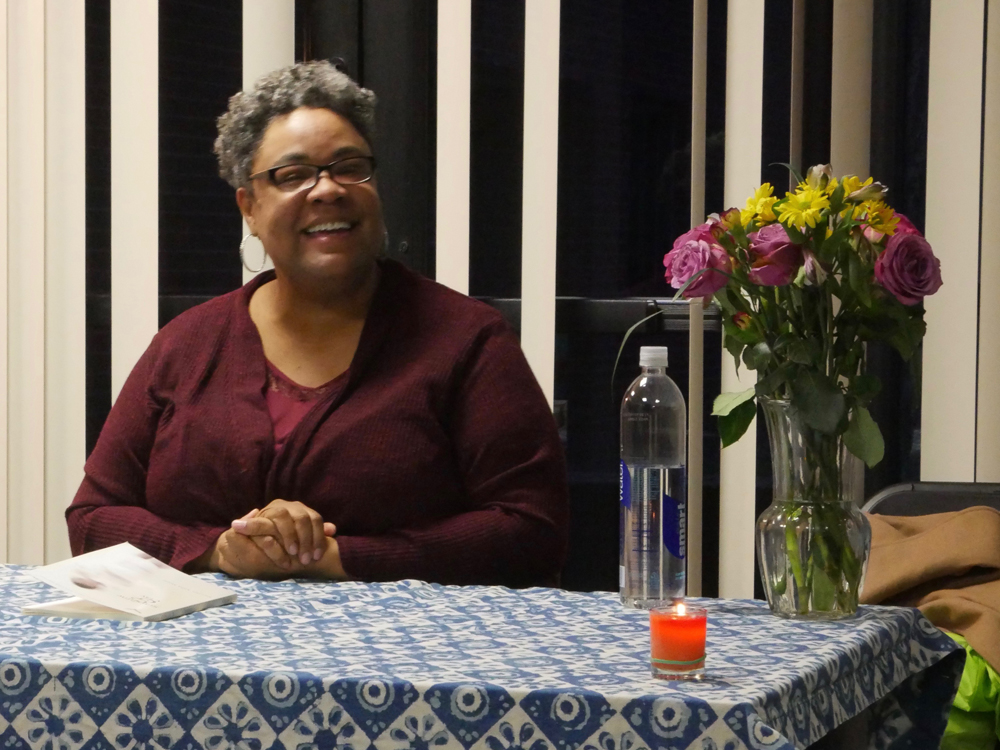 Moon, currently an assistant professor of poetry and creative writing at Agnes Scott College, is a Pushcart Prize winner, Lambda Award finalist, and Cave Canem fellow with two published books of poetry: She Has a Name (Four Way Books, 2013) and Starshine & Clay (Four Way Books, 2017). The Poets & Writers–sponsored events with Moon on March 26 included a craft talk and workshop for student writers, and an evening reading for the community.
Moon spent the afternoon talking about craft, inviting students to consider the power of their creative work to “bear witness.” This power, she observed, depends on the writer’s ability to practice craft with attention and empathy. One of the worst things we can do to each other, she observed, is to render someone invisible, and writers, who purposely aim to be “mirrors of treachery and glory,” have the power to do just the opposite: to help us see each other, and especially to see the familiar in a very different way. Moon invited students to interrogate this potential in their own work by presenting her work with disarming vulnerability, sharing early drafts and asking students to critique the choices that led to the final versions of her poems.
The reading that evening was lovingly intimate and set up in Spelman style: Audience members entered to find Moon seated at a candlelit table and listened to a recording of the a capella ensemble Sweet Honey in the Rock as they waited for the reading to begin. Moon opened the reading by noting that although she was never a student at Spelman herself, she fondly remembers the AUC as social stomping grounds for her and her friends. The reading that followed was exemplary of what can happen when the work of a black woman poet is honored within a black women-centered space.
Moon read from Starshine & Clay, whose Lucille Clifton-honoring title is meant to cover a lot of ground—the world of the personal and the public, of the grief and love and joy that exists between the starshine and the clay. Reading her poem “The Emperor’s Deer,” which she first wrote for Michael Brown, she asked the audience to hear it as mourning for the recently murdered Stephon Clark. Reading from the book’s third section, the author asked the audience to acknowledge the ways that personal traumas and historical traumas are intricately connected, to recognize that both the joy and pain of the personal persist while a public trauma blazes and burns. “I never read these,” she admitted, smiling.
We at Spelman commit to continuing to make spaces like these that invite this kind of intimacy between author and audience, especially in ways that honor the work of black women writers. We hope that Kamilah Aisha Moon knows that she has a home here, “on this bridge between / starshine and clay.”
Support for Readings & Workshops in Atlanta is provided by an endowment established with generous contributions from the Poets & Writers Board of Directors and others. Additional support comes from the Friends of Poets & Writers.
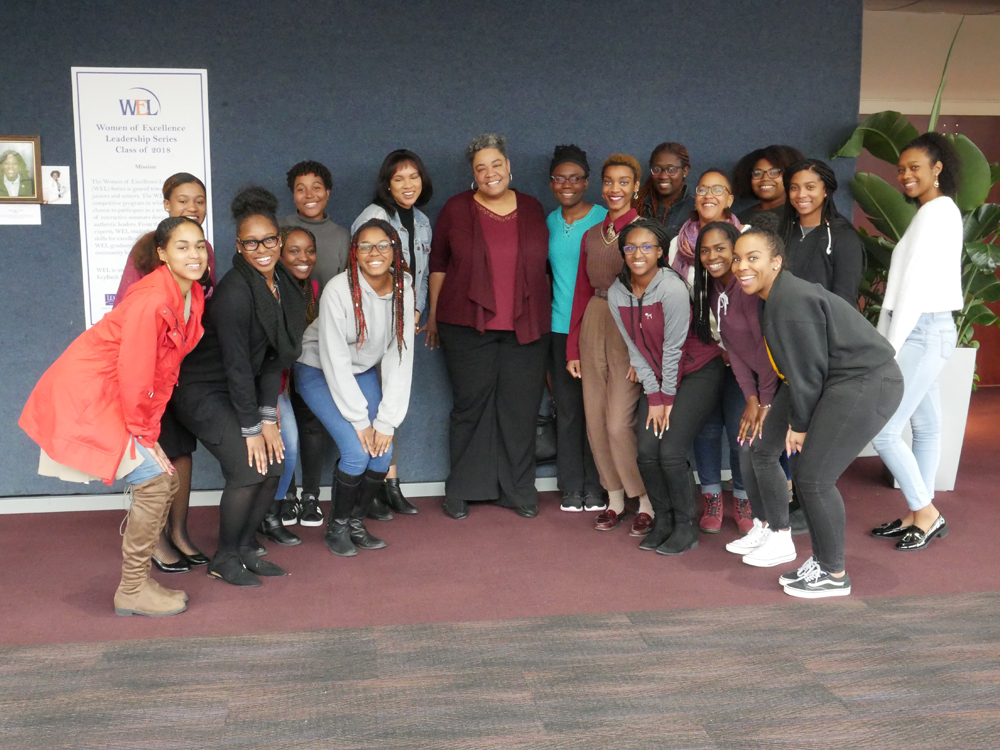
Photos: (top) Kamilah Aisha Moon (Credit: Sarah RudeWalker). (bottom) Spelman College students with Moon (Credit: Sarah RudeWalker).


 I’ve taught writing for most of my adult life, but community classes, particularly fiction workshops, occupy a special place in my heart. Unlike college classrooms or graduate programs, community classes cast a wide net, attracting a spectrum of writers of all ages, diverse backgrounds and experience. Suddenly a cross section of people that might not otherwise connect gather around a table with a single common purpose: to transform seething, raw images and words into comprehensible, moving stories. Here the CPA rubs shoulders with the waitress, the civil servant with the entrepreneur, only to find that when it comes to the vagaries of the human heart, they have more in common with one another than they might have otherwise thought.
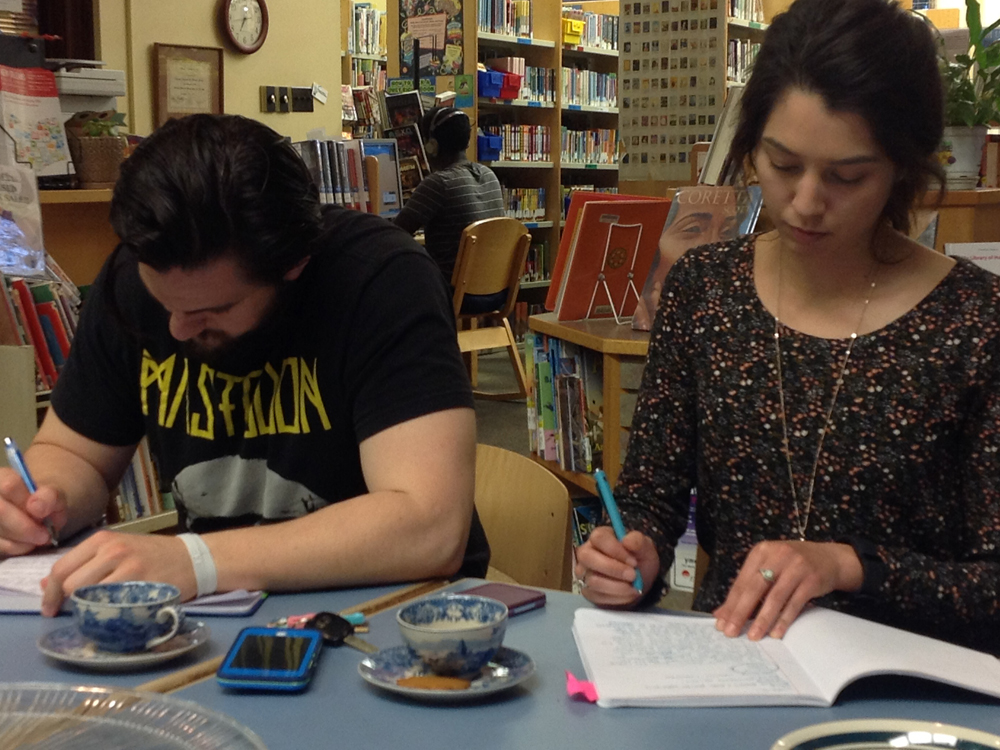 Each week, we talked a bit of shop and about technique, but the bulk of our time was spent in heavily guided exercises that began with pre-writing, specifically with take no prisoner questions centering on character, motivation, conflict, and stakes. Together these answers helped to clarify what can stymy even the most advanced of writers: a scene’s given function in the story’s overall arc. What followed was a sustained writing period that alternated between gentle nudging on my part about juggling details around setting, movement, interiority, backstory, and dialogue, and brief periods of silence during which participants scribbled at record speed.