A Thirst for the Arts in the Inland Region

For years, Poets & Writers’ Readings & Workshops program has been conducting Literary Roundtable Meetings in California and New York State. The meetings bring together people from all areas of the literary community to share ideas, news, and resources. In California, eight community meetings are held a year. This spring, a meeting was held in California’s Inland Empire region, an area centered around the cities of Riverside and San Bernardino. The guest speaker was Dr. Ernie Garcia of the Garcia Center for the Arts, where the meeting was held, and the cohost was Cati Porter, director of the Inlandia Institute. Porter is a poet, editor, essayist, and arts administrator, and her third poetry collection, The Body at a Loss, is forthcoming next year from CavanKerry Press. She writes about the value of the annual Literary Roundtable Meetings and the recent gathering in San Bernardino, California.
For the past decade, Inlandia Institute has been the Inland Empire regional partner for Poets & Writers’ annual Inland Empire Literary Roundtable Meeting. We have always held the meeting at a local library, but this year thought it would be fun to mix it up and meet at the Garcia Center for the Arts in San Bernardino.

Situated in an urban center, the Garcia Center is an oasis. Opening the front gate is like stepping through a portal: The courtyard is filled with desert-loving flora. Banana trees, heavy with fruit, bend over the walkways. A fountain purrs. The building is a Spanish adobe, once abandoned and now rehabilitated, and home to artist studios and arts organizations, including a second office for Inlandia.

The Garcia Center is named after and run by Dr. Ernie Garcia, our guest speaker for the roundtable that day. I arrive early and can already hear voices as I make my way toward the community library for the meeting. That’s when I find Ernie sitting on a bench in the courtyard with another early arrival. The three of us head into the “library,” a large room stocked, thanks to generous community donations, with books and comfy chairs.

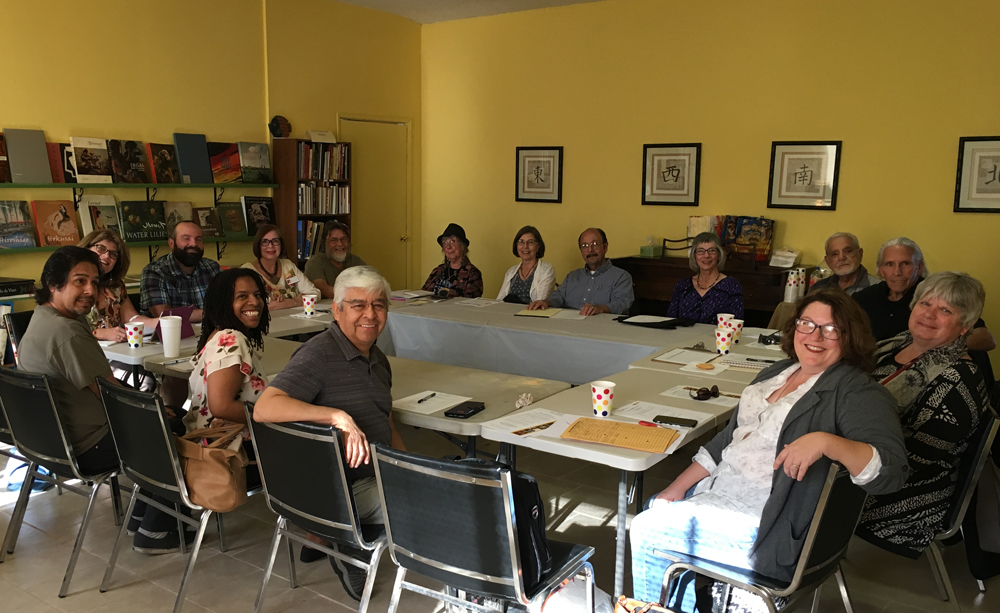
An island of tables has already been set up for our meeting. Soon Jamie Asaye FitzGerald, director of Poets & Writers’ Readings & Workshops (West), arrives—and then about a dozen others. Just inside the door is an upright piano, another donation, and Jamie sits and plays for us as we settle in. The table fills up quickly.

We have just begun going around the room introducing ourselves when two more people walk in, then one more, then a couple more again, until nearly every seat is filled including the wing chairs and sofa. Among those present are Timothy Green of Rattle literary magazine, Richard Soos of Cholla Needles Press, Jennifer Kane of Arts Connection, Juan Delgado of California State University in San Bernardino, Cindy Rinne of the San Bernardino Valley Concert Association, Edward Ferrari of PoetrIE, and Nikia Chaney, the Inlandia Literary Laureate.

In all, twenty-five people coming from as far and wide as Sun City, Rancho Cucamonga, Barstow, Ontario, Wrightwood, Forest Falls, Joshua Tree, Yucaipa, Moreno Valley, Redlands, and Riverside. There is such thirst for this kind of support for artists and writers in Inlandia that folks were willing to drive great distances just to connect.

Dr. Garcia—aka Ernie, aka Neto Esquelito—gives us an oral history of the Garcia Center, and then reads from his book, Growing Up Aleluya, about religious intolerance in the barrio of South Colton, California.

When Ernie finishes, I pull out a pair of scissors.

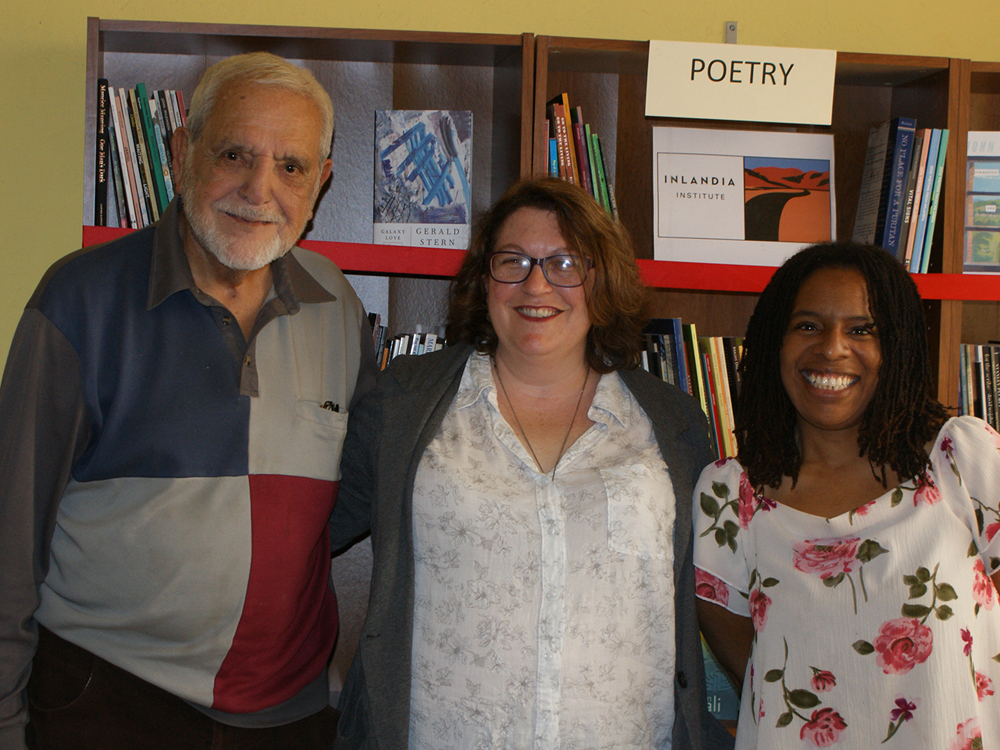
Ernie, Nikia, and I push back our chairs and walk to a trio of bookshelves behind me, a red ribbon draped across. Ernie cuts the ribbon. The sign beneath reads: Inlandia Poetry Library Donated By Inlandia Literary Laureate Nikia Chaney.

Nikia found herself with more books than bookshelves after serving as a judge for this year’s Kate and Kingsley Tufts Poetry Prize, so she decided to donate them as part of her laureateship to form the Inlandia Poetry Library at the Garcia Center. More than four hundred poetry books are now free to the public to check out, on the honor system, when the center is open.

Writing is about connecting. It’s not, as they say, always a solitary act. Community is the well we drink from after the long journey inward. What Poets & Writers does is create someplace for us to come back to—for exchange of ideas and connection with other writers—something that, in the Inlandia region, is hard to come by.
Support for this event and Readings & Workshops in California is provided by the California Arts Council, a state agency, and the National Endowment for the Arts, a federal agency. Additional support comes from the Friends of Poets & Writers.

Photos: (top) Dr. Ernie Garcia, Cati Porter, and Nikia Chaney (Credit: Cindy Rinne). (bottom) Inland Empire group (Credit: Jamie FitzGerald).

Poetry in Motion: The Poet Is In

Caption: 

“It’s so wonderful…to sit down together, look into each other’s faces, and talk and listen, and then make something of it.” Marie Howe speaks about The Poet Is In, an annual program that brings more than thirty award-winning poets together to write individual poems on request. The 2017 event was cosponsored by the Poetry Society of America and MTA Arts & Design, and held during National Poetry Month in April.

Genre: 

The Broken Heart of James Agee

Caption: 

Leslie Jamison reads her essay “The Broken Heart of James Agee” from The Empathy Exams (Graywolf Press, 2014) for a reading series hosted by the Center for Documentary Studies and the Kenan Institute for Ethics at Duke University. Jamison speaks about her new book, The Recovering: Intoxication and Its Aftermath (Little, Brown, 2018), in “The Infinite World” by Michele Filgate in the May/June issue of Poets & Writers Magazine.

Evie Shockley

Caption: 

“Poetry travels, you don’t need a lot of money to write it, you don’t need a lot of money to print it and distribute it.” Evie Shockley, a finalist for the 2018 Pulitzer Prize in poetry for her third collection, semiautomatic (Wesleyan University Press, 2017), talks with City of Asylum about the accessibility of writing poetry and its long and powerful tradition.

Genre: 

Gregory Pardlo on Air Traffic

Caption: 

Gregory Pardlo talks about the difference between writing poetry and creative nonfiction, and the universality of storytelling in this interview with Rich Fahle at the 2018 AWP Annual Conference & Book Fair in Tampa. Pardlo’s debut memoir, Air Traffic: A Memoir of Ambition and Manhood in America (Knopf, 2018), is featured in Page One in the May/June issue of Poets & Writers Magazine. 

The Handmaid’s Tale: Season Two

Caption: 

The Handmaid’s Tale, a television series adapted from Margaret Atwood’s classic dystopian novel published in 1985, returns for a second season. Atwood, who was a cowriter on the first season, has also collaborated extensively with series creator Bruce Miller on the storylines for this season.

Genre: 

Carmen Giménez Smith

Caption: 

In this 2016 video, Carmen Giménez Smith reads from a selection of her poems for the Lunch Poems reading series at the University of California in Berkeley. Smith speaks about her fifth book, Cruel Futures (City Lights Books, 2018), in “The Love of Labor, the Labor of Love” by Rigoberto González in the May/June issue of Poets & Writers Magazine.

Genre: 

Taylor Mali on Page Meets Stage

A four-time National Poetry Slam champion, Taylor Mali is one of the original poets to appear on the HBO series Def Poetry Jam and is the author of two collections of poetry and a book of essays, What Teachers Make: In Praise of the Greatest Job in the World (G. P. Putnam’s Sons, 2012). He is the founding curator of Page Meets Stage, a monthly poetry series in New York City that pairs two poets to perform a conversation through their work.

How did Page Meets Stage begin? What was your inspiration?
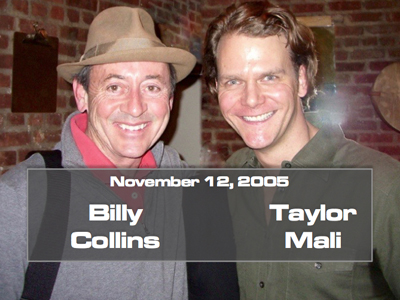
The inspiration for the series actually started with Billy Collins. I’ve been a fan of his work for years and now consider him a mentor. In the early 1990s, I used to write him a fan letter every couple months or so, and every letter ended with an invitation for him to come read at a poetry slam series that I used to help curate at the Bowery Poetry Club. In 2005, after a decade of these letters, he finally agreed, and he had a wonderful time. I suggested that we arrange another reading with just the two of us and call it “Page vs. Stage.” He liked the idea, and somewhere along the way in planning the format for the night, we decided that it would be interesting if we went back and forth, poem for poem, perhaps having a conversation through our work.

The reading was a great success, in part I suspect, because of the unique format, which the audience loved. Since then, we’ve had several different pairings of poets, always with one representing a more performative style of poetry and the other, more literary. Currently, I work with Mahogany L. Browne, April Ranger, and MaryCae to produce the show once a month and we are still at the Bowery Poetry Club!

What have the challenges been to sustaining such a long-running program?
Promotion has always been the issue. There’s always something good to watch on TV, and people seem happy these days to sit in a comfy chair for a few hours with only their smart phones (I know because I’ve been that person). It’s an awful feeling when you craft a spectacular pairing—with two poets who don’t know each other but whose work blends together in just the right way—and then only two people show up for the show! We’ve had some wonderful pairings that were so poorly attended that I’ve been tempted to call it quits.

Has your mission or your vision for the organization changed over the years? What’s most important for you right now?
In the beginning, I was probably on a mission to garner more respect for spoken word poets. I wanted to show the world that spoken word poets are just as concerned with craft as the next poet; but they understand that how you read a poem is also important. In the thirteen years we’ve been around, the line between page and stage has been bent in some places and blurred in others. There are former slam poets who are finalists for the National Book Award like Danez Smith, university professors such as Patricia Smith and Jeff McDaniel, and even Pulitzer Prize winners and Guggenheim fellows such as Tyehimba Jess.

Furthermore, we’ve had about six poets who have done both sides of the pairing, stage the first time and page the second. So these days, we don’t care quite so much about labels. We just try to craft a great night for people to hear great poetry.

What has been your most rewarding experience as a curator and organizer?
There have been a lot of great pairings and some fantastic ones coming up as well, but a couple of moments have stuck with me. I got to share the stage with Galway Kinnell before he died. Back then we also traded poems during readings so Galway read one of my poems, and I performed his poem “The Waking” from memory, which takes five minutes to recite and is probably the longest poem I’ve ever memorized.

I’d also been trying to get my friend Saul Williams to participate for years, and I finally got him to agree in 2014. I asked what his dream pairing would be, and he said, “Without a doubt, Carolyn Forché.” As luck would have it, I had just taken a workshop with Carolyn, so I was able to set it up. That’s a pairing I would never have concocted on my own, but it remains one of my favorites.

What’s next for the series?
I am hesitant to even mention this because it’s still months away, but two of my favorite poets, Ocean Vuong and Sharon Olds, are scheduled to read together on Sunday, October 28, which will be very exciting.

Support for the Readings & Workshops Program in New York City is provided, in part, by public funds from the New York State Council on the Arts, and the New York City Department of Cultural Affairs, with additional support from the Frances Abbey Endowment, the Cowles Charitable Trust, and the Friends of Poets & Writers.

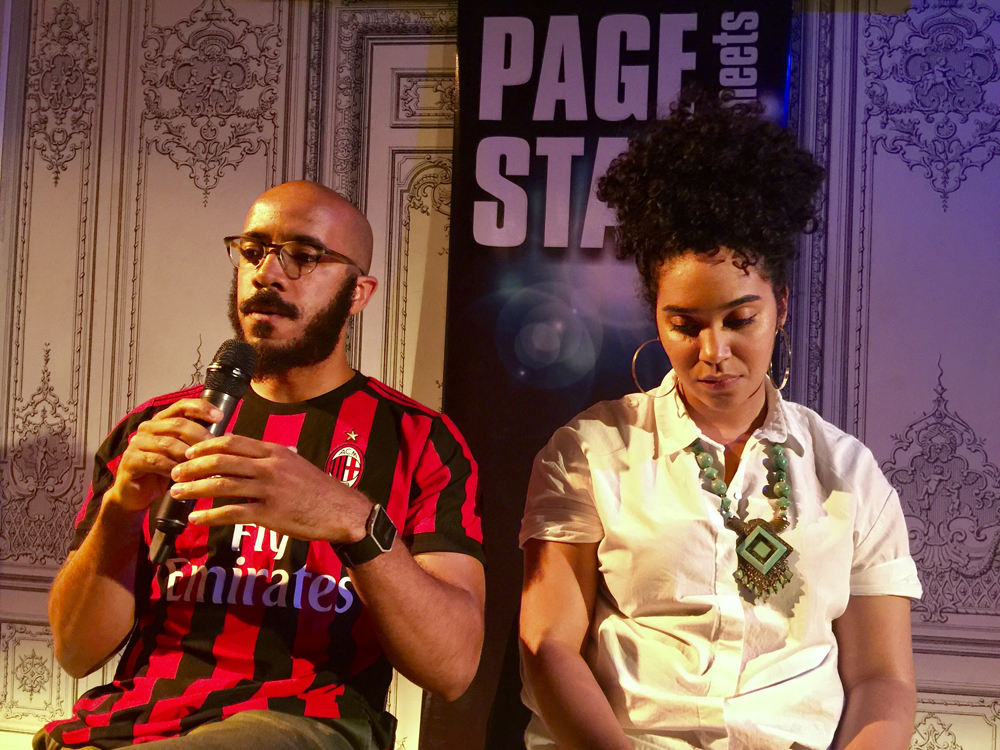
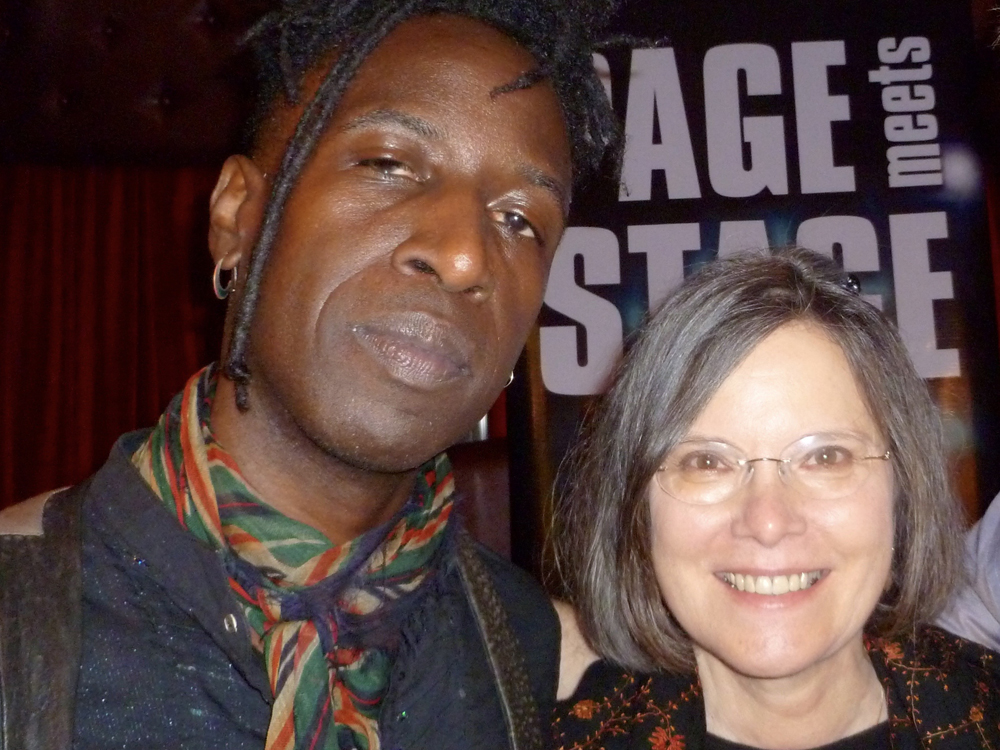
Photos: (top) Billy Collins and Taylor Mali in 2005 for the inaugural reading of the series (Credit: Taylor Mali). (middle) Clint Smith and Elizabeth Acevedo (Credit: Taylor Mali). (bottom) Saul Williams and Carolyn Forché (Credit: Taylor Mali).


Pages

Subscribe to Poets & Writers RSS