Natasha Trethewey on Memorial Drive

Caption: 

“I think that the body does not let you forget.” In this PBS NewsHour video, Natasha Trethewey reflects on the trauma of her mother’s murder, the subject of her book Memorial Drive: A Daughter’s Memoir (Ecco, 2020), and how the events led her to become a poet and writer. Trethewey is interviewed by Joshunda Sanders in “A Poetics of Resilience” in the July/August 2020 issue of Poets & Writers Magazine.

Genre: 

Poets House Presents: John Murillo

Caption: 

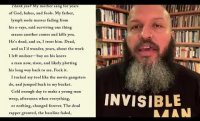
“I’ve never spoken to anyone about this. Until now, until you.” In this installment of the Poets House Presents video series, John Murillo reads two poems from his latest poetry collection, Kontemporary Amerikan Poetry (Four Way Books, 2020). For more Murillo, listen to his Page One author reading of “On Metaphor.”

Genre: 

Nikky Finney’s National Book Award Speech

Caption: 

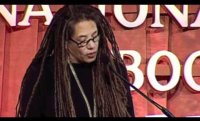
“We begin with history. The slave codes of South Carolina, 1739,” begins Nikky Finney’s 2011 National Book Award acceptance speech for Head Off & Split (Northwestern University Press, 2011), where she traces the history of literacy in her own life and in the lives of African Americans. Finney is the recipient of the 2020 Wallace Stevens Award from the Academy of American Poets, conferred annually to honor outstanding artistic achievement over a poet’s career.

Genre: 

Beauty

10.1.20

In the title essay of landscape photographer Robert Adams’s collection Beauty in Photography: Essays in Defense of Traditional Values (Aperture, 1981), he goes about the impossible task of defining beauty, a position he acknowledges is “unprovable.” Through a variety of mediums, including fiction and poetry as well as photographs, Adams goes about discussing beauty’s relevance to society, its unavoidability in an artistic practice, and whether it is the goal of art. In his essay, Adams posits that beauty is “a synonym for the coherence and structure underlying life.” Using the catalog of your own experiences and knowledge, write an essay searching to answer what beauty is to you. What life events does the word conjure?

Waves

9.30.20

Virginia Woolf’s modernist 1931 novel The Waves weaves together the voices of six protagonists across various stages of their lives from infancy to maturity. The first chapter begins with a swirl of dialogue that avoids narration and the chapters that follow use individual monologues to explore the internal lives and desires of each character. Create a group of characters that are joined by a particular relationship. Then, without external narration, write individual monologues for each character that distinguish their voices, desires, and conflicts. How do your characters develop both as individuals and as a group? What do they reveal and what do they hide in these interior conversations?

Dear America, We Can’t Turn a Blind Eye

Caption: 

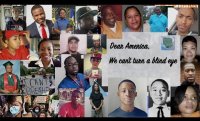
The Ventura County Poetry Project invited writers from Ventura County and surrounding counties in Southern California to respond to their “Dear America, We Can’t Turn a Blind Eye” initiative and share their work. This short video includes excerpts from W. David Hall, Sojourner Kincaid Rolle, Veronica Reyes, Julius Sokenu, Amy Uyematsu, and others.

Genre: 

Pentimento

9.29.20

In Natasha Trethewey’s “Repentance,” included in her retrospective poetry collection Monument (Houghton Mifflin Harcourt, 2018), she describes the term pentimento as: “the word       for a painter’s change       of heart       revision / on canvas.” Trethewey uses this painting practice as a metaphor for contending with the memory of a quarrel with her father: “a moment so / far back    there’s still time      to take the glass   from your hand / or mine.” What memory would you want to revise or repent, as if you could paint over it? Inspired by painting, write a poem that uses detailed imagery to imagine the possibility of a new past.

Pages

Subscribe to Poets & Writers RSS