Eileen Myles and Alice Notley on Public Access Poetry
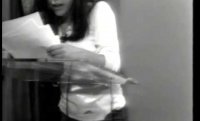
Caption: 

In this episode of Public Access Poetry, a cable television show produced for two seasons during 1977 and 1978, Eileen Myles and Alice Notley read a selection of their work. The full archive of half-hour episodes featuring poets from the downtown New York City poetry scene can be found on PennSound, an archival project affiliated with the University of Pennsylvania.

Genre: 
Celebrity Skin

11.16.22

I’m Glad My Mom Died by Jennette McCurdy, Friends, Lovers, and the Big Terrible Thing by Matthew Perry, Finding Me by Viola Davis, and Surrender by Bono are just a few recent high-profile celebrity memoirs on many must-read lists. For some celebrities, writing a memoir is one way to reclaim their story and separate themselves from their public persona. This week, write a short story in the voice of a famous person who feels the need to write a memoir. What secrets are they willing to share, and which do they keep for themselves?

Apocryphal Birth

11.15.22

Where are you from / is a question I field too much. Once / I said Vietnam and the white man said I fought there. / I loved the country. I love their people. / That’s the day I started to lie / about my birth,” writes Kien Lam in his poem “Lunar Mansions,” published in the May/June 2018 issue of the American Poetry Review, in which he recounts the apocryphal story of his birth. Lam weaves in the story of the birth of Jesus, often conflating it with his own: “In the stable / the horses kicked me from their wombs,” he writes. Write a poem that tells the apocryphal story of your birth incorporating, as Lam does, a fantastical tone.

Ada Limón on the Power of Poetry

Caption: 

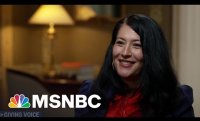
In this interview for MSNBC’s American Voices, Ada Limón speaks to host Alicia Menendez about becoming the first Latina U.S. poet laureate, her journey to a writing career, life in Kentucky, and how poetry can bring people together in “those moments when we can put everything down for one minute and just see ourselves, each other.”

Genre: 

Persimmons

11.10.22

“How to choose // persimmons. This is precision. / Ripe ones are soft and brown-spotted. / Sniff the bottoms. The sweet one / will be fragrant. How to eat: / put the knife away, lay down newspaper. / Peel the skin tenderly, not to tear the meat,” writes Li-Young Lee in his evocative poem “Persimmons,” in which he uses the autumnal fruit as a way to speak on a number of personal subjects, such as his memories of a sixth grade teacher, his relationship with his wife, and his father’s blindness. Inspired by Lee’s poem, write a lyric essay about a favorite fruit that conjures sensorial memories. Let yourself be surprised by the direction of your associations.

Spring Forward, Fall Back

11.9.22

Over the weekend, many of us, perhaps reluctantly, turned our clocks back an hour, ending Daylight Saving Time for the year. Dating back to World War I when countries needed a way to preserve power and fuel, the yearly change begins in the spring with clocks being pushed forward an hour to conserve daylight leading to longer days and shorter nights, then in the fall pushed back for longer nights and shorter days. Write a story that takes place during the end of Daylight Saving Time. How does the lengthening of darkness affect the mindset of your character?

Pages

Subscribe to Poets & Writers RSS