Deadline Nears for Waterston Desert Writing Prize

Are you a nonfiction writer whose prose explores the ethos or ecology of dry climates? If so, consider submitting to the High Desert Museum’s Waterston Desert Writing Prize, which offers $3,000 for a work of nonfiction that recognizes “the vital role deserts play worldwide in the ecosystem and the human narrative, with the desert as both subject and setting.” The winner will also be provided with travel and lodging to attend a reception and awards ceremony at the High Desert Museum in Bend, Oregon, in September, as well as the opportunity to attend a residency at PLAYA at Summer Lake.
Using the online submission system, submit up to 10 pages of nonfiction, a biographical statement, and a one-page project description by May 1. There is no entry fee. Works-in-progress as well as published and unpublished prose are eligible. Proposals will be reviewed by the Waterston Desert Writing Prize Advisory Committee and Rena Priest, the first Indigenous poet laureate of Washington. Visit the website for complete guidelines.

Last year’s prize winner was Caroline Tracey for “Salt Lakes,” a group of eighteen essays offering a queer take on the eponymous water bodies, which are under threat due to climate change. Founded in 2014 by writer Ellen Waterston, the High Desert Museum’s Waterston Desert Writing Prize has a mission to “strengthen and support the literary arts and humanities in the High Desert region through recognition of literary excellence in nonfiction writing about desert landscapes, through community interaction with the winning authors of the annual prize, and presentations and programs that take place in association with the program,” according to the museum’s website. Oregon’s High Desert region includes most of Central Oregon, beginning east of the Cascade mountains at the “high” elevation of 4,000 feet above sea level. The High Desert Museum is located on 135 acres that offer a “close-up view of native wildlife, such as river otters, porcupines and raptors” and 100,000 square feet of exhibition space.

2023 International Booker Prize Shortlist

Caption: 

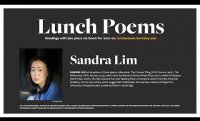
Looking for a new book to read? See the shortlisted titles for the 2023 International Booker Prize, which highlights fiction from all five continents translated into English. The six books include Boulder by Eva Baltasar, translated from Catalan by Julia Sanches; Whale by Cheon Myeong-kwan, translated from Korean by Chi-Young Kim; and The Gospel According to the New World by Maryse Condé, translated from French by Richard Philcox.

Conjuring Inheritance

4.20.23

“I grew up a few hours from the scrapyard my namesake, Ida Novey, started in 1906. Nobody suggested a trip to see what had come of the still-operating Novey scrapyard, and I never asked. I have no material connection to what is now over a century of Novey recyclers,” writes author Idra Novey in her essay “Monstrous Hybrids and the Conjuring of Legacy,” published in the Yale Review, which chronicles a visit to a scrapyard owned by her family for generations. Novey discusses the nature of material versus linguistic inheritance, as she traces her connection to the ancestors who began this scrapyard a century before. This week consider your own sense of inheritance, whether material or otherwise, and write an essay that connects you to this history.

Kaleidoscopic Conflict

4.19.23

In Nathacha Appanah’s novel The Sky Above the Roof, translated from the French by Geoffrey Strachan and out now from Graywolf Press, a family drama unfolds through the eyes of several characters. After seventeen-year-old Wolf steals his mother’s car to search for his estranged sister, he causes an accident for which he is arrested and incarcerated, forcing his mother and sister to fight for his release. Instead of using a linear narrative to tell the story of what led to this event, Appanah builds the family’s fractured lives into the novel’s structure, each chapter offering a new version of events. As the novel progresses and more details about the characters are revealed, the reader is able to piece together the story. Taking inspiration from nonlinear narratives, build a story around a single life-altering event. First, try listing the characters affected by the conflict then write into their individual perspectives, taking into account each distinct tone, diction, and background.

Christopher Isherwood on Day at Night

Caption: 

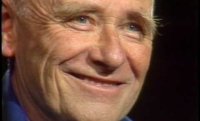
In this 1974 episode of Day at Night, a public television interview series hosted by James Day and restored by CUNY TV, Christopher Isherwood shares memories of the poet W. H. Auden and discusses his years in Berlin, which inspired his 1939 novel Goodbye to Berlin. Isherwood on Writing: The Complete Lectures in California (University of Minnesota Press, 2022) edited by James J. Berg is included in our Best Books series.

To the Future

4.18.23

“The American experiment will end in 2030 she said / looking into the cards, / the charts, the stars, the mathematics of it,” writes Jorie Graham in “Time Frame,” a poem in her latest collection, To 2040, out today from Copper Canyon Press. The book’s title suggests both a dedication and an urgent address, casting the poems therein as reflections on the age of the Anthropocene and calls to action to protect the earth’s natural wonders. Write a poem that illustrates and reflects on your vision of the future, whether hopeful or woeful. Use the open-endedness of this prompt to fold in as many aspects of the future as possible, including your personal journey and what you foresee for the natural world.

The Sympathizer Trailer

Caption: 

Watch the trailer for the forthcoming HBO limited series The Sympathizer, an adaptation of the Pulitzer Prize–winning novel of the same name by Viet Thanh Nguyen. The series stars Hoa Xuande as a half-French, half-Vietnamese communist spy forced to flee to the United States near the end of the Vietnam War. The cast also includes Fred Nguyen Khan, Toan Le, Vy Le, Alan Trong, Ky Duyen, Sandra Oh, and Robert Downey Jr.

Genre: 

Paisley Rekdal Reads From West: A Translation

Caption: 

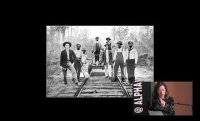
“Sorrowful news sings the telegram / and Lincoln’s body slides from DC / to Springfield, his third son, Willie, / boxed beside him.” In this 2019 City of Asylum event, Paisley Rekdal reads from her multimedia poem “West: A Translation,” a book-length work commissioned by Utah’s Spike 150 organization to commemorate the one hundred and fiftieth anniversary of the Transcontinental Railroad. Rekdal’s hybrid collection, published in May by Copper Canyon Press, is featured in Page One in the May/June issue of Poets & Writers Magazine.

Youthful Stories

4.13.23

In her essay “Why Do We Keep Telling Sister Stories?” published on Electric Literature, writer and filmmaker Tia Glista reflects on the surplus of stories in literature, visual art, and film that revolve around the dynamics of sisters, ranging from Louisa May Alcott’s Little Women to the reality show series Keeping Up With the Kardashians. In the essay, Glista writes about growing up without sisters and how these stories guided her ideals of femininity. “I found surrogate sisters in pop culture; the Olsen twins’ bevy of straight-to-VHS buddy movies taught me how to plan slumber parties and inspired every fashion choice that I sported in kindergarten,” writes Glista. Write an essay that reflects on the kinds of stories you grew up with and how they connect to who you are today.

Pages

Subscribe to Poets & Writers RSS