That Was Then

12.7.23

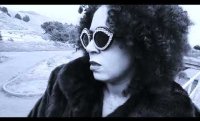
Last month, musician André 3000, best known as one half of the Atlanta hip-hop duo Outkast, released his first solo album, New Blue Sun. The instrumental jazz album features the artist playing flute on songs improvised in real time, a surprising turn for fans of the renowned and reclusive rapper whose last album with Outkast was in 2003. In a recent GQ video interview, the music legend speaks about authenticity as a creator and how he doesn’t feel compelled to rap about anything in his life. “I’m forty-eight years old,” he says. “And things that happen in my life, like, what are you talking about? ‘I got to go get a colonoscopy.’” Write a personal essay about how your own literary output has evolved over the years. How can you connect your creative predilections and urgencies at specific times in your life with the state of your physical body or physical space?

Sigrid Nunez and Henry Hoke

Caption: 

In this event hosted by the Free Library of Philadelphia, Sigrid Nunez, author of The Vulnerables (Riverhead Books, 2023), and Henry Hoke, author of Open Throat (MCD, 2023), read from their novels and discuss the writing of nontraditional lines, the appeal of literary absurdity, and current trends in literature.

Genre: 

Vibes

12.6.23

“What creates the vibe of a room? The other people inside it: the combined resonance of their voices,” write authors Sofia Samatar and Kate Zambreno in the introduction to their collaborative nonfiction book, Tone (Columbia University Press, 2023). A study on the use of tone in literary works, the authors consider how even if a room is empty, “there is a trace in the air of those who have recently left.” Begin a short story that takes place over the course of several scenes set in different places. Jot down notes for what you imagine happened in each environment before your story’s scene takes place there. How might subtle traces of those who have recently left the locale still linger and affect the tone or atmosphere of your story?

Paul Lynch’s Booker Prize Speech

Caption: 

“The rational part of me believed I was dooming my career by writing this novel, though I had to write the book anyway.” In this video, Paul Lynch accepts the 2023 Booker Prize for Prophet Song (Oneworld, 2023), a dystopian novel about the hardships of a family living in a totalitarian Ireland.

Genre: 

Eponymous Poem

12.5.23

The thirteen lines of the late Molly Brodak’s self-titled poem read: “I am a good man. / The amount of fear / I am ok with / is insane. / I love many people / who don’t love me. / I don’t actually know / if that is true. / This is love. / It is a mass of ice / melting, I can’t hold / it and I have nowhere / to put it down.” Through a series of declarative, zigzagging statements, the short poem manages to touch upon a handful of intense emotions—doubt, fear, uncertainty, desperation, and helplessness—all tied together by the eponymous title. This week write a short self-titled poem. How can you bring your own deeply personal responses to questions about your life and relationships under poetic scrutiny in a way that represents your individuality?

An Interview With Derek Owusu

Caption: 

“When you are comfortable with your own voice, you’re able to create other voices that are authentic as well.” In this short video, Derek Owusu, author most recently of Losing the Plot (Canongate Books, 2022) and one of Granta’s 2023 Best of Young British Novelists, talks about writing immigrant stories and finding your voice.

Genre: 

Upcoming Contest Deadlines

Don’t let 2023 pass you by without trying your luck at a writing contest! Prizes with a December 15 deadline include a weeklong residency at Millay Arts in Austerlitz, New York, and $1,000 (including $500 for a reading in New York City) for a poetry chapbook; $1,500 and publication for a short story; and $1,000 and publication for a poetry collection. Read on to learn more, and best of luck to you!

Center for Book Arts
Poetry Chapbook Contest

A prize of $500 and letterpress publication by the Center for Book Arts is given annually for a poetry chapbook. The winner will also receive 10 copies of their chapbook, an additional $500 to give a reading with the contest judge at the Center for Book Arts in New York City in fall 2024, and a free weeklong residency at Millay Arts in Austerlitz, New York, for their Wintertide Rustic Retreat. Manuscripts written in another language are accepted when accompanied by an English translation. Entry fee: $30.

Gival Press
Poetry Award

A prize of $1,000 and publication by Gival Press will be given biennially for a book of poetry. Beverly Burch will judge. Entry fee: $20.

Longleaf Press
Book Contest

A prize of $1,000, publication by Longleaf Press, and 25 author copies is given annually for a poetry collection. The winner will also be invited to give a virtual reading in early 2024. Roger Weingarten will judge. Entry fee: $27.

Story
Story Foundation Prize

A prize of $1,500 and publication in Story is given annually for a short story. Entry fee: $25.

Willow Books
Literature Awards

Three prizes of $1,000 each and publication by Willow Books are given annually for a book of poetry, fiction, and creative nonfiction by BIPOC writers. Entry fee: $25.

Visit the contest websites for complete guidelines, and check out the Grants & Awards database and Submission Calendar for more contests in poetry, fiction, creative nonfiction, and translation.

Julia Lee in Conversation With Hua Hsu

Caption: 

“When you see injustice, you have to bite back.” In this Books Are Magic event, Julia Lee reads from her memoir, Biting the Hand: Growing Up Asian in Black and White America (Henry Holt, 2023), and joins author Hua Hsu for a conversation about healing from family trauma, Asian American rage and shame, and lessons learned from teaching literature to college students.

Pages

Subscribe to Poets & Writers RSS