Genre: Fiction

In an Octopus’s Garden

6.26.19

How would you experience everyday life differently if you had eight arms? If you could turn your skin metallic or reflective, or blend into any background and remain unseen, would you use this power to escape from dangerous or awkward situations? In celebration of Cephalopod Week, write a short story in which your main character possesses some type of octopus, squid, or cuttlefish characteristic. Describe the benefits of newfound capabilities, and what might prove unexpectedly difficult with these peculiar attributes.

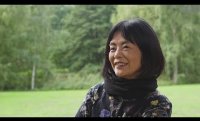
Yoko Tawada

Caption: 

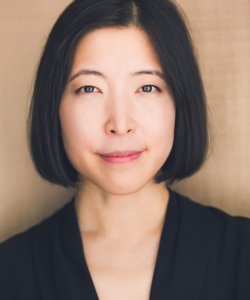
“I believe literature should always start from zero. So, I write stories in both languages on purpose.” In this Louisiana Channel interview, Yoko Tawada speaks in German, English, and Japanese about thinking and writing in two different languages and about her novel Memoirs of a Polar Bear (New Directions, 2016), translated from the German by Susan Bernofsky.

Genre: 

Nathan Englander on Ritual

Caption: 

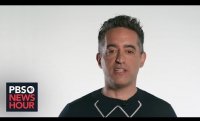
“I adopted the six days for creation and a seventh for rest model. I figured, if it worked for building this world, it should work for fictional ones as well.” Novelist Nathan Englander, author of kaddish.com (Knopf, 2019), shares how his religious upbringing has influenced his writing rituals in this PBS NewsHour video.

Genre: 

The Future of Books

Caption: 

“The questions that I try to answer in the book, through fiction, are questions about people I knew when I was a child…I made up the answers because I could not access the real answers.” In this Entertainment Weekly video, De’Shawn Charles Winslow, author of the debut novel, In West Mills (Bloomsbury, 2019), speaks with fellow debut authors Taffy Brodesser-Akner, Sarah M. Broom, Linda Holmes, and Lisa Taddeo about the inspiration and evolution of their books. Winslow is featured in “First Fiction 2019” in the July/August issue of Poets & Writers Magazine.

How Novel

6.19.19

This is a novel. All facts are true, but I have imagined feelings, thoughts, and dialogue. I used intuition and deduction rather than actual invention…. When I read about him, something happened. He started to live in my head like a character in a novel,” writes Catherine Cusset in the prologue to her latest book, Life of David Hockney: A Novel (Other Press, 2019), translated from the French by Teresa Fagan, which offers a portrait of the famous painter through a blend of biography and fiction. Think of an artist whose work you admire, whose character or life circumstances resonate with you in a personal way. Research some basic facts about this artist’s life, and then write a short story that focuses on emotional truth, using your intuition to imagine feelings and thoughts. 

Brian Evenson on Writing

Caption: 

“My favorite form is the long short story or the novella because I think it allows you a little bit more breadth and scope in terms of what you can do.” Brian Evenson, whose eighth story collection, Song for the Unraveling of the World (Coffee House Press, 2019), is featured in Page One in the July/August issue of Poets & Writers Magazine, reads from his work and talks about teaching, writing habits, and spirituality in this video from the 2014 Mission Creek Festival.

Genre: 

Rules for Writing

Caption: 

“Rule No. 10: Revise, revise, revise. I cannot stress this enough. Revision is when you do what you should have done the first time, but didn’t.” Colson Whitehead, whose seventh novel, The Nickel Boys (Doubleday, 2019), is featured in Page One in the July/August issue of Poets & Writers Magazine, reads his 2012 New York Times piece “How to Write” at the Muldoon’s Picnic variety show in New York City in 2015.

Genre: 

To the Lighthouse

6.12.19

In “Job Opening: Seeking Historian With Tolerance for Harsh Weather, the Occasional Bear,” MPR News reporter Euan Kerr interviews Lee Radzak about his retirement this spring after thirty-six years as the lighthouse keeper at Split Rock Lighthouse on Lake Superior in Minnesota. Radzak says many of the romantic notions about lighthouses can be attributed to the physical space they inhabit on “the edge—the edge of land and of water,” but that there are also difficult and tedious tasks that accompany his job. This week, write a story about someone who resides and works in a space that is intermittently peopled and completely isolated—a national park, a large estate, or a new planet. How do these extremes affect the life of your character? 

Pages

Subscribe to Fiction