Poetry Prize
A prize of $1,000 is given annually for a single poem. Andrew Schelling will judge. Submit up to three poems of no more than three pages each with a $10 entry fee by March 14. Visit the website for complete guidelines.
Jump to navigation Skip to content
A prize of $1,000 is given annually for a single poem. Andrew Schelling will judge. Submit up to three poems of no more than three pages each with a $10 entry fee by March 14. Visit the website for complete guidelines.
In a tribute published in the Yale Review to Ellen Bryant Voigt, who passed away in October, executive editor Meghan O’Rourke writes: “Through her, I learned to read like a poet. Not to identify themes, as I’d been trained to do as an undergraduate at Yale, but to attend to effects.” This type of close examination included describing poems by how many medium-length lines and periods were in a poem, and how many lines a sentence takes up. “Her rigor taught me how to read my own work as I’d learned to read others’: closely enough to see what it was resisting,” writes O’Rourke. Revisit a poem you’ve written and consider what the work may want to be, and what it might be resisting. What about its syntax or grammar might lead you to these conclusions? Explore reworking the poem a little or a lot to shape how it arrives at its desired effects, or resists them.
“You have to learn to write when you don’t feel like it.” —Raquel Gutiérrez, author of Southwest Reconstruction
The author of Ocean of Clouds (Knopf, 2025) considers the lineage of his own loping lines and encourages poets to try them.
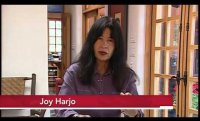
“This table has been a house in the rain, an umbrella in the sun.” In this video that originally aired in 2012, poet Joy Harjo reads her poem “Perhaps the World Ends Here,” which appears in her collection The Woman Who Fell From the Sky (Norton, 1994), for PBS NewsHour.
Write a poem that begins with the image of an animal arriving where it should not be, such as a whale in an office space or a Zebra in a suburban backyard. Allow this surreal scene to take you to unexpected places and metaphors. Is the animal an omen or is it concealing a secret? Focus on the literal and symbolic dimensions of the encounter, drawing out the scene to illuminate overlooked truths, inner stirrings, and the quiet absurdities of the world around you.
The author of Ocean of Clouds (Knopf, 2025) considers the benefits of planning elements of a poem before its composition.
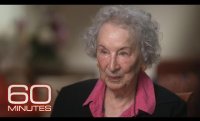
In this 60 Minutes interview, Margaret Atwood speaks about her response to book banning, her new memoir, Book of Lives: A Memoir of Sorts (Doubleday, 2025), and why she says the popularity of her novel The Handmaid’s Tale is “not due to me or the excellence of the book. It’s partly the twists and turns of history.”
In “Man Ray: When Objects Dream,” a new survey exhibition at the Metropolitan Museum of Art in New York, among the many works on display are over fifty of the artist’s “rayographs,” photograms made in the early twentieth century by placing objects on or near light-sensitive photo paper that is then exposed to create dramatically silhouetted images with high contrast. In these works, everyday objects—a comb, bottle, lightbulb, eggbeater, key, and wrench—become defamiliarized through Man Ray’s manipulation of placement and movement, capturing what poet Tristan Tzara described as the moment “when objects dream.” Browse through some of the rayographs and select one image that particularly resonates with you. Compose a poem that imagines the dreams in your chosen image. In your deciphering of the objects, ask yourself what do they dream?
“It can take days, months, years for me to know when notes pass into the arena of poem or story.” —Devon Walker Figueroa, author of Lazarus Species