Genre: Poetry

Front Range Book Prize

Alternating Current Press
Entry Fee: 
$18
Deadline: 
December 31, 2024
A prize of $1,000, publication by Alternating Current Press, and 25 author copies will be given annually for a poetry collection, story collection, essay collection, novel, memoir, or book-length hybrid work on the theme of Colorado or by a writer born, raised, or residing in Colorado (or who has resided in Colorado for at least three years). The winner will also be given the opportunity to participate in a book tour in Colorado. All entries are considered for publication. Using only the online submission system, submit a manuscript of any length with an $18 entry fee by December 31. Visit the website for complete guidelines.


Rising Writer Prize

Autumn House Press
Entry Fee: 
$30
Deadline: 
November 15, 2024
A prize of $1,000 and publication by Autumn House Press is given in alternating years for a debut work of poetry or fiction. The 2025 prize will be given for fiction. The winner will also receive a $1,000 stipend for travel and book promotion. K-Ming Chang will judge. Submit a novel, novella, or story collection of 100 to 200 pages with a $30 entry fee by November 15. The submission fee may be waived in cases of financial need. All finalists are considered for publication. Visit the website for complete guidelines.

Falling

10.8.24

“One by one, like leaves from a tree, / All my faiths have forsaken me; / But the stars above my head / Burn in white and delicate red, / And beneath my feet the earth / Brings the sturdy grass to birth,” begins Sara Teasdale’s 1915 poem “Leaves.” Write a poem that uses rhythm and meter to evoke the feeling of the autumn season and describes the sights and sounds of the natural environment drying and withering, beginning the descent to decomposition. You might use this as an opportunity to ruminate on the larger themes of slowing down, and cycles of renewal and decay. Pay particular attention to consonance, short and long vowel sounds, and the length of your words and lines to create the desired tone of your poem.

Ode to Style

10.1.24

In a recent piece published on Literary Hub highlighting responses from writers and editors on their appreciation for The Chicago Manual of Style, book editor Barbara Clark muses on the poetry found within the guidebook. “When I looked up something in the manual, I saw poems in their purest form. Open to a page at random, and find a poem there,” says Clark. “Fused participles! Who can imagine such a thing?” Taking inspiration from grammar-related terms and phrases, compose a poem that plays with an open interpretation of the words involved, bringing these concepts beyond language usage and into a more personal or philosophical context. Can you locate a sort of soul or lyrical beauty within organization and categorization?

An Evening With the Institute of American Indian Arts

Caption: 

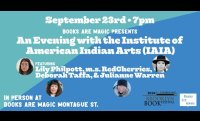
In this Brooklyn Book Festival Bookend Event at Books Are Magic, the Institute of American Indian Arts presents readings by students, alumni, and faculty of the program, including program director Deborah Jackson Taffa, m.s. RedCherries, Lily Philpott, and Julianne Warren.

Banned Books Week: Ana DuVernay

Caption: 

In this virtual event, Banned Books Week honorary chair and award-winning filmmaker Ava DuVernay joins youth honorary chair Julia Garnett, a student activist who fought book bans in her home state of Tennessee, for a conversation about advocacy and fighting censorship.

Pages

Subscribe to Poetry