AAWW at Home: Yu Miri

Caption: 

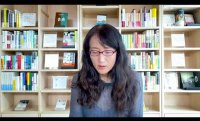
“I come from a place of not belonging and perhaps I started writing in order to make a place where I belonged in the world of novels or plays.” In this AAWW video, Yu Miri answers questions about her life and writing process, and reads from her novel Tokyo Ueno Station (Riverhead Books, 2020), translated from the Japanese by Morgan Giles, which won the 2020 National Book Award in translated literature.

Douglas Stuart Reads From Shuggie Bain

Caption: 

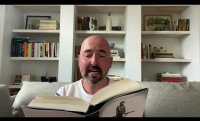
“She’s seen by those around her as being too much, but in fact, it’s not that she is too much, it’s that the world around her isn’t enough.” In this video for Perthshire Pride, Douglas Stuart introduces the characters from his debut novel, Shuggie Bain (Grove Press, 2020), for which he won the 2020 Booker Prize, and reads a short excerpt.

Genre: 

National Book Foundation’s Literarian Award to Carolyn Reidy

Caption: 

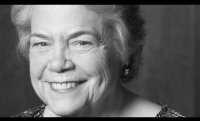
“You knew that she was motivated by the basic concept that we’re here for a short while, and we have to make sure we make it about something larger than just ourselves.” In this video from the 2020 National Book Awards Ceremony, authors and colleagues speak about the influence of Carolyn Reidy, the late president and CEO of Simon & Schuster, who was honored with the National Book Foundation’s 2020 Literarian Award for Outstanding Service to the American Literary Community. Reidy died on May 12, 2020 at the age of seventy-one.

The Ministry of Utmost Happiness

Caption: 

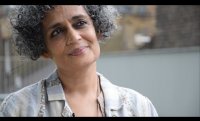
“When she first moved in, she endured months of casual cruelty like a tree would—without flinching.” In this video, Arundhati Roy reads from the first chapter of her second novel, The Ministry of Utmost Happiness (Knopf, 2017). Roy speaks about her much-anticipated book in “Worth the Wait” by Renée H. Shea in the July/August issue of Poets & Writers Magazine.

Genre: 

Persisting

11.19.20

In a 2018 Boston Review interview, Avni Sejpal asks Arundhati Roy about the narrative differences between her two novels, The God of Small Things and The Ministry of Utmost Happiness, elaborating on how the former is “written in a style often described as lyrical realism,” while the latter is “more urgent, fragmented, and bleak.” Arundhati’s response pushes back on the word “bleak” as she explains that “most of the characters, after all, are ordinary folks who refuse to surrender to the bleakness that is all around them, who insist on all kinds of fragile love and humor and vulgarity, which all thrive stubbornly in the most unexpected places.” Write about a time when you chose to push against despair and bleakness. How did love, humor, and hope persist despite dire circumstances?

W. S. Merwin on Writing Poems and Planting Trees

Caption: 

“It would be silly to waste time daydreaming about, if only I were twenty years old again. It’s more interesting to figure out, how do I see the world now.” In this 2015 PBS NewsHour video, the late W. S. Merwin reflects on growing old and writing poems on the three acres of land he purchased in the late 1970s, now known as the Merwin Conservancy, an arts and ecology organization located on the island of Maui.

Genre: 

An Interview With Susan Larson

I recently had an opportunity to speak with Susan Larson, former book editor for the New Orleans Times-Picayune and host of WWNO’s The Reading Life, a podcast where she interviews celebrated and emerging authors. Larson has served on the boards of the Tennessee Williams/New Orleans Literary Festival and the New Orleans Public Library, and is the founder of the New Orleans chapter of the Women’s National Book Association. She is also the author of The Booklover’s Guide to New Orleans.

You were the book editor for the New Orleans Times Picayune for many years. Do you miss doing that work?
I was the book editor from 1988 to 2009, such a grand period in local literary history, with many writers emerging to national recognition and major prizes, and the rise of so many great literary festivals. It was absolutely the best job of my life and I miss it every day! In the current days of the shrinking book review, it now seems to me impossibly lucky that I had two, sometimes three, pages a week for book review coverage, and I miss all those talented reviewers’ voices as well.

Talking to writers is a privilege and a gift: I am forever grateful for life-changing conversations I have had over the years with Dorothy Allison, Stephen E. Ambrose, James Lee Burke, Andre Dubus, Ernest J. Gaines, Derek Walcott, and Christine Wiltz.

Why was it important for you to start a chapter of the Women’s National Book Association in New Orleans?
I asked my longtime friend Mary Grey James, who had recently retired from working with Ingram Book Company and then went on to work at Parnassus Books, an independent bookstore in Nashville, what activity had meant most to her in her new life. She said that she was most proud of her involvement with the WNBA. After she came to talk to a group of women in New Orleans, we were off!

When people think of New Orleans, they often think of our food and culture. What do you wish people knew about New Orleans as a literary city?
One of my cherished dreams is to see New Orleans designated as a UNESCO City of Literature. As we continue to excavate our long history, we are learning more and more about how much we have contributed to American literature—consider the beginnings of African American literature here, for example, that are just beginning to be appreciated properly. And I wish more people realized how diverse the literary contributions have been from novelists, poets, playwrights, political writers, historians, writers of creative nonfiction. One of the things I treasure about living here is how much of our literary landscape survives in physical form—it means so much to me to drive or walk past the homes of writers who have meant so much to the world, imagining the lives they lived here, including Shirley Ann Grau, Walker Percy, Anne Rice, and Tennessee Williams, to name only a few. I often think I see New Orleans through a hazy dream of books I’ve read.

As host of The Reading Life podcast, what are some of your most memorable shows?
We are celebrating our tenth year on the air, after a brief pandemic hiatus. We try to present a range of writers, local and national, authors of fiction and nonfiction and poetry, focusing on writers who live here or are coming here for appearances.

Our show is conversational, rather than scripted because you always have to be ready to follow the author where they want to go. Some of my favorite guests have been Hillary Clinton and Chelsea Clinton talking about their book The Book of Gutsy Women: Favorite Stories of Courage and Resilience (Simon & Schuster, 2019); Alex Beard sharing the African adventures that led to his children’s picture books; Eddie S. Glaude Jr. on Begin Again: James Baldwin’s America and Its Urgent Lessons for Our Own (Crown, 2020); Sarah Broom on her debut memoir, The Yellow House (Grove Press, 2019); and Albert Woodfox on Solitary: My Story of Transformation and Hope (Grove Press, 2019).

What are you currently reading?
I’ve just finished Together in a Sudden Strangeness: America’s Poets Respond to the Pandemic (Knopf, 2020) edited by Alice Quinn, which is a book of great wisdom and consolation for these troubled times; there are days when poetry is the only answer. I’m savoring Susanna Clarke’s Piranesi (Bloomsbury, 2020) for my private pleasure after the long wait for this book; her debut novel, Jonathan Strange & Mr. Norrell is one of my favorite novels.

Next on my list are The Rib King by Ladee Hubbard, forthcoming from Amistad in January, and Economy Hall: The Hidden History of a Free Black Brotherhood by Fatima Shaik, forthcoming in March, which illuminates an important chapter in the history of free people of color in New Orleans. I’m also eager to read former president Barack Obama’s memoir A Promised Land (Crown, 2020).

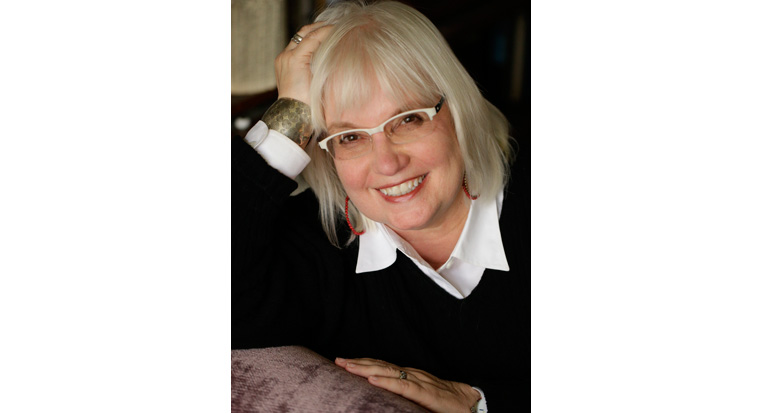
Photo: Susan Larson.
 
Kelly Harris is the literary outreach coordinator for Poets & Writers in New Orleans. Contact her at [email protected] or on Twitter, @NOLApworg.

Grifter

11.18.20

Patricia Highsmith’s 1955 suspense novel The Talented Mr. Ripley, recently adapted into a television series for Showtime, centers around a character who has set the bar for the literary archetype of “the grifter.” In a T Magazine essay, Megan O’Grady writes that Tom Ripley embodies self-authorship, which is “all about creating a convincing character within the narrative structure of one’s own aspirational thinking.” O’Grady argues that Highsmith’s novel has foretold our era of self-invention: “con artists and ‘visionaries,’ the gurus and hucksters, schemers and dreamers, the online dating scammers—all of our 21st-century buccaneers of society, politics, and commerce.” Write a story with a grifter as its protagonist, one with a self-invented identity that drifts into high society in search of prestige.

Jacqueline Woodson on BookTube

Caption: 

“I had a teacher who said, ‘Instead of lying, write it down. Cause it’s fiction. It’s not a lie anymore,’” says Jacqueline Woodson. “I feel like that’s one of the things I go back to, is that moment where my stories became legitimized.” In this episode of BookTube, Woodson sits down with CeCe Ewing, Ebony and Denice Nuñez, and Elaine Welteroth to discuss writing and reading, as well as gender and queer identity.

Genre: 

Meow

11.17.20

“Cats suffer from dementia too. Did you know that?” begins Margaret Atwood’s poem “Ghost Cat” from Dearly (Ecco Press, 2020), her first collection of poetry in over a decade. The poem centers on a cat with dementia who wanders the house at night nibbling on bits of food: “from a tomato here, a ripe peach there, / a crumpet, a softening pear. / Is this what I’m supposed to eat?” Cats have been at the center of literature for centuries, ranging from Christopher Smart’s eighteenth-century poem “Jubilate Agno,” which begins “For I will consider my Cat Jeoffry,” to Mikhail Bulgakov’s novel The Master and Margarita and Haruki Murakami’s novel Kafka on the Shore. Write a poem inspired by a cat. As an added challenge, try writing from the perspective of a cat, instead of from a human watching one.

Pages

Subscribe to Poets & Writers RSS