Find details about every creative writing competition—including poetry contests, short story competitions, essay contests, awards for novels, grants for translators, and more—that we’ve published in the Grants & Awards section of Poets & Writers Magazine during the past year. We carefully review the practices and policies of each contest before including it in the Writing Contests database, the most trusted resource for legitimate writing contests available anywhere.
Find a home for your poems, stories, essays, and reviews by researching the publications vetted by our editorial staff. In the Literary Magazines database you’ll find editorial policies, submission guidelines, contact information—everything you need to know before submitting your work to the publications that share your vision for your work.
Whether you’re pursuing the publication of your first book or your fifth, use the Small Presses database to research potential publishers, including submission guidelines, tips from the editors, contact information, and more.
Research more than one hundred agents who represent poets, fiction writers, and creative nonfiction writers, plus details about the kinds of books they’re interested in representing, their clients, and the best way to contact them.
Find publishers ready to read your work now with our Open Reading Periods page, a continually updated resource listing all the literary magazines and small presses currently open for submissions.
Since our founding in 1970, Poets & Writers has served as an information clearinghouse of all matters related to writing. While the range of inquiries has been broad, common themes have emerged over time. Our Top Topics for Writers addresses the most popular and pressing issues, including literary agents, copyright, MFA programs, and self-publishing.
Our series of subject-based handbooks (PDF format; $4.99 each) provide information and advice from authors, literary agents, editors, and publishers. Now available: The Poets & Writers Guide to Publicity and Promotion, The Poets & Writers Guide to the Book Deal, The Poets & Writers Guide to Literary Agents, The Poets & Writers Guide to MFA Programs, and The Poets & Writers Guide to Writing Contests.
Poets & Writers lists readings and other literary events held online and in person. Whether you are an author on a book tour or the curator of a reading series, the Literary Events Calendar can help you find your audience.
Research newspapers, magazines, websites, and other publications that consistently publish book reviews using the Review Outlets database, which includes information about publishing schedules, submission guidelines, fees, and more.
Well over ten thousand poets and writers maintain listings in this essential resource for writers interested in connecting with their peers, as well as editors, agents, and reading series coordinators looking for authors. Apply today to join the growing community of writers who stay in touch and informed using the Poets & Writers Directory.
Since our founding in 1970, Poets & Writers has served as an information clearinghouse of all matters related to writing. While the range of inquiries has been broad, common themes have emerged over time. Our Top Topics for Writers addresses the most popular and pressing issues, including literary agents, copyright, MFA programs, and self-publishing.
Find a writers group to join or create your own with Poets & Writers Groups. Everything you need to connect, communicate, and collaborate with other poets and writers—all in one place.
Well over ten thousand poets and writers maintain listings in this essential resource for writers interested in connecting with their peers, as well as editors, agents, and reading series coordinators looking for authors. Apply today to join the growing community of writers who stay in touch and informed using the Poets & Writers Directory.
Find information about more than two hundred full- and low-residency programs in creative writing in our MFA Programs database, which includes details about deadlines, funding, class size, core faculty, and more. Also included is information about more than fifty MA and PhD programs.
Whether you are looking to meet up with fellow writers, agents, and editors, or trying to find the perfect environment to fuel your writing practice, the Conferences & Residencies is the essential resource for information about well over three hundred writing conferences, writers residencies, and literary festivals around the world.
Poets & Writers lists readings and other literary events held online and in person. Whether you are an author on a book tour or the curator of a reading series, the Literary Events Calendar can help you find your audience.
Discover historical sites, independent bookstores, literary archives, writing centers, and writers spaces in cities across the country using the Literary Places database—the best starting point for any literary journey, whether it’s for research or inspiration.
From in-person events held in cities across the country to virtual events available to all, Poets & Writers Live offers a more tangible connection to the community of writers through celebrations of authors featured in the pages of Poets & Writers Magazine, including readings and conversations with the debut authors in our annual debut poets roundup, First Fiction, The New Nonfiction, and 5 Over 50 and acclaimed authors such as Garth Greenwell, Douglas Kearney, Karen Russell, and Clint Smith.
Establish new connections and enjoy the company of your peers using our searchable databases of MFA programs and writers retreats, apply to be included in our directory of writers, and more.
Each year the Readings & Workshops program provides support to hundreds of writers participating in literary readings and conducting writing workshops. Learn more about this program, our special events, projects, and supporters, and how to contact us.
The Maureen Egen Writers Exchange Award introduces emerging writers to the New York City literary community, providing them with a network for professional advancement.
Find information about how Poets & Writers provides support to hundreds of writers participating in literary readings and conducting writing workshops.
Bring the literary world to your door—at half the newsstand price. Available in print and digital editions, Poets & Writers Magazine is a must-have for writers who are serious about their craft.
View the covers and contents of every issue of Poets & Writers Magazine, from the current edition all the way back to the first black-and-white issue in 1987.
Find details about every creative writing competition—including poetry contests, short story competitions, essay contests, awards for novels, grants for translators, and more—that we’ve published in the Grants & Awards section of Poets & Writers Magazine during the past year. We carefully review the practices and policies of each contest before including it in the Writing Contests database, the most trusted resource for legitimate writing contests available anywhere.
Every day the editors of Poets & Writers Magazine scan the headlines—publishing reports, literary dispatches, academic announcements, and more—for all the news that creative writers need to know.
In our weekly series of craft essays, some of the best and brightest minds in contemporary literature explore their craft in compact form, articulating their thoughts about creative obsessions and curiosities in a working notebook of lessons about the art of writing.
The Time Is Now offers weekly writing prompts in poetry, fiction, and creative nonfiction to help you stay committed to your writing practice throughout the year. Sign up to get The Time Is Now, as well as a weekly book recommendation for guidance and inspiration, delivered to your inbox.
Ads in Poets & Writers Magazine and on pw.org are the best ways to reach a readership of serious poets and literary prose writers. Our audience trusts our editorial content and looks to it, and to relevant advertising, for information and guidance.
Start, renew, or give a subscription to Poets & Writers Magazine; change your address; check your account; pay your bill;
report a missed issue; contact us.
Poets & Writers is pleased to provide free subscriptions to Poets & Writers Magazine to award-winning young writers and to high school creative writing teachers for use in their classrooms.
Read select articles from the award-winning magazine and consult the most comprehensive listing of literary grants and awards, deadlines, and prizewinners available in print.
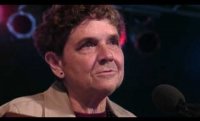
“There’s a place between two stands of trees where the grass grows uphill / and the old revolutionary road breaks off into shadows…” In this 2009 video, pioneering feminist poet Adrienne Rich reads her poem “What Kind of Times Are These?” at the Geraldine R. Dodge Poetry Festival. Rich died at the age of eighty-two on March 27, 2012.
Many might think of the great Renaissance artist Leonardo da Vinci as naturally gifted, but Francesca Fiorani, author of The Shadow Drawing: How Science Taught Leonardo How to Paint (Farrar, Straus & Giroux, 2020), points out in an excerpt published on Literary Hub that even the prolific virtuoso, at one point, did not know how to paint. It wasn’t until after a series of experiments with a candle did da Vinci learn how to realistically paint light, writing that “every shadow made by an opaque body smaller than the source of light casts derivative shadows tinged by the color of their original shadow.” Inspired by da Vinci, write about a time when a deep study helped you overcome an obstacle, whether in writing or life. What kind of focus was necessary to see a solution more clearly?
Crowd-sourced video hosting website YouTube has compiled over fifteen years of a variety of content, making it an accessible resource for historical footage. From early documentaries made in the 1990s, to remastered and colorized footage from the beginning of the twentieth century, including views of Tokyo streets in 1913, Market Street in San Francisco in 1906, and Tverskaya Street in Moscow in 1896, and footage of cities around the world in the 1890s. Using one of these videos, or one of your choosing, pick out a face and write a scene in the life of that person. What concerns are specific to this era, and which are still relevant today?
Last month, Poets & Writers’ Readings and Workshops program, with support from the Hearst Foundation, cofunded three virtual literary events for the 2020 New Orleans Words and Music Festival. Due to the pandemic this year, instead of purchasing tickets, donations were suggested to attend virtual events. Proceeds from the four-day festival provide literacy resources for adults, education programs for incarcerated adults and teens, and free community programming in New Orleans through Words & Music’s parent organization, One Book One New Orleans. Here are the three events:
1. Queering the South: LGBTQ+ Writers on Home, Love, and History A discussion and reading curated by New Orleans poet Brad Richard with a panel featuring Matthew Draughter, M’Bilia Meekers, and Megan Volpert.
2. Heartbreak, or Research? Poets on the Writing Process A discussion and reading curated by Stacey Balku with panelists Elizabeth Gross, Skye Jackson, Aimee Nezhukumatathil, Melinda Palacio, and Rebecca Morgan Frank.
3. The Power of Jazz and Place in Tom Dent Poetry: A Workshop With Skye Jackson Writers from an earlier workshop hosted by Skye Jackson were invited to read their work, including Stacey Balkun, Joshua Benitez, Liz Granite, Sonny Miro, Kiana Naquin, and Lisa O’Neill.
Bonus: Poets, Presidents, and Pandemics: A Reading for These Times Catch our literary outreach coordinators from Houston and Detroit, Lupe Mendez and Justin Rogers, read with Pulitzer Prize–winning author Tyehimba Jess for a virtual event I curated.
If you missed the festival or any affiliated events, you can view them at the YouTube channel for One Book One New Orleans.
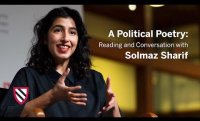
“It matters what you call a thing,” reads Solmaz Sharif from her poem “Look” in this 2017 reading and conversation with Evie Shockley for the Radcliffe Institute for Advanced Study at Harvard University. For more Sharif, read “Shadows of Words: Our Twelfth Annual Look at Debut Poets” from the January/February 2017 issue of Poets & Writers Magazine.
“Everybody’s got a song / they’ve gotta sing. / So they say. So they / think,” begins Rita Dove’s poem “The Spring Cricket’s Discourse on Critics,” published in the Believer this month. The deftly enjambed poem uses the perspective of a cricket and its ability to use its legs to chirp, known as stridulation, to discuss an artist’s defense against critics believing “they can / just… crank out the golden / tunes.” Use the perspective of an insect or an animal whose abilities come naturally to examine an aspect of being a poet. Try enjambment in your poem to emphasize particular words.
“The sky is our common home, the place we all live. / There we are in the world together.” In this video, Alberto Ríos reads “We Are of a Tribe” from his latest poetry collection, Not Go Away Is My Name (Copper Canyon Press, 2020).
“You will love again the stranger who was your self.” Dub poet Linton Kwesi Johnson reads Derek Walcott’s poem “Love After Love” from Collected Poems: 1948–1984 (Farrar, Straus and Giroux, 1986) for a tribute to the poet and playwright. Walcott, who won the Nobel Prize in Literature in 1992, passed away on March 17, 2017.
“You kissed the ones you loved and the ones you didn’t even like that much, sometimes even someone you hated, just so you wouldn’t seem shady. Too much garlic was never a problem, we kissed anyway. We kissed the living and the dying, knowing that the dying were part of the living and we wanted to keep them with us.” In this passage from Mattilda Bernstein Sycamore’s nonfiction book The Freezer Door, forthcoming in December from Semiotext(e), she writes about the kiss greeting embedded in queer cultural norms she adopted while living in San Francisco in the early 1990s. What happens to gestures of intimacy during a pandemic at the time of year traditionally associated with family and friends, holiday festivities, and gatherings in close proximity? Write a personal or lyric essay that meditates on memories of intimacy from your past, perhaps also exploring how your perceptions or modes of intimacy have changed over the course of the past year.
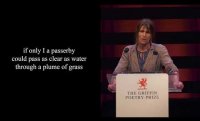
“What I love about water is that it spends its whole time falling,” begins Alice Oswald as she introduces her poem “A Short Story of Falling” from her 2017 Griffin Poetry Prize–winning collection, Falling Awake (Jonathan Cape, 2016). “It’s always, apparently, trying to find the lowest place possible and when it finds the lowest place possible, it lies there wide awake.”