Red

12.22.20

“Mars Being Red” by the late poet Marvin Bell lyrically explores the color red as a state of being, likening it to a list of images that both physically resemble the color and provide memories, such as that of youth. In this compact, twelve-line poem, Bell begins what seems to be a portrait of the planet Mars and then delves into a series of digressions that find resolve in a meditation on the possibility of change: “You will not be this quick-to-redden / forever. You will be green again, again and again.” Inspired by Bell, write a poem that serves as a portrait of a color. Use physical descriptions to begin and then personal memories to develop a transformation in this study of hue.

Cheryl Boyce-Taylor at Free Verse

Caption: 

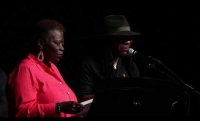
In this 2018 video, Cheryl Boyce-Taylor reads a collaborative poem about her son Malik Taylor with South Carolina’s first poet laureate Marcus Amaker at the Free Verse poetry festival in Charleston. Boyce-Taylor’s fifth poetry collection, Mama Phife Represents (Haymarket Books, 2021), is featured in Page One in the January/February issue of Poets & Writers Magazine.

Genre: 

A Fresh Start

12.17.20

New Year’s traditions range across cultures and families. Rolling empty suitcases around the block to increase one’s chances of traveling, pounding rice to make mochi for good fortune, eating lentils to herald prosperity, and enjoying twelve grapes for twelve wishes are just a few of the traditions whereby folks start anew and connect with their roots. Some of these practices, such as kissing at midnight for romantic luck and throwing pails of water out a window to chase away evil spirits, date back a century or more. What are some of your New Year’s traditions? How is the way you celebrate uniquely yours? Write an essay that describes your New Year’s traditions, traces their cultural lineages, and tells the story of how you learned them.

Reel

12.16.20

Jana Larson’s Reel Bay: A Cinematic Essay, forthcoming from Coffee House Press in January, straddles the line between memoir and fiction. Larson blends essay and screenplay to investigate and understand the mysterious death of a woman found in Minnesota who local police alleged was in search of the fictional ransom money seen buried in the snow in Joel and Ethan Coen’s 1996 film, Fargo. The ambitious premise and second-person narration places readers in the shoes of the investigator, not unlike the subjective perspective of certain movies. Considering how true stories are often stranger than fiction, write a short story based on a mysterious occurrence that you experienced yourself or that stuck with you after you learned about it. How will you draw in the reader? Try narrating the story in first or second person to give the illusion of truth.

COVID Vivid Interview: Reyes Ramirez

I’m continuing this series of interviews, asking Houston writers how and what they’ve been doing since the start of the COVID-19 pandemic. It’s been enlightening and heartwarming to hear these responses when I pose the question:

What have you been doing since the pandemic?

This week we hear from Reyes Ramirez, a Houstonian, writer, educator, curator, and organizer of Mexican and Salvadoran descent. Ramirez is the winner of the 2019 YES Contemporary Art Writers Grant, 2017 Blue Mesa Review Nonfiction Contest, and 2014 riverSedge Poetry Prize. His poems, stories, essays, and reviews have been published in Indiana Review, Cosmonauts Avenue, Queen Mob’s Teahouse, the Latinx Archive, december magazine, Arteinformado, Texas Review, TRACK//FOUR, Houston Noir, Gulf Coast, the Acentos Review, Cimarron Review, and elsewhere. Ramirez is a 2020 CantoMundo fellow and 2021 Crosstown Arts writer in residence, and has been awarded grants from the Houston Arts Alliance, Poets & Writers, and the Warhol Foundation’s Idea Fund.

Here’s what he says:

“What have I been doing since the pandemic started? Well, I’ve been editing my collection of short stories titled The Book of Wanderers, which I’ll have some news to report about soon. I’m working on a collection of poetry that’s been kicking me around in terms of order and titles, but I’m loving the journey for the destination. I did a whole podcast with Houston creatives where we discussed career-based issues for the contemporary artist. Oh! I also received a Poets & Writers’ United States of Writing grant to organize a series of virtual readings focused on pop culture featuring Houston writers of color titled Houston Eyes, Silver Screens (HESS). It’s cofunded by the Houston Arts Alliance because I originally received a grant from them to organize a literary reading/pro wrestling event where pro wrestlers were going to perform parts of my short story. But this whole pandemic thing happened, and I had to cancel it. C’est la vie, lo que sea, oh well.

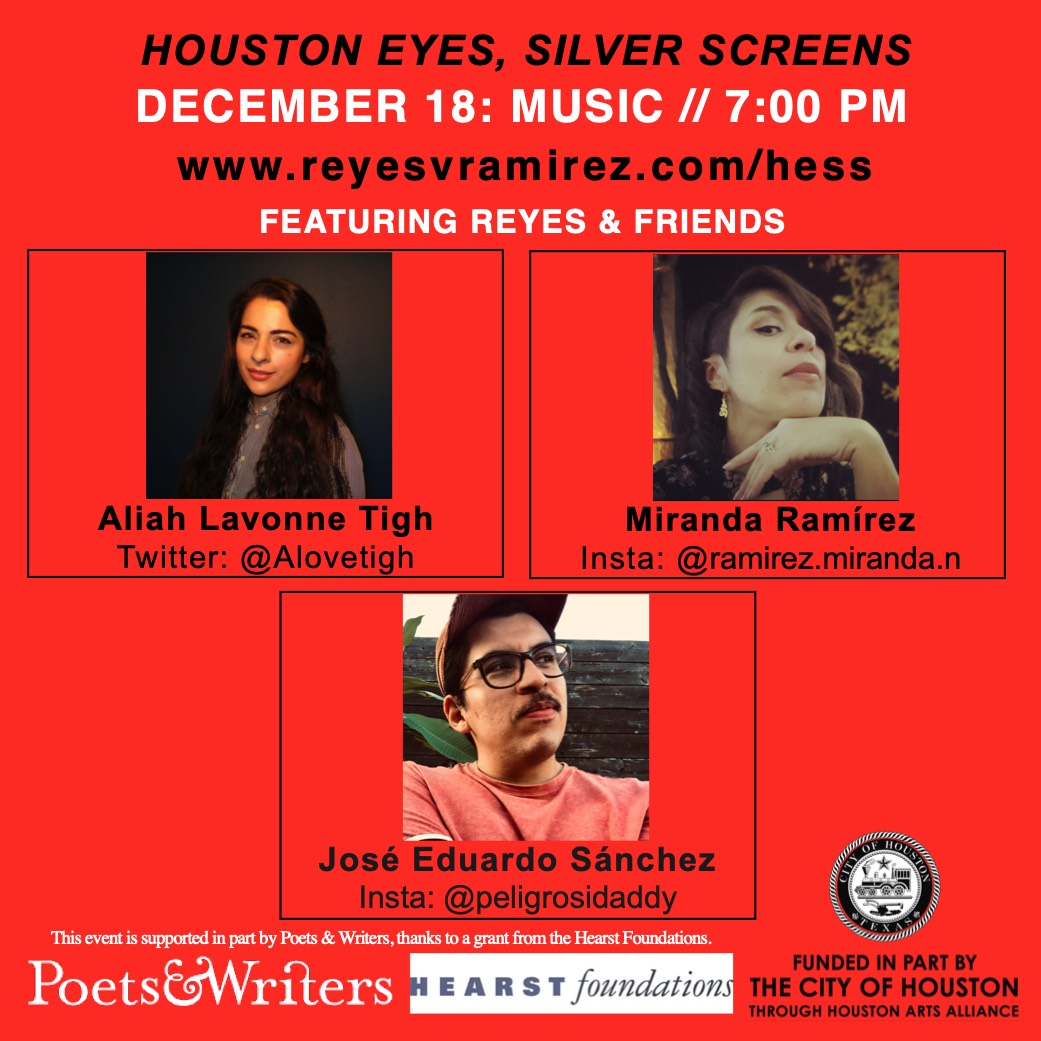
If you missed the first and second installments of HESS (on films and video games, respectively), it’s totally okay! Not only is the last one coming up on December 18 at 7:00 PM CT (on music with Miranda Ramírez, Aliah Lavonne Tigh, and José Eduardo Sánchez), but you can watch the other readings with captions in English and Spanish on my YouTube channel. Happy reading and writing!”

Photo: Flyer for December 18 Houston Eyes, Silver Screens virtual event.
 
Lupe Mendez is the literary outreach coordinator for Poets & Writers in Houston. Contact him at [email protected] or on Twitter, @houstonpworg.

Now It’s Dark by Peter Gizzi

Peter Gizzi reads “That I Saw the Light on Nonotuck Avenue” and “The Present Is Constant Elegy” from his poetry collection Now It’s Dark, published in December 2020 by Wesleyan University Press.

Pages

Subscribe to Poets & Writers RSS