This Place

12.2.20

“No room in Toronto is ever used in the way it was originally intended. That’s what happens in a city always trying to reinvent itself. Like it has an itch it can’t scratch. Like it has a commitment problem.” At the beginning of Catherine Hernandez’s second novel, Crosshairs, forthcoming in December from Atria Books, the protagonist narrates a missive to his lover from his hiding place in a friend’s dark basement. In Hernandez’s description of the setting—a dystopian version of Toronto where a fascist government regime has rounded up marginalized communities into labor camps—one can see the ways in which identity can be layered or transformed through time, whether applied to rooms or cities or gender roles. Write a short story in which a change that’s occurring for the main character is reflected in some way through the setting. How might an environment evolve or change shape as a person does? Conversely, how does a person’s behavior sometimes resemble the shifting characteristics of a physical space?

COVID Vivid Interview: Ayokunle Falomo

Hey mi gente. Hope you’re all staying safe. I’m continuing this series of interviews with Houston writers during the COVID-19 pandemic, offering them a space to respond to this question:

What have you been doing since the pandemic?

This week we hear from Ayokunle Falomo who is Nigerian, American, and the author of the poetry chapbook African, American (New Delta Review, 2019) and two self-published collections. A recipient of fellowships from Vermont Studio Center and MacDowell, his work has been published in the New York Times, Michigan Quarterly Review, the Texas Review, New England Review, and elsewhere. Falomo’s readings have been featured on Write About Now and Houston Public Media. He holds a BS in Psychology from the University of Houston, a Specialist in School Psychology degree from Sam Houston State University, and is currently an MFA in poetry candidate at the University of Michigan’s Helen Zell Writers’ Program.

Here’s his response:

“Since the pandemic started, which feels like a decade ago now, I have mostly been (at)tending to the things that need it in my life. I’ve been reacquainting myself with beauty and truth. I’ve been learning. A lot about myself. I’ve been nursing a broken heart back to health. I’ve been teaching. I’ve been writing. I’ve been reading. A lot. I’ve been taking walks. I’ve been grieving the loss of the future I once imagined. I’ve been running. I’ve been cooking. I’ve been learning, slowly, how to embrace the future that’s mine now. I’ve been learning how to sit still. I’ve been grateful. I’ve been watching shows on Netflix. I’ve been resentful. I’ve been....”

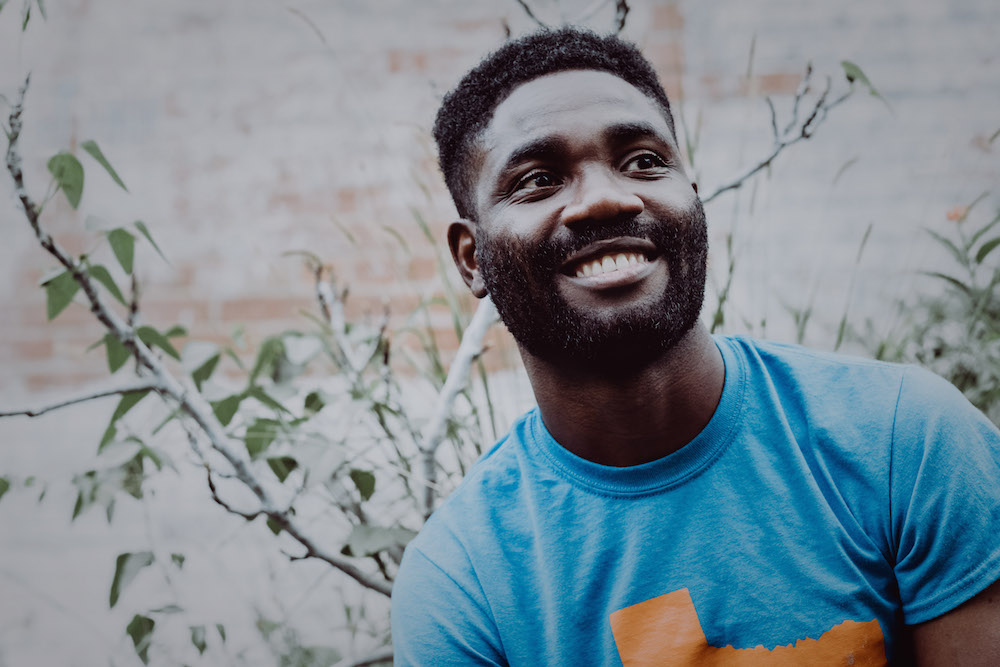
Photo: Ayokunle Falomo.
 
Lupe Mendez is the literary outreach coordinator for Poets & Writers in Houston. Contact him at [email protected] or on Twitter, @houstonpworg.

Zeyn Joukhadar on The Thirty Names of Night

Caption: 

“To me, it was really important to do justice to the complexity of the lives of queer and trans people in my community, and the lives of queer and trans people of color more broadly.” In this Simon & Schuster video, Zeyn Joukhadar speaks about the journey of the protagonist in his second novel, The Thirty Names of Night (Atria Books, 2020). For more Joukhadar, read his installment of Ten Questions.

Genre: 

Vestiges

12.1.20

Humans may no longer have the nictitating membranes, tails, and vomeronasal organs possessed by birds, monkeys, or reptiles, but we do still have vestiges of them, whittled down to nonfunctioning parts of the body: the folds at the inside corners of the eyes, tailbones, and the tiny sac in the nasal cavity above the roof of the mouth. What use, then, can one imagine for nictitating membranes that no longer draw laterally across the eye, tails that no longer help maintain balance, or Jacobson’s organs that no longer detect moisture-borne odor particles? Write a poem that considers the beauty of a body part with no clear-cut function. How might the specificities of the body be appreciated in different ways given our contemporary circumstances? What is the value in imagining new functions for old forms?

Ocean Vuong on War, Sexuality, and Asian American Identity

Caption: 

“I would sneak out of recess, stay in the library to listen to tapes of famous speeches, and one of them was Martin Luther King,” recounts Ocean Vuong about his childhood in this interview with Michel Martin for Amanpour and Company. “You could hear the static when he was giving the ‘I Have a Dream’ speech, and I thought...who is this man talking about dreams in a snowstorm?” Vuong was awarded the 2020 Brooklyn Public Library Fiction & Poetry Prize for his novel, On Earth We’re Briefly Gorgeous (Penguin Press, 2019).

Genre: 

Language Report

11.26.20

Every year Oxford Languages picks a word of the year, which in the past has included “climate emergency” in 2019, “toxic” in 2018, and “youthquake” in 2017. However, this year in lieu of choosing one word, a sixteen-page language report was released with sections on COVID-19, remote work, social movements, and the environment, highlighting words of the year which include “social distancing,” “pods,” “Blursday,” “allyship,” and “bushfire.” Write an essay that reflects on the personal experiences of this complex year using some of these featured words. In what ways have you witnessed the evolution of language in your attempt to describe new experiences?

The Power of Poetry

Caption: 

Looking for a prescription of poetry? In this Intelligence Squared video, William Sieghart, author of The Poetry Pharmacy: Tried-and-True Prescriptions for the Heart, Mind and Soul (Penguin Books, 2017), and Jeanette Winterson, author of Frankissstein: A Love Story (Grove Press, 2019), introduce poems that have changed their lives as a cast of actors—including Tom Burke, Helena Bonham Carter, Jason Isaacs, and Sue Perkins—recite them.

Genre: 

VS Podcast With Nandi Comer

This week I took time to catch up on the VS podcast, a biweekly series hosted by poets Danez Smith and Franny Choi, presented by the Poetry Foundation and Postloudness. Smith and Choi have interviewed a number of my favorite writers and their November 10 episode featured Detroit writer Nandi Comer.

Comer’s poems and essays have appeared or are forthcoming in Callaloo, Crab Orchard Review, the Journal of Pan African Studies, Sycamore Review and Third Coast. She is the author of American Family: A Syndrome (Finishing Line Press, 2018) and, most recently, Tapping Out (Northwestern University Press, 2020).

Comer opens the podcast by reading her poem “¡Sangre! ¡Sangre! ¡Sangre!” that puts the reader in the crowd of a wrestling match—the sport of lucha libre being a main subject in Tapping Out. Readers get a snippet, not only of the blood and bruises, but the grace and dance of a brutal sport craved by the author and the crowds that watch these matches. “The first match. I couldn’t have expected the kind of joy just out of that experience,” says Comer, speaking about the first time she attended a live lucha libre match. “A lot of it has to do with that experience of being at that call and response, watching the wrestlers come down the ramp.”

In my favorite portion of this VS episode, when diving into the language of Comer’s collection, Smith asks a fantastic question harping on its bilingual nature: “Is there anything that you learned from Spanish language or Spanish poetry that you sort of found yourself trying to import into the English of this book?” Comer speaks frankly about how she failed a Spanish class, and how the traditional sense of learning a language doesn’t work for everyone. She further explains how she used “imports” from the Spanish language in her book: “I think I was trying to enact moments of utterances that are seamless to me,” says Comer. “Oftentimes I’m not trying to invent another language, but…it’s like when you have two decks of cards and you’re trying to get the right shuffle.”

I thoroughly enjoyed this podcast interview and reading with Comer and highly encourage everyone to listen to this episode and others!

Justin Rogers is the literary outreach coordinator for Poets & Writers in Detroit. Contact him at [email protected] or on Twitter, @Detroitpworg.

Museumgoer

11.25.20

Visual art can be a source of inspiration for all writers by providing what philosopher Walter Benjamin describes as an aura that one can only experience in the presence of that art piece. Although many are not presently able to visit a museum or physically stand in front of a work of art, inspired by Sharon Dolin’s installment of Writers Recommend, try a virtual visit by using Google’s Art and Culture museum page to choose a work of art from a museum that is new to you. Write a scene or story from the perspective of a subject or object in the painting, using its aura in order to build the story’s conflict or tone.

The Work of Revision

by
Author: 
Hannah Sullivan
Published in 2013
by Harvard University Press

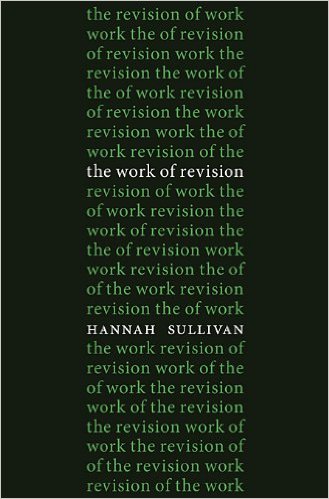
In The Work of Revision, Hannah Sullivan argues that the history of revision is a relatively new trend inherited from the avant-garde experiments of the modernists, a badge of honor for writers anxious to justify the difficulty of their work. Dating back to how Alexandrian editors surveyed Homer’s works, Sullivan considers the virtues of redrafting and examines changes made in manuscripts and proofs by T. S. Eliot, Ezra Pound, James Joyce, Virginia Woolf, and others, illustrating how the impulse to keep rewriting can sometimes go too far. Both craft writing manual and historical analysis, this book will shed light on practices writers have come to understand as commonplace, sharpening the praxis of prose writers and poets alike. 

Pages

Subscribe to Poets & Writers RSS