Lunch Poems With Fady Joudah

Caption: 

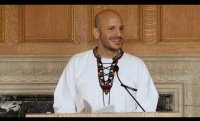
“The age of portrait is drugged. Beauty / is symmetry so rare it’s a mystery.” In this 2018 event, Fady Joudah reads a selection of poems from his collection Footnotes in the Order of Disappearance (Milkweed Editions, 2018) for the Lunch Poems reading series at UC Berkeley. Joudah is the recipient of the 2024 Jackson Poetry Prize.

Genre: 

I Buy My Monster Roses by Diannely Antigua

Caption: 

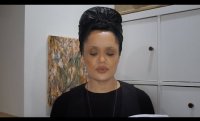
“I sniff the tops of the rose heads / like a newborn’s scalp—fresh skin and hair / only a few days picked.” In this video, Diannely Antigua reads “I Buy My Monster Roses” from her second poetry collection, Good Monster (Copper Canyon Press, 2024), which is featured in Page One in the May/June issue of Poets & Writers Magazine.

Genre: 

Doing Less

4.18.24

More, please? Or, no more, please? In The Fast: The History, Science, Philosophy, and Promise of Doing Without (Avid Reader Press, 2024), John Oakes recounts his personal experience conducting a weeklong fast and examines the practice’s history and place within a wide range of religions and philosophies. The book also explores the act of self-deprivation and the potential transformative benefits of subtracting rather than adding to one’s life. “The act of fasting…won’t stop routine, but impedes it for a bit, signifying a shift and a determined unwillingness to follow standard operating procedure,” writes Oakes. Use this idea to consider your personal relationship with consumption—of food, conversation, media, clothes, space—and write a personal essay that reflects on what you might otherwise take for granted.

The Blaney Lecture: Jane Hirshfield

Caption: 

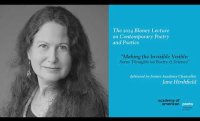
“There are kinds of knowledge, in both science and poetry, that can be made visible only by their enacting.” For this recording of the Academy of American Poets’ 2024 Blaney Lecture, Jane Hirshfield discusses the visible versus the invisible and examines poetry’s ways of naming through some of her favorite poems.

Genre: 

The House of Being

by
Author: 
Natasha Trethewey
Published in 2024
by Yale University Press

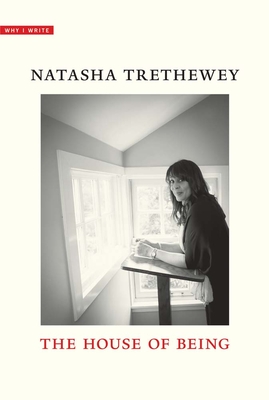
In The House of Being, part of the Why I Write series based on Yale University’s Windham-Campbell Lectures, former U.S. poet laureate Natasha Trethewey revisits the places that informed her beginnings as a reader and a writer, reflecting on her childhood in Gulfport, Mississippi, as the daughter of a Black mother and a white father. Through these intimate essays, Trethewey looks back to the origins of her writing life and considers writing as reclamation. “My need to make meaning from the geography of my past is not unlike the ancients looking to the sky at the assortment of stars and drawing connections between them,” she writes. “I’ve needed to create the narrative of my life—its abiding metaphors—so that my story would not be determined for me.” Watch Trethewey’s 2022 Windham-Campbell Lecture in our Poets & Writers Theater. 

All in Your Head

4.17.24

In “Table for One,” a short story from Korean author Yun Ko-eun’s new collection of the same name, translated by Lizzie Buehler and published by Columbia University Press in April, a surreal quality seeps into the tale of a lonely office worker who enrolls in a course to make solitary dining easier. Tips from the course include: “Target corner tables rather than those in the middle. Seats at the bar are also good. Hang your coat or bag on the chair facing you and take advantage of tools like a book, earphones, a cell phone, or a newspaper.” The fantastic element of the story lies less in the oddity of the premise than in the narrator’s meticulously recounted neuroses and detailed rendering of processes that become seemingly cyclical. Write a scene that focuses on your character’s minute observations as they attempt to overcome something debilitating. Does the situation lend itself to a quirky or dark sense of humor?

Neither Questions nor Answers

4.16.24

“Where is the homeland / to lay a cradle for the dead / Where is the other shore / for poetry to step across the end point / Where is the peace / that lets the days distribute blue sky...” In Sidetracks, forthcoming in May from New Directions, the Chinese poet Bei Dao begins his book-length poem with a list of twenty-five enigmatic questions that dance around mythological, philosophical, and existential subjects. In Jeffrey Yang’s translation, the speaker’s questions lack the end punctuation of the original text, with question marks omitted. Through these unanswered questions, the poet conjures loss and nostalgia. Loosely following this structure, write a prologue to a poem that poses a series of questions gesturing toward your most pressing uncertainties. While Bei Dao’s lines are mysterious and mystical, allow your poem the tone and allusions that feel instinctive to you.

Poetry in Place

Caption: 

In celebration of National Poetry Month, Seattle Civic Poet Shin Yu Pai and graphic designer Jayme Yen have installed a series of poetry installations reflecting the unique places and neighborhoods of Seattle. The featured poems by Seattle poets Kathya Alexander, Bryna Antonia (Á Thanh) Cortes, Cindy Luong, Joe Nasta, and Bryan Wilson were chosen for their themes of sustainability and place.

Genre: 

An Evening With Kim Hyesoon and Don Mee Choi

Caption: 

In this video, South Korean poet Kim Hyesoon reads with her longtime translator Don Mee Choi, both sharing their work and speaking about their writing and collaboration with Susan Bernofsky, director of Literary Translation at Columbia University. Choi’s latest poetry collection, Mirror Nation (Wave Books, 2024), is featured in Page One in the May/June issue of Poets & Writers Magazine.


Pages

Subscribe to Poets & Writers RSS