
Raring to Go

3.27.24

This spring brings a rare occurrence of cicadas to the eastern United States: the simultaneous emergence of two separate broods, Brood XIII (the seventeen-year cycle Northern Illinois Brood) and Brood XIX (the thirteen-year cycle Great Southern Brood). Though otherwise harmless to humans, male cicadas serenade females at a range of up to ninety decibels, making for a pretty noisy season. In celebration of this double brood, write a short story set against the backdrop of an infrequent or unusual natural occurrence. How can you play with the imagery or symbolism of the phenomenon to expand on what your characters are experiencing? Do their actions reflect or contrast in some way with what’s happening in the background environment?
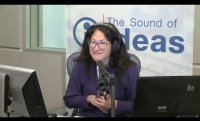
Jessica Jacobs and Philip Metres

Caption: 

Philip Metres, author of Fugitive/Refuge (Copper Canyon Press, 2024), and Jessica Jacobs, author of unalone (Four Way Books, 2024), speak about the coincidence of their shared book-cover imagery and themes of faith and ancestry in their new poetry collections for this episode of “The Sound of Ideas” morning program from Ideastream in Cleveland.

Genre: 

Seeing Shapes

3.26.24

“I read Call It in the Air, / Ed’s book about his painter sister & her death / at 44, like Billie Holiday, & I start to consider / 44. No. Not the death, just the conch of it, / how it whorls & opens, limelights / —44 limelights a woman,” writes Shamala Gallagher in her poem “‘The New York Times’ Says Aloe Is a Hoax,” published in the Academy of American Poets’ Poem-a-Day series. The lines in the poem shift from lightness to darkness, and the image of recursion and spiraling reappear as the speaker allows her mind to wander freely after a long day. Write a poem that experiments with a recurring shape that you’ve observed. Consider the connotations or associations with this shape, whether it be a number, ray of light, or plant. How might a simple form inspire you to think about the shape of time in your life?

Tommy Orange: Wandering Stars

Caption: 

In this Politics and Prose event, award-winning author Tommy Orange reads from his second novel, Wandering Stars (Knopf, 2024), and discusses the musicality of language and the challenge of writing about trauma in a conversation with Kaveh Akbar. Wandering Stars is featured in Page One in the March/April issue of Poets & Writers Magazine.

Genre: 

3 Body Problem

Caption: 

Watch the trailer for the television series adaptation of Liu Cixin’s acclaimed science fiction novel, The Three-Body Problem, translated from the Chinese by Ken Liu and published by Tor Books in 2014. Created by David Benioff, D. B. Weiss, and Alexander Woo and starring Jovan Adepo, Rosalind Chao, Jess Hong, and Benedict Wong, the Netflix series follows the life of an astrophysicist during the Chinese Cultural Revolution and her encounters with extraterrestrial life.

Get the Word Out: 2023 Fiction Cohort Reading

Caption: 

In this video, Thierry Kehou, director of Programs & Partnerships at Poets & Writers, hosts a celebratory reading by the 2023 fiction cohort of Get the Word Out, a publicity incubator for early career authors. Introduced by publicist May-Zhee Lim, readers include Christina Cooke, Alisa Alering, Kathya Alexander, Esinam Bediako, Marissa Higgins, Parul Kapur, Bruna Dantas Lobato, Jessie Marshall, Lynn Stansbury, and Lena Valencia.

Genre: 

Daily Grind

3.21.24

Day Jobs, an exhibition currently on display at Stanford University’s Cantor Art Center in California, examines the impact of day jobs on artists. Showcasing the work of three dozen visual artists, the accompanying catalogue offers first-hand accounts of how their employment in places like a frame shop, hair salon, and museum helped inform their creativity. The exhibit deconstructs the romanticized image of the artist and draws attention to how one’s economic and creative pursuits are often intertwined. Write a personal essay that considers how one of your day jobs unexpectedly influenced your own writing projects. How might something undertaken because of financial necessity also provide valuable ideas to explore in your art?

Order and Disorder

3.20.24

Sheila Heti’s new book, Alphabetical Diaries, published by Farrar, Straus and Giroux in February, is just that—rearranged sentences in order from A to Z made up of the author’s diaries kept over the course of a decade. By placing previously composed sentences into this structure, patterns emerge, and unexpected juxtapositions reveal fresh connections that form a new kind of narrative. “Basically it’s a crazy year, that’s what Claire said, this is going to be a crazy year. Be a pro, Lemons said. Be a woman. Be an individual, he suggested. Be bald-faced and strange. Be calm,” Heti writes. Take this idea of reordering your writing and use sentences from a story you’ve written in the past to create a new story. Experiment with different constraints, whether alphabetizing or grouping by another type of category, perhaps using recurring images or places. See where these arrangements take you.

Gina Chung: Green Frog

Caption: 

“I do think that everything you see or do or experience does become part of the material that you create with, ultimately.” In this Books Are Magic event, Gina Chung reads from her short story collection, Green Frog (Vintage, 2024), and discusses the cultural importance of mythological creatures in a conversation with Jimin Han. For more from Chung, read her installment of our Writers Recommend series.

Genre: 

Morgan Parker on Her First Book of Essays

Caption: 

In this event hosted by the Free Library of Philadelphia, Morgan Parker discusses her debut essay collection, You Get What You Pay For (One World, 2024), and the challenges of writing about mental health in a conversation with Shantrelle Lewis. Parker’s book is featured in Page One in the March/April issue of Poets & Writers Magazine.

Pages

Subscribe to Poets & Writers RSS