Dinner Out

3.19.24

Anne Carson’s 2017 poem “Saturday Night as an Adult,” which had a viral moment on X last summer, is structured as a short block of text recounting observations and thoughts around a dinner date with two couples. “We really want them to like us. We want it to go well. We overdress. They are narrow people, art people, offhand, linens,” writes Carson. “We eat intently, as if eating were conversation.” While the existential despair may seem tragicomic, Carson conveys an honest vulnerability that touches upon disappointment at the potential smallness of life. Write a poem that builds upon your observations of a mundane social encounter in order to capture larger concerns on your mind, perhaps using sharp, terse statements as Carson does in her poem. Is there humor to be found in these minute details?

Jennifer Croft: The Extinction of Irena Rey

Caption: 

In this New York Public Library event, Man Booker International Prize–winning translator Jennifer Croft discusses her debut novel, The Extinction of Irena Rey (Bloomsbury, 2024), in a conversation with Daniel Saldaña París. “I feel, as a translator, that I’m always on this mission of seeking an essence, a mysterious thing that can’t really be articulated...something I can capture and reconstitute in my language,” says Croft. Her novel is featured in Page One in the March/April issue of Poets & Writers Magazine.

Genre: 

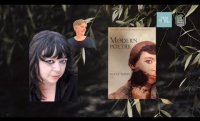
Diane Seuss Presents Modern Poetry

Caption: 

In this Left Bank Books virtual event, Diane Seuss reads from her new collection, Modern Poetry (Graywolf Press, 2024), and joins poet Jane Hilberry in a conversation about their fathers, writing practices, and friendship. Seuss is interviewed by Bianca Stone in the March/April issue of Poets & Writers Magazine.

Genre: 

Opposite Effects

3.14.24

In her groundbreaking 1962 book, Silent Spring, biologist Rachel Carson foretold of “a spring without voices.” Documenting the harmful effects of chemical pesticides used in the agricultural industry, her book sparked an awakening to the environmental crisis in the 1960s and 1970s and launched a movement that brought about the founding of the Environmental Protection Agency. “The history of life on earth has been a history of interaction between living things and their surroundings,” she writes. “Only within the moment of time represented by the present century has one species—man—acquired significant power to alter the nature of his world.” Write an essay that begins by examining how the environment, whether natural or manufactured, has molded you. Then consider how you have modified your surrounding environment—the nature of your world.

Sheila Heti: Alphabetical Diaries

Caption: 

In this event for the ALOUD series at the Los Angeles Public Library, Sheila Heti reads from her new book, Alphabetical Diaries (Farrar, Straus and Giroux, 2024), in which she arranges ten years of her diaries from A to Z, and discusses her choice to tackle an intimate and long-term project in a conversation with author Michelle Tea.

Feeling Lucky?

3.13.24

With Saint Patrick’s Day around the corner, you might be feeling as if luck is everywhere you look: in four-leaf clovers, Shamrock Shakes, horseshoes, a rabbit’s foot, and the number seven. Or perhaps everything is just a coincidence, or predetermined by destiny. In a 2008 Guardian essay critiquing Victor Hugo’s 1862 novel, Les Misérables, Adam Thirlwell writes: “In this gargantuan novel, everything seems utterly improbable. Every plot operates through coincidence. Normally, novelists develop techniques to naturalize and hide this. Hugo, with his technique of massive length, refuses to hide it at all. In fact, he makes sure that the plot’s coincidences are exaggerated.” Thirlwell notes Hugo’s classic novel straddles the ideas of lucky coincidence and predetermination. Based on your personal beliefs about luck, coincidence, and destiny, write a story in which a plot unfolds according to a series of consequential encounters, discoveries, and mistakes. How do your own convictions about these ideas affect your characters’ decision-making and the overall philosophy of your story?

The Thing With Feathers

3.12.24

For one year, fans of Flaco the Eurasian eagle-owl enjoyed watching him fly freely around New York City and become, for many city dwellers, a feathered symbol of liberation. Released from his cage at the Central Park Zoo by a vandal, zoo officials were initially concerned for his survival, but Flaco quickly learned to hunt prey and move about the city. His fans grew, and for them, Flaco began to represent resilience and the ability to embark on a new chapter of life, a gesture at the potential of rewilding. Sadly, Flaco died in February after apparently striking a building on the Upper West Side. This week, write a poem that incorporates a subject that signifies qualities of freedom and hope for you personally. Consider strengths and weaknesses, and address both in your poem.

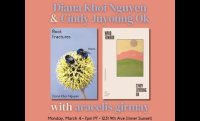
Diana Khoi Nguyen and Cindy Juyoung Ok

Caption: 

In this Green Apple Books event, Diana Khoi Nguyen, author of Root Fractures (Scribner, 2024), and Cindy Juyoung Ok, author of Ward Toward (Yale University Press, 2024), read from their poetry collections and join Aracelis Girmay for a conversation. Ok is featured in an installation of our Ten Questions series and Nguyen’s Root Fractures is featured in Page One in the January/February issue of Poets & Writers Magazine.

Genre: 

Pages

Subscribe to Poets & Writers RSS