The Poem Is You: 60 Contemporary American Poems and How to Read Them

by
Author: 
Stephanie Burt
Published in 2016
by Belknap Press

In this volume, Stephanie Burt selects sixty poems as a small representation of the wide scope of contemporary American poetry, ranging from John Ashbery’s “Paradoxes and Oxymorons” published in 1981, to Ross Gay’s “Weeping” published in 2015. Each poem is accompanied by an essay that details the poem’s technique, sensibility, and context to help readers approach and enjoy the work with a new perspective. “These poems let us imagine someone else’s interior life, almost as if it were or could have been ours,” writes Burt in the introduction. “Each poem presents a way of arranging language, and a question about the culture from which it emerged; each poem is a way for a person to live in the world.”  

A Solitary Sentence

6.26.24

In a 2012 interview for the Guardian, Hungarian author László Krasznahorkai explained his predilection for writing extremely long sentences that manage to endure for dozens of pages: “This characteristic, very classical, short sentence—at the end with a dot—this is artificial, this is only a custom, this is perhaps helpful for the reader, but for only one reason, that the readers in the last few thousand years have learned that a short sentence is easier to understand.” For Krasznahorkai, the long sentence extends beyond the desire to reflect the natural continuousness of human speech, but to also express the speaker’s existential drive, a seemingly overwhelming desire to communicate, to be empowered to say their piece. Write a short story that consists of a single sentence, using any punctuation you’d like but saving the period until the very end. How does this constraint affect your story’s themes?

Miranda July on Her Novel All Fours

Caption: 

“The book is really for every woman who’s aging and has secret desires and anxieties about those desires,” says Miranda July about her second novel, All Fours (Riverhead Books, 2024), and the importance of writing and speaking about female bodies of all ages in this Daily Show interview with host Desi Lydic.

Genre: 

Defeat Is Inevitable

6.25.24

“In the end, I suppose, defeat is inevitable, / the closing of something once delicately propped / open,” writes Dawn Lundy Martin in her poem “From Which the Thing Is Made,” which appears in her collection Instructions for the Lovers, out today from Nightboat. With each line of the poem, Martin dives deeper into the connection between the narrator and their mother, and how her absence is still felt in the body of the narrator. “Even I can’t let go, can’t sift her being (that part / of her that’s her) from my hands,” writes Martin. This week, start a poem with Martin’s first line: “In the end, I suppose, defeat is inevitable…” What memories and imagery come to mind when you think of defeat or of something closing?

Carvell Wallace on Another Word for Love

Caption: 

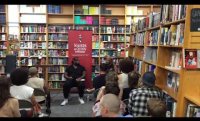
In this Magers & Quinn Booksellers event in Minneapolis, Carvell Wallace reads from his debut memoir, Another Word for Love (MCD, 2024), and talks about finding strength in his communities and ancestors, and the transformative power of memory in a conversation with Junauda Petrus.

Summer Morning

Caption: 

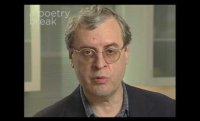
“I know all the dark places / Where the sun hasn’t reached yet...” Charles Simic reads his poem “Summer Morning,” which he says needs no introduction, in this video for an installment of Poetry Breaks, a series created by Leita Luchetti in the 1980s and 1990s presented in partnership with the Academy of American Poets. The Pulitzer Prize–winning poet died at the age of eighty-four on January 9, 2023.

Genre: 

The Longest Day

6.20.24

This year’s summer solstice arrives in the Northern Hemisphere on June 20, marking it the longest day, and shortest night, of the year. And yet, no matter the exact number of daylight or nighttime hours measured out, any day can feel like a very long day, just as any night can end in the blink of an eye. Write a two-part lyric essay in which the first part details one long summer day you’ve experienced, and the second part focuses on one short summer night. For the day that seemed to last forever, did it drag on and on, producing exasperation, or did the hours ooze dreamily and pleasurably? For the night that whizzed by, was there nonstop action that was over before you knew it?

Domestication

6.19.24

In an interview published in Salon, Rosemary Mosco, author of A Pocket Guide to Pigeon Watching: Getting to Know the World’s Most Misunderstood Bird (Workman Publishing, 2021), reflects on the historical connections between pigeons and people, and recounts a process of domestication, obsolescence, and abandonment. “The city pigeons around us…were domesticated by humans a really long time ago,” says Mosco. “They were really bred to be good at living near us. And then, we forgot, and now they keep hanging around us. And we’re like, ‘why are they here?’” Write a short story that involves an encounter or situation with a domesticated animal, whether a pet, livestock, or one wandering the streets. Think about the wild ancestors of this animal, and how they’ve become entwined with humans and civilization. How might you connect philosophical ideas around domestication with other larger themes of your story?

Chigozie Obioma on Novel Writing

Caption: 

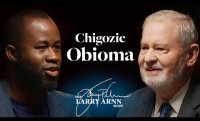
In this episode of The Larry Arnn Show, Hillsdale College president Larry P. Arnn interviews author Chigozie Obioma who discusses his life in Nigeria, the inspiration behind his second novel, An Orchestra of Minorities (Little, Brown, 2019), and how the Classics inform his work. Obioma’s third novel, The Road to the Country (Hogarth, 2024), is featured in Page One in the July/August issue of Poets & Writers Magazine.

Genre: 

Pages

Subscribe to Poets & Writers RSS