Scents

6.18.24

“We tend to treat odor in general as a sort of taboo,” writes Scott Sayare in a New York Times Magazine article about a woman who discovered she could smell Parkinson’s disease, in some cases over a dozen years before medical diagnosis. “Modern doctors are trained to diagnose by inspection, palpation, percussion and auscultation; ‘inhalation’ is not on the list, and social norms would discourage it if it were.” This week, focus your attention on your sense of smell as you go about your days, perhaps even ignoring social norms as you inhale all the odors around you. Then, write a poem that focuses solely, or primarily, on smell—perhaps juxtaposing scents that are in your everyday life now and those from a more distant past.

Banned Book Club Event With Sonora Reyes

Caption: 

In this special edition of the Banned Book Club series hosted by the New York Public Library, Sonora Reyes discusses their award-winning debut novel, The Lesbiana’s Guide to Catholic School (Balzer + Bray, 2024), which tells the story of a queer Mexican American girl navigating her way through Catholic school.

Genre: 

Michelle Herrera Mulligan on Primero Sueño Press

Caption: 

“I want to create a legacy for the people who come after me.” In this interview hosted by Las Comadres Para Las Americas and Latinx in Publishing, Michelle Herrera Mulligan speaks about launching Atria Books’ new imprint, Primero Sueño Press, whose mission is to publish Latinx authors from the United States in English and Spanish and bring them to new audiences. Read more about the press in “A New Imprint for Latinx Authors” by Jennifer De Leon in the July/August issue of Poets & Writers Magazine.

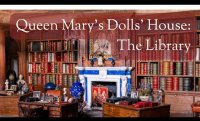
Queen Mary’s Dolls’ House Library

Caption: 

Watch this short video offering a glimpse of the miniature books handwritten by revered authors in the library of Queen Mary’s Dolls’ House at Windsor Castle, the residence of the British royal family in the eponymous English town. Read more about the miniature library in “The Written Image: Queen Mary’s Dolls’ House Library Books” in the July/August issue of Poets & Writers Magazine.

Crónicas

6.13.24

A Question of Belonging: Crónicas (Archipelago Books, 2024) by the Argentine writer Hebe Uhart, who died in 2018, translated from the Spanish by Anna Vilner, contains over two dozen crónicas—a form of narrative journalism popularized in Latin America that is characterized by short, informal musings about everyday topics and observations. In her introduction to the book, Mariana Enríquez notes Uhart’s lack of pretension in her chosen subjects, from what she observed around her to the locals with whom she conversed. “Her fascination with language is not limited to the spoken: She roams around cities and towns taking note of shop names, ads, and graffiti.…” Jot down intriguing or amusing fragments of language you see and hear as you go about your day, perhaps during your commute or while watching your favorite TV show. Write a series of short musings based on your observations, noting any humor or insights gleaned from contemporary language and what it reveals about our current times.

Masquerade Season by ’Pemi Aguda

Caption: 

In this video for the African Speculative Fiction Society, ’Pemi Aguda reads an excerpt from her award-winning short story “Masquerade Season,” which appears in her debut collection, Ghostroots (Norton, 2024). Aguda is featured in “First Fiction 2024” in the July/August issue of Poets & Writers Magazine.

Genre: 

Head This Way

6.12.24

Ayşegül Savaş’s third novel, The Anthropologists, forthcoming in July from Bloomsbury, is narrated by Asya, one half of a young couple setting out to build a new life together in a foreign city. While they solidify friendships, search for an apartment, and accommodate visiting relatives, Asya begins a documentary project. Each of the novel’s vignette titles reference anthropological concepts: Notions of Loyalty, Child-Rearing, Native Tongue, Courtship, Gift Exchange, Division of Labor, Principles of Kinship, and Forms of Enchantment. As Asya reflects on anthropological distance and lenses, these headings raise questions about the conventions, expectations, and routines that constitute a life. What makes a life legible—and to whom? Write a short story with subheadings providing insight or an alternative perspective on scenes. How might they produce additional layers of complexity and ambiguity?

Pages

Subscribe to Poets & Writers RSS