The Lonely First Division

Caption:
This video poem by Daniel Broadhurst, inspired by Italian artist Daniele D'Orazi, makes interesting use of Post-It Notes, with music by Wax Tailor.
Genre:
Tags:
Jump to navigation Skip to content
This video poem by Daniel Broadhurst, inspired by Italian artist Daniele D'Orazi, makes interesting use of Post-It Notes, with music by Wax Tailor.
Gregory Crosby blogs about Tom Sleigh's involvement in the City College of New York's Poetry Festival. Crosby is a poet and teacher, and coordinator of the City College of New York Poetry Outreach Center. He is co-editor of the poetry journal Lyre Lyre and co-curator of the long-running Earshot reading series.
This past May, The City College of New York’s (CCNY) Poetry Outreach Center presented its annual Poetry Festival on campus at Aaron Davis Hall, a remarkable event for a number of reasons: the impressive number of excited and delightful elementary, middle school, and high school students who read their winning poetry to a capacity crowd; the varied and talented faculty, MFA candidates, and local poets who participated with poems of their own; and the inspiring reading given by this year’s special guest poet, Tom Sleigh. This was the 41st day in a continuous series of festival events dedicated to poetry and public school students. Founded by poet and professor emeritus Barry Wallenstein, and now run by poet and lecturer Pamela L. Laskin, the CCNY Poetry Festival has grown over the decades from a small community outreach event focused on Harlem to a citywide program that sends poet mentors into schools from the Bronx to the Battery to Brooklyn.
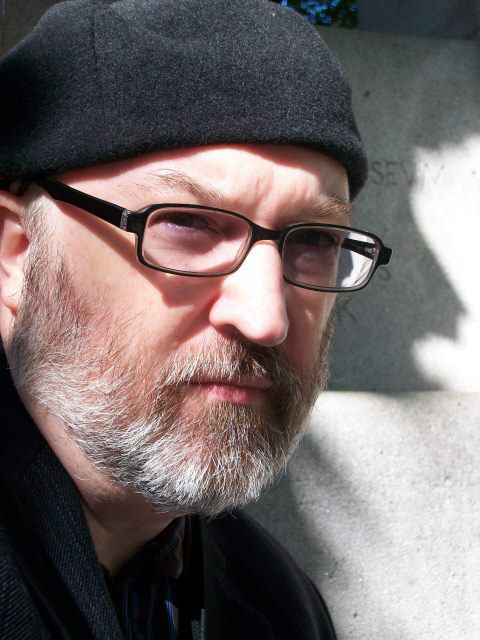
“I was part of CUNY poetry affiliation group that Pam Laskin belonged to,” says Tom Sleigh, who teaches in Hunter College’s MFA program, “and every year Pam would tell us about Poetry Outreach and its work, so when she asked me to be the featured guest poet I was happy to say yes.” Sleigh has long understood and appreciated the importance of poetry mentoring in schools. “It was very familiar to me as I’ve always done this kind of thing, teaching poetry in schools of all kinds as a guest poet,” says Sleigh.
“What was particularly wonderful on the day of the festival was hearing so many students, many from disadvantaged economic backgrounds, read their poems,” Sleigh continues. “I think it’s essential that students have exposure to art, especially poetry. There’s so much mediation that goes in our culture, and students, I think, are very often distanced from language; to suddenly hear these really great, idiosyncratic poems from these high school kids, and hear them engaging with language in that way, is wonderful. I hear this young man get up and read this fascinating, funny poem about the NBA, all these basketball players, and think how only he could have written that, and how that kind of expression comes out of mentoring.” Sleigh smiles: “Kenneth Koch would have loved that poem.”
Lately, it feels as if poetry in public schools is a sort of secret agent—a shadowy spy in the House of Test Preparation, a fugitive fleetingly glimpsed by students as they are drilled and drilled again in subjects that have been deemed by some in education as “more practical” or “more real world.” Harried teachers are finding it more and more difficult to incorporate poetry—both reading it and writing it—into curriculums dictated by the current obsession with standardized tests. The Poetry Outreach Center takes some of the burden off teachers by sending poetry mentors to teach and encourage the art of poetry in classrooms where it otherwise might fall off the radar. “It’s crucial to public education,” says Sleigh. “Who knows what that kid who wrote that poem will do next in life, thanks to poetry?”
Photo: Gregory Crosby. Photo Credit: Gregory Crosby.
Support for Readings & Workshops in New York City is provided, in part, by public funds from the New York State Councl on the Arts, and the New York City Department of Cultural Affairs, with additional support from the Louis & Anne Abrons Foundation, the Axe-Houghton Foundation, the A.K. Starr Charitable Trust, and the Friends of Poets & Writers.
P&W–supported poet Michael Medrano will blog about the literary climate in California's underserved Central Valley throughout the month of July. Medrano is the author of Born in the Cavity of Sunsets (Bilingual Press 2009). His poems have appeared in Askew; Bombay Gin; The Cortland Review; The Packinghouse Review; Rattle; and The Yellow Medicine Review among other publications. He is the host of Pakatelas, a literary radio show, streaming worldwide at www.kfcf.org, and hosts the Random Writers Workshop in Fresno, California.
Today, I write i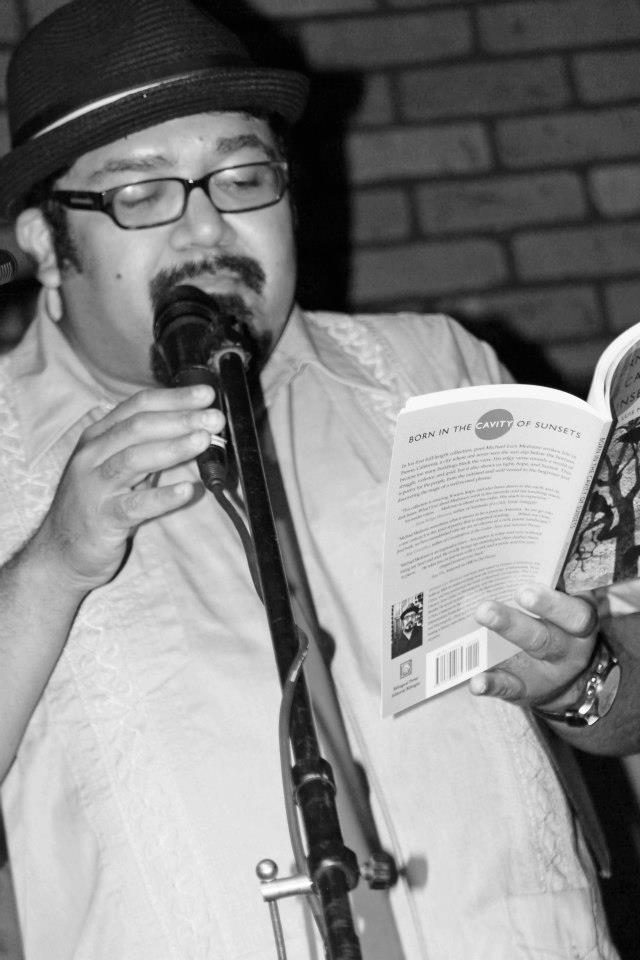 n a collaborative workspace known as The Hashtag in Fresno’s Tower District, an eclectic neighborhood often described by residents as a wannabe San Francisco or, as the kids on the eastside used to say, that gay neighborhood beyond the tracks. For me, the beloved Tower is more than a Bay Area cliché. It is my home, a place many Fresno poets have written about. It lies just east of the infamous Highway 99, another valley literary icon mentioned by Philip Levine, Gary Soto, and many more. It is where I conduct my literary radio show and lead the Random Writers Workshop, where I write and work on poems for my next book, which, you guessed it, is about the Tower District. You can say mi barrio is central headquarters for my personal arts movement!
Your personal arts movement? I hear my mother say, shaking her head, the pencil in her hand manically circling random letters in a giant word search book she keeps by the lamp. Where’s my personal art movement, mijo? And while you’re at it, move out of that neighborhood. You know I don’t like you walking the streets by yourself!
Truth is, I stopped showing her my poems a decade ago because she could not stand me writing about familia, especially cousin Pee-Wee who died alone, by the canal, by Target. Don’t get me wrong. Mom has always been there at the big events, like when my book of poems came out, and I followed in that rich Fresno literary tradition by having a big ole, book release party. She teases me about the first poetry reading I co-organized with Tim Z. Hernandez, the much-talked-about reading where we performed to the only two members of the audience—our mothers!
As a child, we used to take Olive Avenue from our East Fresno apartment all the way to Roeding Park, just west of the Tower. While there, we would picnic, visit the zoo or Storyland, which to us six-year-olds was just as amazing as Disneyland. Later, we would drive back to our eastside apartment down Olive Avenue, the main street of the Tower District. The miniature me would roll down the window, unbuckle the seatbelt in Mom’s 1978 Firebird while the car was in motion and point at all the little mom-and-pop restaurants. Let’s eat there, the restaurant with the big rooster on it! All I remember is that the streets were clean and the neighborhood seemed strangely alive.
Unfortunately, my mother always shot down those requests to visit the Tower. We can’t afford it! was her usual mantra, and who was I to question my own mom? I mean, it wasn’t like I was snooping around in her checkbook. I just took the rejection. Sad as I was in that six-year-old shell of my future self, I would vow, one day, to live in that great neighborhood just east of the freeway.
Ironically, I am completing this first blog post on Independence Day in a business I have supported the last couple of years; a place where I hammer out poems. Sure, the crime has piled on in recent years, and the artists, now, watch each other’s backs, more so in recent weeks. It’s true, maybe I should stray from walking home from the Hashtag at night, and maybe I should listen to my mother. I wonder how many writers have bucked the advice of their mothers. I bet there are many.
Major support for Readings/Workshops in California is provided by The James Irvine Foundation. Additional support comes from the Friends of Poets & Writers.
Choose an inch of space anywhere around you: the sole of your hiking boot, the rusted headlight of an abandoned car, that weathered and broken thumb your grandfather used to pry open the back fence. Write about that inch. As poets we often become overwhelmed by the big picture. We seek to conquer love, injustice, and the meaning of meaning. Take a step back. Focus the scope of your poetry. Writing about a single drop of rain can tell us the most about the sky above.
Poets & Writers-supported poet Mike Sonksen, a.k.a. Mike the Poet, led a five-day workshop at the youth writing center 826LA in Los Angeles. Sonksen’s journalism has been published in Wax Poetics, Los Angeles Review of Books, LA Weekly, and OC Weekly. He received Beyond Baroque Literary Arts Center’s award for Distinguished Service to the Los Angeles Poetry Community in 2013. His weekly KCET column LA Letters celebrates bright moments from literary L.A. Here, he blogs about his experience at 826LA.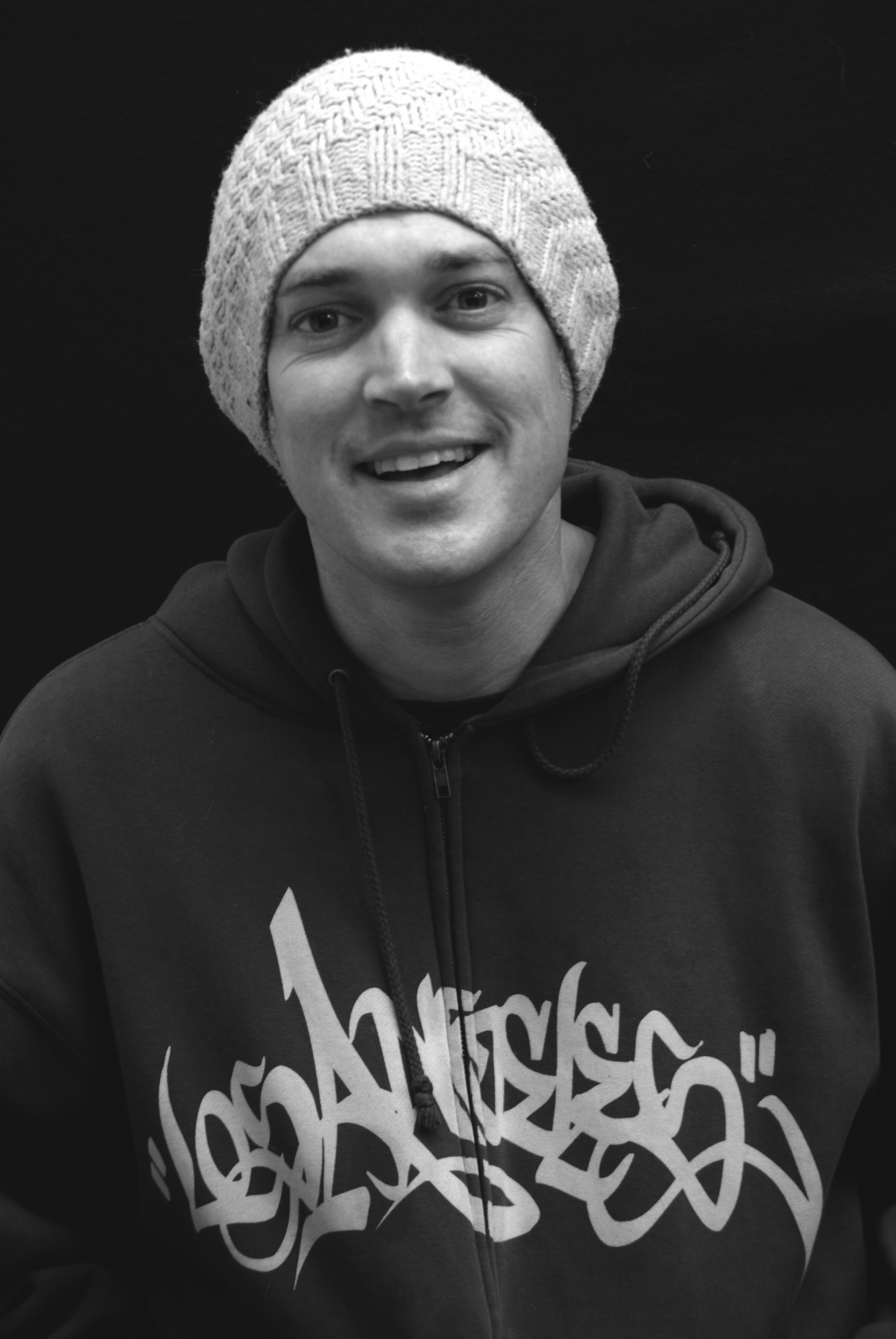 For the fifth consecutive summer I taught my Words Spoken poetry workshop at 826LA in the Northeast L.A. neighborhood of Echo Park. We had twenty diverse teens from Downtown, Historic Filipinotown, Silver Lake, Koreatown, Mt. Washington, and South Pasadena. The combination of 826’s ambience and the earnest personalities of the group made for an explosive week of poetry and community building. The writers ranged from twelve to eighteen, plus a few college students who made guest appearances. Close to a third of the writers were returning students, adding to the group camaraderie.
Each day we write four to five poems. Fast writers write more. The prompts alternate between open and closed forms like haikus, quatrains, cinquains, sonnets, odes, elegies, city poems, list poems, epistles, response poems, and collage poems—a mixture of the fundamentals and a dash of the experimental. The five workshop days focus on writing and reciting poetry, but students are also exposed to journalism, cultural history, geography, urban studies, and public speaking throughout each three-hour lesson.
An open mic follows each assignment; inevitably, every student shares his or her work with the group, but some are quicker to open up than others. Learning elocution and the aesthetic beauty of language through reciting poetry is a time-honored tradition. Freedom is encouraged and judgment checked at the door. There’s no shortage of laughter and tears.
A multi-generational extended family forms the bedrock of our writing community. Guest poets Traci Kato-Kiriyama, AK Toney, and Sara Borjas dropped in to share poems and offer writing tips, as did Jamal Carter, Monique Mitchell, and Chris Siders, three former high school students now in college. Marisa Urrutia Gedney, the director of 826LA’s Echo Park location, is an award-winning teacher who makes sure everyone has fun and gets a lot of writing done. 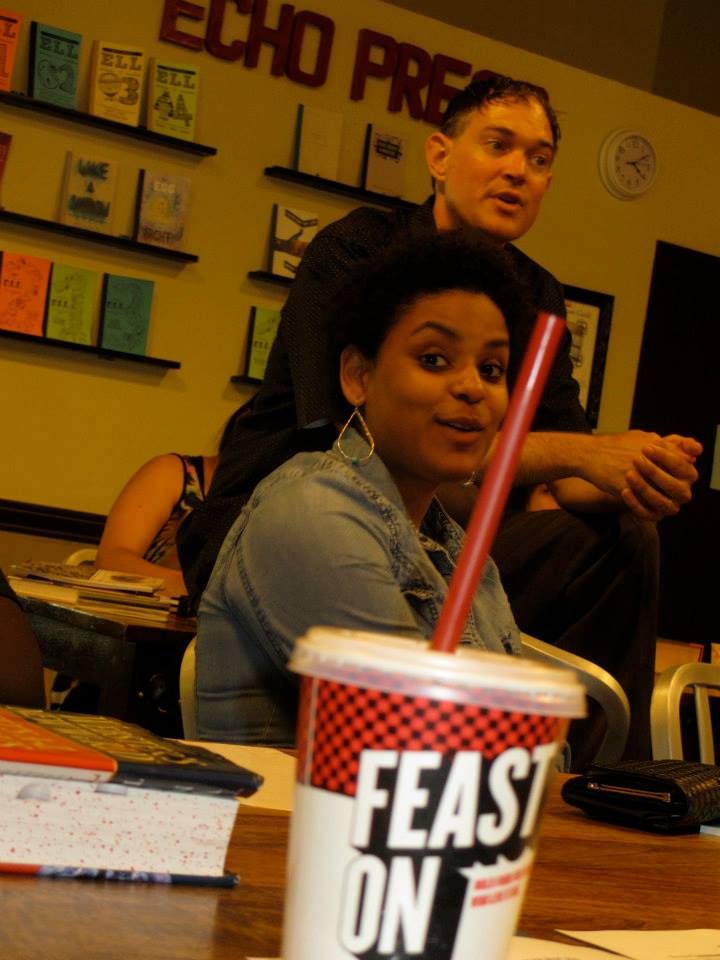 After five summers at 826LA, I have witnessed dozens of students become empowered when writing poems about their lives, families, and neighborhoods. Creative writing, according to the theorist Lester Faigley, allows students to “use narratives to explore the politics of location.” Several of the poets memorized their work, adding even deeper personal meaning to the experience.
There’s nothing more sublime than watching budding writers emerge into poets. We had more writers this year than ever before. I am thankful for 826LA’s perennial hospitality and to Poets & Writers for funding us over the last four years. The workshop gets better every year. The culminating chapbook will be unveiled with a live reading at 826LA on July 24. Come hear the kaleidoscope of voices that form the patchwork of Words Spoken.
Photos: Top: Mike Sonksen. Credit: Chris Felver. Bottom: Sonksen and Monique Mitchell. Credit: Cheryl Klein.
Major support for Readings/Workshops in California is provided by The James Irvine Foundation. Additional support comes from the Friends of Poets & Writers.
Babe Elliott Baker brings poet Tishani Doshi’s poem "The Dream," from Everything Begins Elsewhere (Copper Canyon Press, 2013), to the small screen in the latest Motionpoem.
"For the poetry reader...there are certain emotions you are allowed to feel—sadness, love—but this is such a miserable choice of all the emotions one feels," writes Craig Raine in the English Review. "One feels anger, boredom, chilliness—quite strong emotions, but they don't get much of a run in poetry, and I think they should." Write a poem about anger or boredom or any other "nonpoetic" emotion. If you have trouble getting started, try using the first line of John Berryman's devastating "Dream Song 14": "Life, friends, is boring. We must not say so."
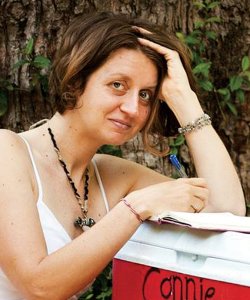
Poet Crystal Hoffman sets out on a pilgrimage across the country to write a collection of poetry and essays based on the narratives of people she meets along the way. And she’s doing it all on foot.
Small Press Points highlights the innovation and can-do spirit of independent presses. This issue features Off the Grid Press, which publishes books exclusively by poets over the age of sixty.
P&W-supported poets Jon Sands, Adam Falkner, and Samantha Thornhill recently performed at North Country Community College in Saranac Lake, New York, as part of their "Poets in Unexpected Places" project. Sands, a poet, essayist, and author of The New Clean (Write Bloody Publishing, 2011), blogs about the experience. 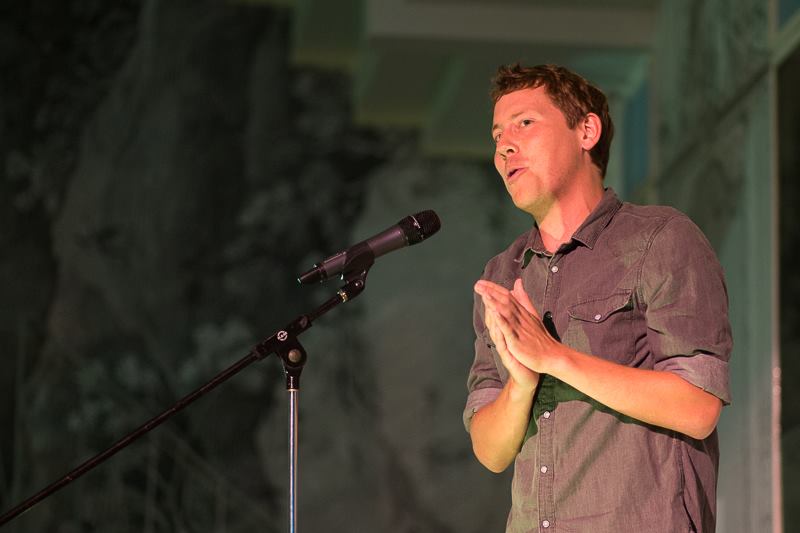 In 2010 Adam Falkner, Samantha Thornhill, and I cofounded “Poets in Unexpected Places” as a public art experiment. (We have since been joined, as curators, by Elana Bell and Syreeta McFadden.) And for one day in National Poetry Month, Adam, Samantha, and I had "free poetic reign" over the campus of North Country Community College (NCCC).
For over three years, we’ve staged seemingly impromptu poetry installations in public spaces throughout New York City, from the Q train to Times Square to Brooklyn Laundromats to Whole Foods—some sanctioned, some not. The goals are: 1) to blur the line between the artist and the audience 2) to bring poems back into a public sphere that provides the muse for so many of them 3) to challenge a creative public landscape largely curated by corporations, and 4) to acknowledge how many stories are inside every person you see, anywhere.
We have a fluid membership of writers who share their own work, or that of authors they love. You’re liable to hear Lucille Clifton, Audre Lorde, or Jack Gilbert reverberating off the subway walls.
Poets & Writers, the Adirondack Center for Writing, and NCCC brought us not just to English seminars on the NCCC campus, but to calculus classes, cafeterias, and chemistry labs (where Samantha performed her “Ode to an Apron” wearing an apron and safety goggles). I taught a midday writing workshop, and one student, Glen, a veteran and self-proclaimed “macho guy,” wrote a heartbreaking poem about one of his fellow soldiers, then joined us for the afternoon to read it aloud. 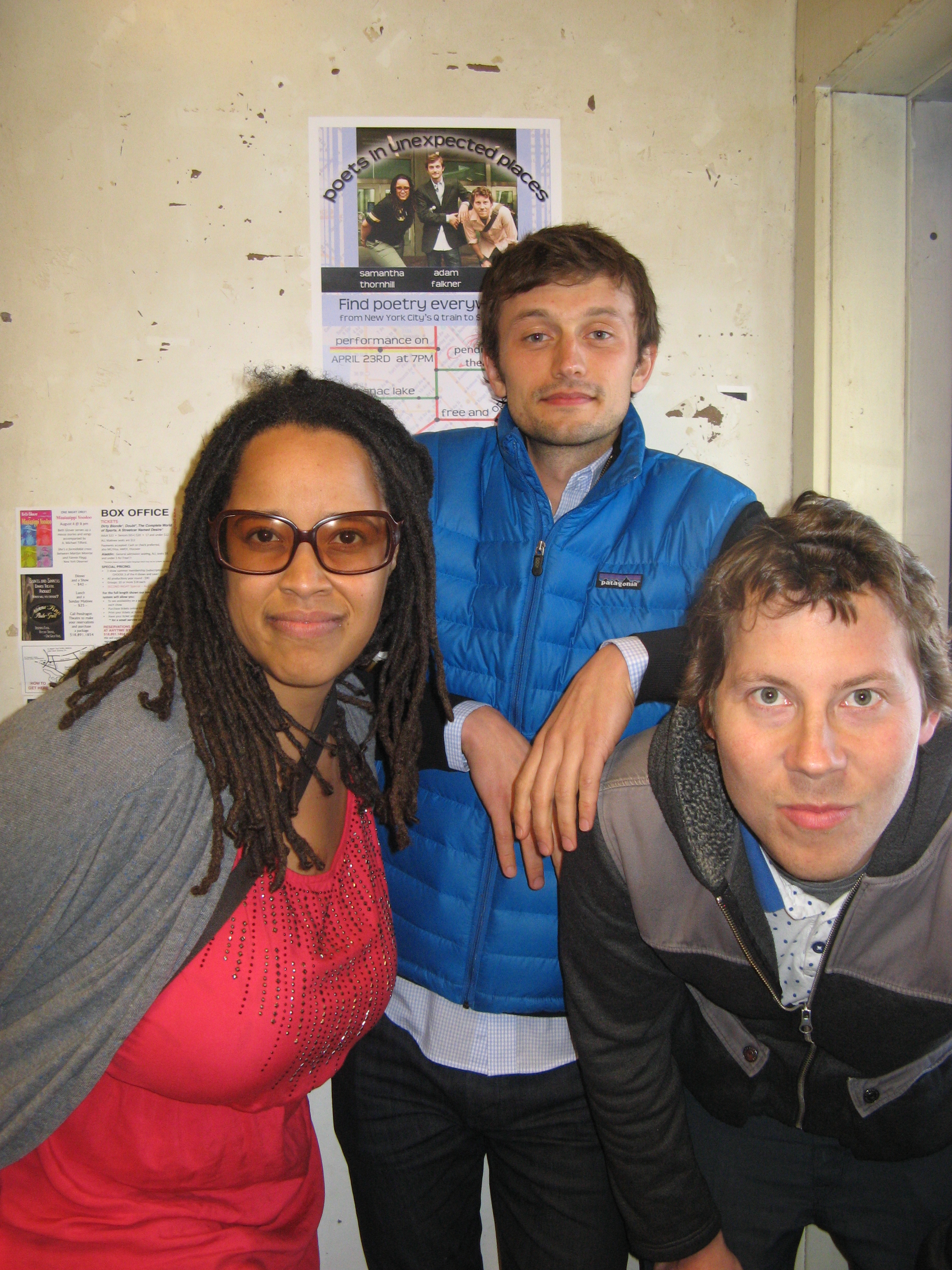 We stormed into something like forty classrooms that day with no introduction or apology. This gave the night’s culminating reading at the Pendragon Theater a Pied Piper-type feel. We had been gathering students, faculty, and staff throughout the day, from the math major to the cafeteria worker. After poetry showed up for them, they showed up for poetry. The workshop participants kicked off the night for an intergenerational audience of about seventy-five.
Then, with three chairs and a keyboard, we had a poetry show that could just as easily have taken place in Adam’s living room in Fort Greene, Brooklyn. We shared the stories that make us who we are, from my poems that celebrate and mourn my high school days to Adam’s poem “War in Baltimore,” a precise, hilarious, and sorrowed tale of teacher-student interaction. Samantha read her epic “Ode to Odetta” while Adam pulled bluesy notes out of the keyboard.
We stayed after for nearly an hour swapping stories with audience members. One young woman approached with tears in her eyes in response to Samantha’s elegy for a German Shepherd. She too was bitten by a dog who was subsequently euthanized. And this is the point: the hidden connections unlocked through poetry, regardless of whether it’s the Q train platform or a stage upstate. It’s the whisper in the parking lot, if only to yourself: "Damn. Me too. Now...."
Photos: Top: Jon Sands. Bottom, from left: Samantha Thornhill, Adam Falkner, Jon Sands. Credit: Nathalie Thille.
Support for Readings/Workshops in New York City is provided, in part, by public funds from the New York State Council on the Arts and the New York City Department of Cultural Affairs, with additional support from the Louis & Anne Abrons Foundation, the Axe-Houghton Foundation, The Cowles Charitable Trust, the Abbey K. Starr Charitable Trust, and the Friends of Poets & Writers.