Genre: Poetry

The Role of Poetry in Your City

In my last post, I reflected on the ways writing can unite us wherever we live, and I’d like to continue that thread a bit more.

One recent example of how writing can unite us is Amanda Gorman’s poem “The Hill We Climb,” which she read at the presidential inauguration of Joe Biden last month. Gorman is the youngest inaugural poet at 22 years old, and the first youth poet laureate of the United States. She also received a Barnes & Noble Writers for Writers Award from Poets & Writers in 2020. Gorman’s reading was widely shared, and it’s likely you’ve come across it on your own social media feed. In fact, it was so popular that this past Sunday, Gorman became the first poet to perform at the Super Bowl.

The attention on Gorman’s poem got me thinking about how poetry can make us feel engaged in the world politically, socially, and spiritually. I believe poetry offers each of us different meaning and purpose. For youth, poetry can provide a seat at the table in an adult world that impacts them. For women and people of color, poetry can provide a space to empower their voice and take agency against systems of oppression.

I also thought about the role poets laureate, like Amanda Gorman, serve in public and the amazing work they do in their cities and states. Two previous Louisiana poets laureate, Peter Cooley and Brenda Marie Osbey, were kind enough to share their experiences with me for this blog.

Poets in New Orleans (and across Louisiana), you should know that the Louisiana Endowment for the Humanities is currently seeking nominations from the public for the state’s next poet laureate, and you can submit recommendations now through February 24.

If you were selected as the next poet laureate of Louisiana, what role might you take? How would you use poetry to cultivate community and conversation?

Kelly Harris is the literary outreach coordinator for Poets & Writers in New Orleans. Contact her at NOLA@pw.org or on Twitter, @NOLApworg.

The Poem I Wish I Had Read: Ada Limón

Caption: 

“No matter the pull toward brink. No / matter the florid, deep sleep awaits. / There is a time for everything.” Ada Limón reads “Sorrow Is Not My Name” by Ross Gay and shares why this poem means so much to her for this new video series “The Poem I Wish I Had Read,” created by the Boutelle-Day Poetry Center at Smith College.

Genre: 

Metonymy

In an essay published on Literary Hub, Urvi Kumbhat writes about the use of the mango in diasporic literature, asserting that it “rests uneasily between symbol and sumptuous fruit.” Kumbhat begins by exploring her memories of eating mango in Calcutta, and how “in the global South Asian cultural and literary lexicon, the fruit is a metonym for the home country,” but also discusses why she has avoided using the fruit in her writing for fear of “self-exoticization and unoriginality.” What serves as a metonym for the place you call home? Write a poem about your chosen symbol that embraces, as well as complicates, what it represents.

Upcoming Contest Deadlines

It is fitting that during the most romantic month of the year, contest opportunities abound for poets! With deadlines of either February 14 or February 15, these awards include opportunities for both English language poetry and poetry in translation. There are also two contests for prose writers. All offer a cash prize of $1,000 or more.

Academy of American Poets Ambroggio Prize: A prize of $1,000 and publication by University of Arizona Press is given annually for a book of poetry originally written in Spanish by a living writer and translated into English. The poet and translator will split the prize. Rigoberto González will judge. Deadline: February 15. Entry fee: none.

Academy of American Poets Harold Morton Landon Translation Award: A prize of $1,000 is given annually for a book of poetry translated from any language into English and published in the United States during the previous year. Indran Amirthanayagam will judge. Deadline: February 15. Entry fee: none.

Academy of American Poets Raiziss/De Palchi Fellowship: A fellowship of $25,000 is given biennially for the translation into English of a work of modern Italian poetry. Moira Egan, Rebecca Falkoff, and Graziella Sidoli will judge. Deadline: February 15. Entry fee: none.

Arrowsmith Press Derek Walcott Prize for Poetry: A prize of $1,000 will be given annually for a poetry collection published in English by a writer who is not a resident of the United States. The winner will also receive an invitation to read at the Boston Playwrights’ Theatre in Boston; a one-week residency at poet Derek Walcott’s home in St. Lucia or in Port-of-Spain, Trinidad, in conjunction with the annual Walcott Festival; and the publication of a limited-edition broadside of their work by Arrowsmith Press. Poets who are living in the United States as green card holders are eligible. Poets whose work appears in translation into English are also eligible. Major Jackson will judge. Deadline: February 15. Entry fee: $20.

Hippocrates Prizes for Poetry and Medicine: A prize of £1,000 (approximately $1,260) and publication in the Hippocrates Prize anthology and on the Hippocrates website is given annually for a single poem on a medical theme. A prize of £1,000 (approximately $1,260) and publication in the Hippocrates Prize anthology and on the website is also given for a single poem on a medical theme written by a health professional. Anne Barnard, Keki N. Daruwalla, Anna Jackson, and Neena Modi will judge. Deadline: February 14. Entry fee: $10 ($15 for postal submissions).

Milkweed Editions Ballard Spahr Prize for Poetry: A prize of $10,000 and publication by Milkweed Editions is given annually for a poetry collection by a poet currently residing in Iowa, Michigan, Minnesota, North Dakota, South Dakota, or Wisconsin. Deadline: February 15. Entry fee: none.

Sarabande Books Morton and McCarthy Prizes: Two prizes of $2,000 each and publication by Sarabande Books are given annually for collections of poetry and fiction. Victoria Chang will judge in poetry and Danielle Evans will judge in fiction. Deadline: February 15. Entry fee: $29.

Salem State University Claire Keyes Poetry Award: A prize of $1,000 and publication in Soundings East is given annually for a group of poems. Afaa Michael Weaver will judge. Deadline: February 15. Entry fee: $10 (or $15 to receive a copy of the magazine).

Syracuse University Press Veterans Writing Award: A prize of $1,000 and publication by Syracuse University Press is given biennially for a novel or short story collection by a U.S. veteran, active duty personnel in any branch of the U.S. military, or the immediate family member of a veteran or active duty personnel. Phil Klay will judge. Deadline: February 15. Entry fee: none.

Visit the contest websites for complete guidelines, and check out the Grants & Awards database and Submission Calendar for more contests in poetry, fiction, and creative nonfiction.

Honoring the Storytelling Tradition

Caption: 

In honor of Black History Month, the folks at Open Road Media put together this collection of interviews in which authors such as Henry Louis Gates Jr., Virginia Hamilton, Alice Walker, and others discuss the significance of storytelling as part of African American culture.

Patricia Spears Jones

Caption: 

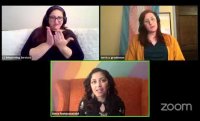
“Don’t be afraid— / Someone has walked this way before / All the world’s music in her hands.” Patricia Spears Jones reads “Discovering America Again” by Lorenzo Thomas, her own poem “The Birth of Rhythm and Blues,” and talks about what it means to be a literary citizen. This video, part of the P.O.P. series, was shot and edited by Rachel Eliza Griffiths in partnership with the Academy of American Poets. Spears Jones is the eleventh winner of the Jackson Poetry Prize.

Genre: 

Line / Break With Jericho Brown

Caption: 

“I’ve been in mourning about the experience of writing The Tradition. It really wore me out and I loved every second of it,” says Jericho Brown about writing his Pulitzer Prize–winning collection, The Tradition (Copper Canyon Press, 2019), and how he works through self-doubt in this installment of Line / Break hosted by Laura Buccieri, press director of publicity for Copper Canyon Press.

Genre: 

Derek Walcott Prize for Poetry

Arrowsmith Press
Entry Fee: 
$20
Deadline: 
February 15, 2021

A prize of $1,000 will be given annually for a poetry collection published in English by a writer who is not a resident of the United States.

Pages

Subscribe to Poetry